

The main difference between coaxial speakers and full-range speakers is how they play different sounds. Coaxial speakers put parts like a woofer and tweeter together in one piece. This gives balanced sound and keeps the design small. This is important if you want speakers that are easy to put in and not too expensive. Full-range speakers can make music sound deeper and fuller. People who want the best sound often like these more.
-
Coaxial speakers are good for simple setups and save room.
-
Full-range speakers are best for people who want great sound.
-
Knowing the difference helps you choose what fits your needs and money.
Key Takeaways
-
Coaxial speakers have more than one driver in one unit. They give balanced sound and save space.
-
Full-range speakers use only one driver for all sounds. They are simple but may not sound as clear.
-
Pick the right speaker for your needs. Coaxial speakers are easy to set up and sound good. Full-range speakers are simple and cost less.
-
Look at your space before you choose. Coaxial speakers fit in small places like cars. Full-range speakers are better for bigger spaces.
-
Think about how much money you want to spend. Coaxial speakers usually cost less. Full-range speakers can sound better but may cost more.
Main Difference Explained
Quick Overview
You may wonder how these two speakers are not the same. The main difference is in how they make sound. Coaxial speakers have more than one driver in one speaker. There is a woofer for low sounds and a tweeter for high sounds. Both are put together in one unit. Full-range speakers use just one driver for all sounds. This means one part plays both bass and treble.
Here is an easy table to show the difference:
|
Speaker Type |
Design Features |
Sound Reproduction Capabilities |
|---|---|---|
|
Coaxial Speakers |
More than one driver in one speaker |
Makes sound clearer at different frequencies |
|
Full-Range Speakers |
One driver for all sounds |
May not be as clear or detailed |
This design changes how each speaker works. Coaxial speakers can play more sounds with better detail. Full-range speakers might have trouble with deep bass and sharp highs.
Why It Matters
Picking the right speaker can change how you hear music. If you want easy setup and balanced sound, coaxial speakers are a good choice. You get clear music and do not need extra parts. Full-range speakers are fine if you want something simple and do not need perfect sound.
Tip: Think about where you will put your speakers. Car audio systems often use coaxial speakers. They save space and give better sound for most people.
When you know the main differences, you can choose what works for you. You will like your music more if you pick the right speaker for your space and how you listen.
Coaxial Speakers Overview

Structure and Design
Coaxial speakers do not look like other speakers. They put two or more drivers together in one speaker. Most coaxial speakers have a woofer for low sounds. They also have a tweeter for high sounds. Some even add a mid-range driver. This design lets you hear many sounds from just one speaker.
Here is a table that shows how coaxial speakers and component speakers are different:
|
Feature |
Coaxial Speakers |
Component Speakers |
|---|---|---|
|
Integrated design |
Combines multiple drivers into a single unit |
Separate components for each driver |
|
Space efficiency |
Compact design saves space |
Requires more space for separate components |
|
Ease of installation |
Simplified installation with minimal wiring |
More complex installation due to separate components |
|
Cost-effective |
Generally more affordable |
Typically more expensive due to separate components |
|
Better sound quality |
Good sound quality but less customizable |
Superior sound quality with more customization options |
Coaxial speakers are a type of full-range speaker. Their special design makes them different. They use one piece instead of many separate parts.
How They Work
Coaxial speakers have the woofer and tweeter in the same spot. Both drivers face you from the same place. This setup helps in a few ways:
-
The woofer and tweeter work together on the same axis.
-
This setup fixes timing and phase problems, so sound feels real.
-
You get sound from one point, which makes music and voices clear.
This design lets you hear both deep bass and sharp highs from one speaker.
Typical Uses
You see coaxial speakers a lot in car audio systems. Most cars come with them because they save space and are easy to put in. Here are some ways people use them:
-
Upgrading car audio or adding new speakers
-
Factory speakers in most cars
-
Home audio systems, but not as often, when space matters
At home, you might need extra gear like amplifiers for better sound. Coaxial speakers give you full-range sound in a small size. That is why many people pick them.
Note: Coaxial speakers give you good sound, a fair price, and are easy to install. If you want an easy way to make your music better, they are a great choice.
Full-range Speakers Overview
Structure and Design
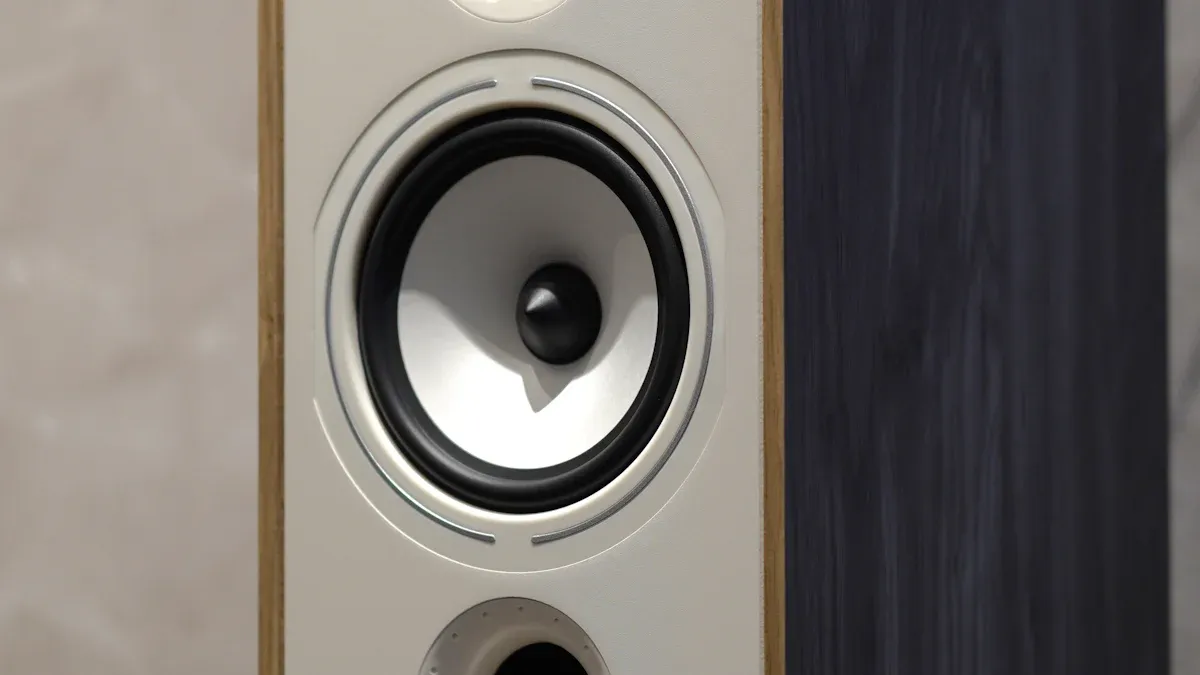
Full-range speakers use one driver for all sounds. You will not see a woofer or tweeter in these speakers. The single driver tries to play both low and high notes. This makes the speaker smaller and easier to use. You can look at the table below to compare full-range speakers and coaxial speakers:
|
Feature |
Full-Range Speakers |
Coaxial Speakers |
|---|---|---|
|
Speaker Configuration |
Single speaker for all frequencies |
Multiple speakers (tweeter + mid-bass) |
|
Sound Source |
Transparent sound |
Point sound sources |
|
Frequency Response |
Wide frequency response |
Improved bandwidth due to multiple drivers |
|
Price |
Generally cheaper |
Typically more expensive |
Full-range speakers cost less and have a simple design. Not every full-range speaker is coaxial. Coaxial speakers use more than one driver. Full-range speakers use only one driver.
How They Work
A full-range speaker uses its one driver to make all sounds. The driver moves to create deep bass and sharp treble. This makes setup easy for you. One driver cannot always play every sound perfectly. You might hear weaker bass or less clear highs. Some full-range speakers can have sound problems like Doppler Distortion. This happens when the driver tries to play many sounds at once.
Note: Coaxial speakers give more balanced sound because they use more than one driver. Full-range speakers are simple and cost less.
Typical Uses
Full-range speakers are used in many places. They work well in stores and public spaces. You also see them in TVs, computer speakers, and multimedia loudspeakers. Some hi-fi systems use full-range drivers for pure sound. These speakers are good when you want a simple setup and need to save space. You can install them easily and use fewer parts.
-
Stores and public spaces
-
Multimedia speakers and TVs
-
Computer speakers
-
Hi-fi systems
-
Small rooms or places with little space
Full-range speakers let you enjoy music without a hard setup.
Coaxial vs Full-range: Key Comparisons
Sound Quality
You want your music to sound clear and full. Coaxial speakers use more than one driver in a single unit. This design helps them play both high and low sounds with better detail. You hear vocals and instruments more clearly because each driver handles a different part of the music. Full-range speakers use one driver for all sounds. This makes them simple, but sometimes the sound is not as sharp or deep. You may notice that full-range speakers give a good balance for everyday listening. They cover a wide range of sounds, but they can struggle with deep bass or very high notes. Audio tests show that smaller full-range drivers can start to distort at lower frequencies, especially around 300 Hz. This means you might hear less clear sound when you turn up the volume.
Tip: If you want clear music with strong highs and lows, coaxial speakers give you better detail. Full-range speakers work well for simple setups and background music.
|
Speaker Type |
Frequency Response |
Sound Clarity |
|---|---|---|
|
Full-Range |
20 Hz to 10,000 Hz |
Good overall balance |
|
Coaxial |
20 Hz to 20,000 Hz |
Better clarity at all frequencies |
Installation
You may want to install your speakers yourself. Coaxial speakers make this easy. You can put them in your car or home in about 20 to 45 minutes. You only need basic tools. You just remove the old speakers and connect the new ones using the same wires. This makes them a great choice if you are new to audio upgrades. Full-range speakers also install easily because they have one driver. You do not need to worry about extra parts. Both types fit into factory locations, so you do not need to change much.
-
Coaxial speakers: Quick and easy installation, perfect for beginners.
-
Full-range speakers: Simple setup, no extra wiring needed.
Note: If you want a fast upgrade, coaxial speakers save you time and effort.
Cost and Value
You may wonder how much you need to spend. Coaxial speakers usually cost less. They give you good sound without a big price tag. Full-range speakers can cost more, especially if you want better sound quality. You get what you pay for. If you want a budget-friendly option, coaxial speakers are a smart pick. If you want to invest in higher sound quality, full-range speakers may cost more but can offer richer sound.
|
Speaker Type |
Price Range |
|---|---|
|
Coaxial |
Budget-friendly |
|
Full-range |
Higher investment |
Tip: Think about your budget and what matters most to you—sound quality or saving money.
Customization
You may want to change how your music sounds. Coaxial speakers come as one unit. This makes them easy to use, but you cannot change much about the sound. You get balanced music, but not many options to adjust it. Full-range speakers also have limited customization because they use one driver. If you want to control every part of your sound, you need component speakers. These let you place woofers, tweeters, and crossovers where you want. You can make your music sound just right, but the setup is harder and takes more time.
-
Coaxial speakers: Easy to use, limited ways to change sound.
-
Full-range speakers: Simple, but not much room for custom sound.
-
Component speakers: Best for advanced users who want full control.
If you want a simple setup, choose coaxial or full-range speakers. If you want to fine-tune your audio, look into component systems.
Pros and Cons
Coaxial Speakers
Coaxial speakers give you many good things. These speakers put different drivers together in one unit. This saves space and makes them easy to install. You do not need extra wires or special tools. You can upgrade your car or home sound system fast. You also spend less money than buying separate speakers.
Here are the main good points:
-
Easy to put in
-
Small size
-
Good sound for most people
-
Low price
There are some things that are not so good. Coaxial speakers do not let you change your sound much. You cannot move the drivers or pick where they go. You may not get the best sound if you want to adjust everything. Some types may not work well with high power.
Main bad points:
-
Not much you can change
-
Less control over sound
-
May not be best for music fans
Tip: If you want an easy upgrade and balanced sound, coaxial speakers are a good choice.
Full-range Speakers
Full-range speakers use one driver for all sounds. This means you get a simple setup with fewer parts. You do not need a crossover, so your amplifier works better with the speaker. You hear sound from one spot, which can make music feel real. Many people say these speakers are very sensitive and work well.
Here is a table that shows the main good and bad points:
|
Advantages |
Disadvantages |
|---|---|
|
No crossover design |
Not as wide frequency range |
|
Better amplifier control |
|
|
Point source sound |
|
|
High sensitivity |
|
There are some problems too. Full-range speakers cannot play deep bass or sharp highs as well as other types. You may hear less detail in your music. These speakers are best for small rooms or background music.
Note: Full-range speakers are simple and work well, but you may not get the richest sound.
Choosing the Right Speaker
For Casual Listeners
If you want a simple way to enjoy music or movies, you should look for speakers that are easy to set up and use. Many casual listeners prefer speakers that do not need extra equipment or complicated wiring. You can choose from these options:
-
Active speakers have built-in amplifiers. You do not need to buy anything extra. You just plug them in and start listening.
-
Bookshelf speakers are small and fit well in bedrooms or living rooms. They give you clear sound without taking up much space.
-
Both types offer balanced sound and work well for most music and TV shows.
Tip: If you want quick setup and good sound, active or bookshelf speakers make life easier.
For Audiophiles
If you care about every detail in your music, you want the best sound possible. Audiophiles often look for speakers that let them hear every note and beat. You should consider:
-
Component speakers give you rich, detailed sound. Each part handles a different range of sound, so you hear clear highs and deep lows.
-
These systems let you adjust each speaker for the best performance.
-
You can fine-tune your setup to match your room and taste.
Audiophiles enjoy customizing their sound. Component speakers help you get the most out of your music.
For Custom Installs
Some people need speakers for special spaces, like cars or small rooms. You might want a setup that fits tight spots or matches your style. In these cases:
-
Coaxial speakers are easy to install. You can put them in small places, like car doors, without much trouble.
-
They work well if you want a fast upgrade and do not want to hire a pro.
-
Full-range speakers may need more work to install and might not fit every space.
Choose coaxial speakers for quick, simple installs in tight areas.
Key Questions to Ask
When you pick a speaker, think about what matters most to you. Do you want easy setup, or do you want the best sound? Full-range speakers give you clear vocals and simple upgrades. They work well if you want better sound without extra parts. If you want more control or better detail, look at component or midrange speakers. These give you cleaner sound for voices and instruments.
Ask yourself: Where will you use the speakers? How much space do you have? Do you want to adjust your sound, or do you want something simple? Your answers will help you find the right speaker for your needs.
Coaxial speakers are easy to put in and sound balanced. Full-range speakers have a simple design but might not sound as clear. Knowing these differences helps you pick the right speaker. You will not choose one that does not fit your car. You will not miss the sound quality you want.
|
Feature |
Coaxial Speakers |
Full-range Speakers |
|---|---|---|
|
Installation |
Easy to install |
Super easy to install |
|
Sound Quality |
Balanced sound |
Basic sound |
|
Cost |
Low price |
Cheap price |
If you want to learn more, look for guides about speaker placement. You can check books like ‘Sound Systems: Design and Optimization.’ You can also find custom options from brands like ZEH Audio for the best fit.
FAQ
What is the main difference between coaxial and full-range speakers?
You will find that coaxial speakers combine a woofer and tweeter in one unit. Full-range speakers use only one driver for all sounds. This design affects sound quality and installation.
How do you define coaxial and full-range speakers?
Coaxial speakers have two or more drivers built together. You get a woofer for bass and a tweeter for highs. Full-range speakers use one driver to play all frequencies. This makes them simple and compact.
What are the main strengths and weaknesses of each type?
|
Speaker Type |
Strengths |
Weaknesses |
|---|---|---|
|
Coaxial |
Easy install, clear sound |
Less customizable |
|
Full-range |
Simple, low cost |
Weaker bass and highs |
Where should you use coaxial or full-range speakers?
You should use coaxial speakers in cars or small rooms. They fit tight spaces and upgrade sound easily. Full-range speakers work well in public spaces, TVs, or computers where you need simple audio.
How do you choose the right speaker for your needs?
Think about your space, budget, and sound quality needs. If you want easy setup and balanced sound, pick coaxial. If you want simple design and lower cost, choose full-range. For custom solutions, check out ZEH Audio’s options.