

You make sound better when you use collaborative design for speaker PCBA and acoustic systems. Collaborative design helps you find problems early and makes building easier. You get better results when electrical and acoustic engineers work together from the start. Prototyping lets you try out ideas, and simulation shows how designs work before building. Collaborative design brings your team together to fix problems and make good speaker systems. You have more control over how things work with collaborative design, so you can always meet high standards.
Key Takeaways
-
Collaborative design helps speaker systems by making engineers work together. Start talking early to find problems and set clear goals.
-
Use prototyping and simulation tools to test ideas first. This saves time and helps you make sound better with small changes.
-
Design the PCB and enclosure at the same time to get better sound. Think about where parts go to stop noise and get good results.
-
Make shared goals using the SMART rules. Meet often to keep the team working together and excited, so results are better.
-
Control costs and make things last by using energy-saving systems and smart tech. Test often to find problems early and make speakers last longer.
Principles of Collaborative Design
Early Team Communication
You make speaker system design better when you talk early. Electrical and acoustic engineers must work together from the start. This way, you set clear noise and vibration targets. You can check if your ideas will work before building. Early teamwork helps you keep working together and makes fewer mistakes. You do not need to redo things when you share information and fix problems as a team.
You can use different ways to help early communication:
-
Use tools that let both teams see the same data.
-
Make data-sharing easy with dashboards or alerts.
-
Help clear communication by bringing in procurement early.
-
Build a smart part and supplier selection process with a database of pre-approved components.
These ways help everyone stay informed and make choices faster. You build trust and make teamwork stronger.
Shared Performance Goals
You need shared performance goals to lead your team. Clear communication helps you set these goals. When all team members help set goals, they care more. You can use the SMART criteria to make goals specific, measurable, achievable, relevant, and time-bound. This method gives you targets you can use.
Regular check-ins and team-building activities keep your team on track. You use these ways to watch progress and change plans if needed. Everyone knows what to aim for, so you get better results. Teamwork is easier when you agree on goals and check success together.
Tip: Have regular meetings to look at goals and celebrate progress. This keeps your team excited and helps speaker system performance.
Integration Techniques for Speaker Systems
PCB and Enclosure Co-Design
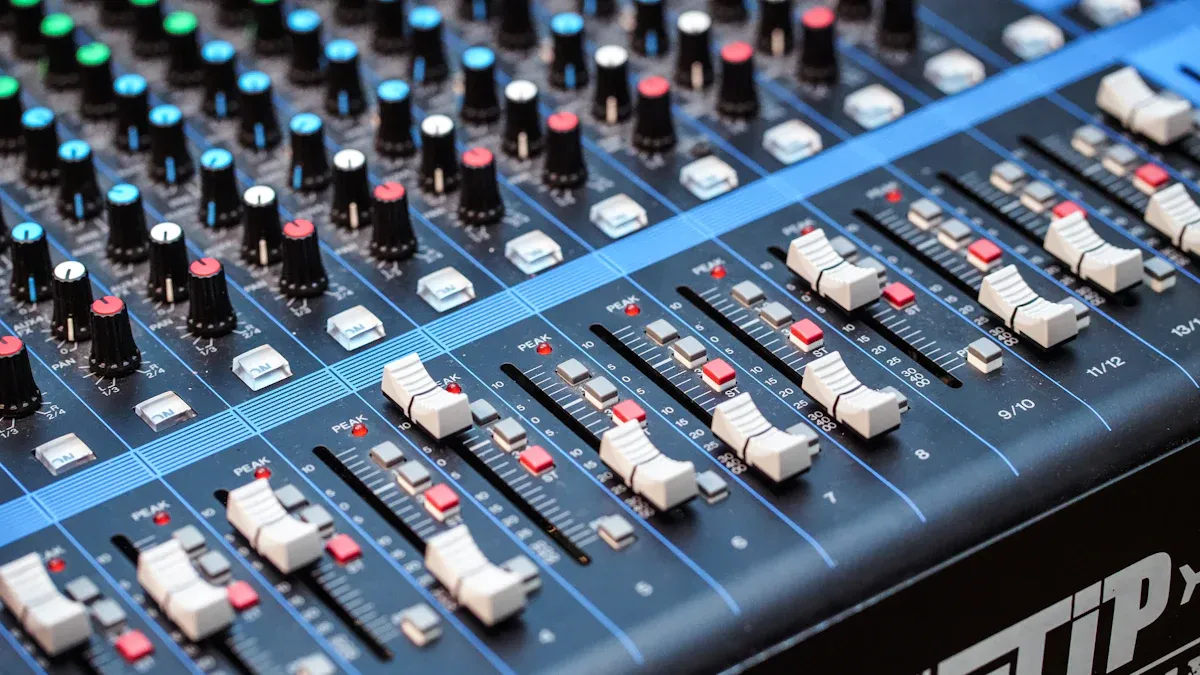
You improve sound when you design the PCB and the enclosure together. The PCB holds the electronic parts that control the loudspeaker. The enclosure shapes the air and supports the cone, magnet, and voice coil. You must think about both at the same time. If you place the PCB too close to the magnet, you can get noise. If you make the enclosure too small, you lose bass. You need to balance space for the PCB and the air volume for the loudspeaker. You also need to plan where to put wires and connectors so they do not block the sound path.
You can use 3D models to see how the PCB fits inside the enclosure. You can test how the shape of the box changes the acoustic characteristics. You get better results when you share these models with your team. You can change the design before you build anything. This saves time and helps you avoid mistakes.
Custom Crossovers and Frequency Response
You use crossovers to send the right sounds to the right loudspeaker parts. A crossover splits the audio signal into bass, midrange, and treble. Each part of the loudspeaker works best with a certain range of sound. You get better sound when you design custom crossovers for your system. Custom crossovers help you match the loudspeaker to the room and the type of music.
Here is how custom crossovers affect sound quality:
|
Evidence |
Description |
|---|---|
|
Frequency response |
Shows how well the loudspeaker plays bass, midrange, and treble. You can see if any sound is too loud or too soft. |
|
Speaker design |
Works best when you match each loudspeaker to a special range of sound. Custom designs make the sound clear and balanced. |
|
Dual speaker systems |
Use more than one loudspeaker, like a tweeter and a woofer. This setup gives you better sound because each part plays what it does best. |
You can test the frequency response with special microphones and software. You can change the crossover parts to get the sound you want. You can use psychoacoustics to check how people hear the changes. You get the best results when you listen and measure at the same time.
EMI and Signal Integrity
You must keep your audio signal clean. Electromagnetic interference (EMI) can add noise to your sound. You can use these best practices to protect your loudspeaker systems:
-
Use shielded cables to block outside noise.
-
Keep audio cables away from power cables.
-
Do not run audio cables near motors or electrical panels.
-
Ground all your audio parts the right way.
-
Add ferrite beads to cables to stop high-frequency noise.
-
Use separate power for sensitive audio equipment.
-
Pick good equipment and install it with care.
-
Use metal boxes or special enclosures in noisy places.
You can test for EMI by listening for hums or buzzes. You can use meters to check for signal loss. You get better sound when you follow these steps. You also make your loudspeaker design more reliable.
Thermal and Mechanical Constraints
You must keep your loudspeaker cool and strong. The voice coil and magnet can get hot when you play loud sounds. If you do not manage heat, you can damage the loudspeaker. You can use heat sinks or vents to move heat away from the coil. You can pick materials that do not melt or warp.
You also need to make sure the loudspeaker does not shake or rattle. You can use strong screws and thick panels. You can test the system by playing loud sounds and feeling for movement. You can use psychoacoustics to see if people hear any unwanted noise. You get the best sound when you control heat and movement.
You must think about all these things together. You get the best results when you design the PCB, enclosure, crossovers, and cooling as one system. You can use loudspeaker arrangements to test different setups. You can use psychoacoustics to check how people feel about the sound. You can measure the acoustic characteristics to see if your design works. You build better speaker systems when you use these integration techniques.
Prototyping and Simulation Tools
Iterative Prototyping Methods
You improve your speaker system when you use prototyping. Prototyping lets you test your ideas and fix problems before you finish your design. You can hear how your sound changes with each new version. This helps you find the best way to get clear sound. You can use these methods to make your work faster and better:
-
Optimize your design for prototyping. A good plan helps you avoid mistakes and makes testing easier.
-
Use quick turn PCB fabrication. This lets you test many versions of your audio system without waiting long.
-
Try online PCB services. These services help you order parts and check your design quickly.
-
Speed up prototype assembly. Fast assembly means you can test your sound sooner and make changes right away.
When you build and test many prototypes, you find errors early. You learn from each test and improve your sound step by step. This process saves you time and helps you avoid big problems later. Regular testing gives you a way to measure your sound and make sure your audio system works well.
Simulation Platforms for Audio Design
Simulation tools help you see how your sound system will work before you build it. You can use platforms like COMSOL Multiphysics to model complex sound interactions. These tools let you test your audio design in a virtual space. You can see how sound waves move and how your speaker parts affect the sound.
Many companies use simulation to make unique speaker systems. For example, SFX uses COMSOL to test different materials and shapes. This helps them get the best sound for each design. Simulation tools also predict how sound will fill a room and how long it will echo. You can use other tools like EASE 5, Odeon, CATT Acoustics, and Treble. These platforms let you compare different designs and share results with your team.
Simulation makes your work faster and more accurate. You can fix problems before you build anything. You get better sound and save money by using these tools in your audio projects.
Listening Room Design and Testing
Room Acoustics and Speaker Placement
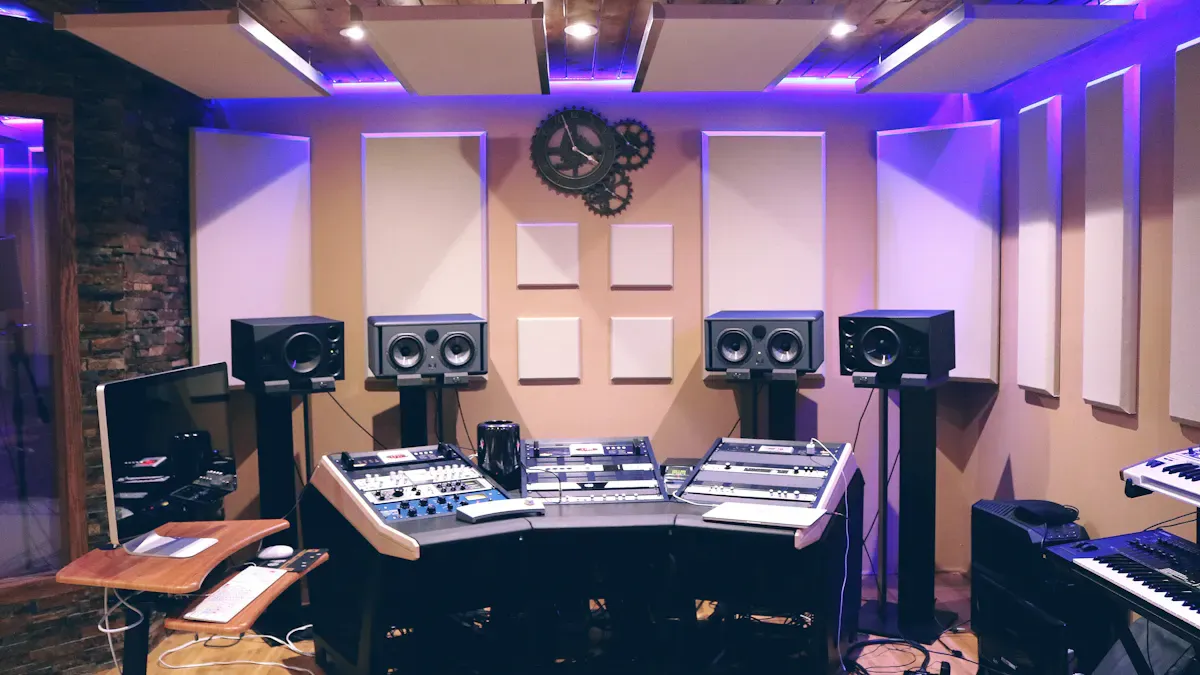
You can change how music sounds by designing your listening room. The way your room is built affects every note you hear. When you set up a special listening room, you hear new details in songs. You notice things like texture, changes in loudness, and pitch more clearly. The kick drum sounds sharper, and you can tell how it works. Songs you know sound different, and you hear bass and quick changes better.
You can make your room sound better by moving your speakers around. Try putting them in shapes like triangles or other setups. Put your speakers the right distance from walls to stop SBIR problems. Use subwoofers to make the bass stronger and keep the sound clear. Pick the best spot for listening and place your speakers for the best effect. Make a spot with no echoes around where you sit to stop sound problems. Put special panels on walls and ceilings to soak up sound that bounces back. Find out where sound reflects by using the rule that the angle it hits is the angle it bounces. Put panels at ear level to work best. Use bass panels in corners and edges to control deep sounds.
Tip: You get the best sound when you put your speakers in the right place and use good sound panels.
Performance Measurement and Refinement
You check and improve your speaker system in real rooms to get great sound. Use impedance meters to check the voice coil’s resistance. Sound level meters help you see how loud your speakers are and what sounds they play. Special tools measure how far the speaker moves, how it stops moving, and how strong the magnet is. You listen closely and use these tools to find ways to make things better.
You test your speaker in your listening room and move things or add panels if you need to. You check again and listen to see what changed. Doing this helps you get the best sound from your system. You feel sure about your design and enjoy music that is clear and deep.
Overcoming Common Challenges
Resolving Electrical vs. Acoustic Conflicts
It is hard to balance electrical and acoustic needs. Sometimes, you want clear sound, but the electrical parts stop you. You can use equalization to change how the sound feels. Graphic and parametric EQs let you control different sound parts. You can fix the tone and solve problems from the room or speaker.
It is important to manage reverberation time. You use acoustic treatments and move speakers to keep sound clear. You control echoes by using panels that soak up or spread sound. These panels help stop feedback and make listening better. Hybrid panels can fix problems with certain frequencies. This helps match the electrical output to the room.
Here is a table with common problems and ways to fix them:
|
Challenge |
Solution |
|---|---|
|
Collaboration Efficiency and System Overhead |
Use low-latency routing and parallel processing for smooth, fast sound. |
|
Cost of Inter-Model Communication |
Compress data and use smart protocols for efficient, reliable systems. |
|
Inter-Model Consistency and Compatibility |
Use real-time style alignment to keep sound the same across models. |
|
Alignment of Model Knowledge Scope |
Use knowledge fusion and conflict resolution for accurate listening. |
Tip: Try different EQ settings and panels to find the best sound.
Managing Cost and Reliability
You want your speaker system to last and not cost too much. You can use energy-saving ideas to lower costs and help your equipment last longer. Variable Air Volume systems save energy and keep your system cool. You put thermostats in smart places and split your space into zones. This keeps the listening area comfy and efficient.
You can use Building Management Systems to watch your speaker system in real time. These systems help you track use and find ways to save money. You make your design strong by picking good materials and testing your speaker often. You check for problems and fix them before they get big.
Here are some ways to manage cost and reliability:
-
Use energy-saving systems to keep your speaker cool and working well.
-
Put thermostats and zone spaces for better comfort.
-
Use smart tech to watch and improve your sound system.
-
Test your speaker often to catch problems early.
You build a speaker system that sounds great and lasts a long time. You make listening easy and fun for everyone.
You make speakers work better when you use collaborative design. You help people listen closely by making systems that let them focus on each mixer channel. You give everyone a way to share ideas and check music choices together. The table below lists important ways to make sound and listening better:
|
Technique |
Description |
|---|---|
|
Support Critical Listening |
Make it easier to listen to one mixer channel at a time. This helps people check sounds closely and do a better job listening. |
|
Provide Shared Interfaces for Enacting Ideas |
Let many people use the same workspace with different devices. This helps everyone work together and control the music as a group. |
|
Provide Systems for Reviewing Musical Choices |
Use project tools to keep track of music work. These tools help groups compare choices and manage versions from different sessions. |
You get strong, good products when you start working together early. Prototyping helps you save time and money. Simulation lets you see how sound will fill your room before you build. Digital twins help you watch sound and compare setups after you install them. You find problems like heat early and use feedback to make things work better. Machine learning looks for patterns in sound and guesses how changes will affect what you hear.
You make the best sound when you think about how people use your system and what they want. You use easy rules and strong parts. You use AI to help control the system and watch sound in the room. You make listening simple and fun for everyone.
Keep learning about how to design audio systems together. You make better sound and places to listen when you use these smart ideas.
FAQ
What is the main benefit of collaborative design for speaker systems?
You get clearer sound and make fewer errors. When electrical and acoustic teams work together, they find problems early. This teamwork helps speakers last longer and sound better.
How do you test speaker designs before building them?
You use simulation tools and build prototypes. Simulation shows how sound moves in the system. Prototypes let you listen and measure real results. You can fix mistakes before making the final speaker.
Why does speaker placement matter in a room?
Where you put speakers changes how music sounds. Good placement lets you hear more details and less echo. You can move speakers and use panels to get the best sound.
What tools help you measure speaker performance?
You can use:
Sound level meters
Impedance meters
Special microphones
These tools help you check how loud, clear, and balanced the sound is. You can use these measurements to make your design better.