
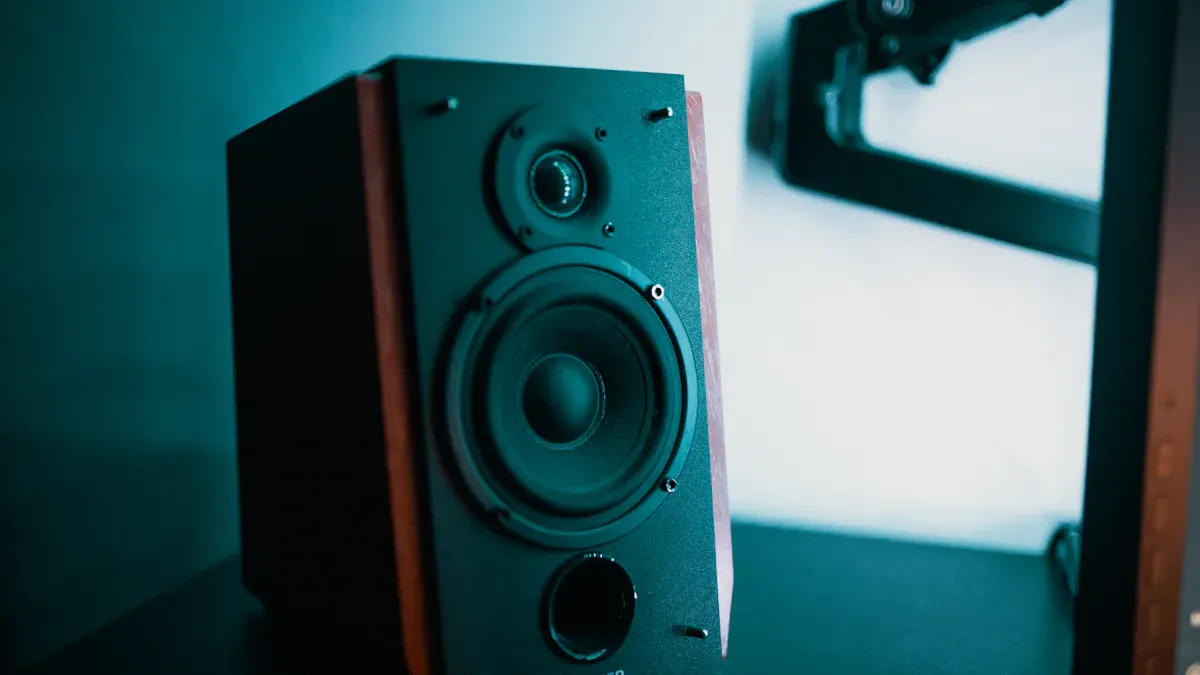
You can optimize the structure of the speaker to stop unwanted resonance. This reduces extra vibrations in speakers and enhances sound quality. A strong speaker housing delivers clear sound. You hear more details when you optimize the structure for better quality. If you want clear sound anywhere, focus on how you optimize the structure of the speaker. You can achieve better sound by changing how you build or fix the speaker. When you optimize the structure, you improve sound and performance in any room.
Key Takeaways
-
Make the speaker housing better to stop extra shaking and make sound clearer.
-
Pick good materials for speaker boxes to help sound and stop shaking.
-
Put braces inside the speaker box to make it stronger and cut down on sound changes.
-
Make sure the speaker box fits the drivers for smoother sound.
-
Try out your speakers in the real room to find the best spot and sound settings.
Why Structure Affects Performance
Resonance and Vibrations
You must control resonance and vibrations for good sound. When music plays, energy from the drivers shakes the cabinet. This shaking is called “cabinet talk” and it makes extra noise. You might hear strange sounds, lose details, or get distortion. These problems make it tough to hear clear music. L-Acoustics found that the size, shape, and vent design change resonance. Modal analysis helps you measure shaking and find ways to stop it. You can use strong mounting surfaces, isolation pods, or damping materials to block vibrations. These steps keep the sound clean and help the frequency response.
Frequency Response
The speaker housing changes the frequency response curve. If you want true sound, look at the size and shape of the box. Bigger speakers often have better bass, but design matters for all sizes. The materials and how you build the box can help, especially for small speakers. When you match the box to the drivers, the frequency response gets smoother. This lets you hear every part of your music, from bass to highs. Good design also cuts down on echo and keeps the sound even in your room.
Acoustic Interference
Acoustic interference happens when sound waves bounce inside the box. This can cause echo and mess up the frequency response. You can use bracing, non-parallel walls, and good grounding to fix this. Bracing splits the box into smaller parts and stops extra echo. Cross bracing links the walls and makes the box stronger. You should also avoid ground loops and electromagnetic interference, since these add noise. By stopping echo and interference, your speakers sound better in any room.
Key Elements to Optimize the Structure
Material Choice and Acoustic Transparency
You must pick good materials for your speaker housing. Acoustically transparent cloth lets sound go through easily. High-quality fabrics keep the sound clear at high frequencies. These fabrics are great for speaker covers and panels. They do not block or change much sound. Using these materials helps your speakers sound right in any room.
Steel mesh is another choice for speaker housing. It looks modern and protects the speaker well. This is good for fancy speakers. But steel mesh can make sound a little less clear. You should think about the good and bad sides before you pick grille cloth or steel mesh.
|
Material |
Advantages |
Disadvantages |
|---|---|---|
|
Steel Mesh |
Modern look, strong, good for fancy speakers |
Might make sound less clear |
|
Grille Cloth |
Keeps sound clear, little interference |
Not as strong as steel mesh |
ZEH Audio uses special materials in their custom speaker boxes. Their team picks fabrics and meshes that keep sound pure and strong. This helps you get the best sound from your speakers anywhere.
Internal Bracing
You can make sound better by adding braces inside your speaker box. Bracing makes the box stronger and splits it into smaller parts. This change makes the box shake less and raises the resonant frequency. Baltic Birch braces help a lot with less shaking and ringing. Your speakers will sound clearer and more correct.
ZEH Audio builds boxes with strong bracing inside. Their designs help stop cabinet talk and keep sound sharp. You get better sound and steady performance in every room.
Shape and Size
The shape and size of your speaker box change how your speakers sound. Sealed boxes give tight bass, but need to be bigger for deep bass. Ported boxes make bass louder by letting air move in and out. They also need more space. Transmission line and horn-loaded boxes need even bigger designs for the best sound.
Curved shapes help stop echoes and standing waves inside the box. Picking the right shape and size gives smoother tuning and better sound. ZEH Audio makes custom shapes and sizes for your needs. This helps your speakers work well in any room.
Damping Materials
You should use damping materials inside your speaker box to stop shaking and make sound better. Good damping can make bass clearer by 73%. It can raise dynamic range by 12dB. It can cut distortion by 85%. It can make frequency accuracy better by 91%.
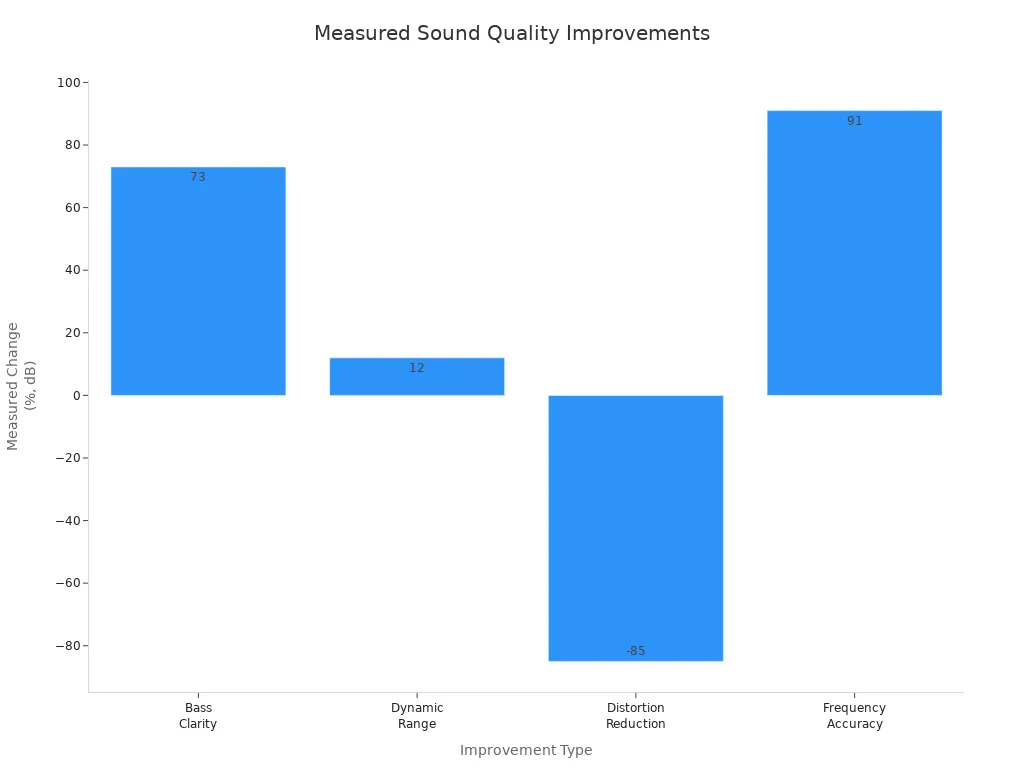
Adding damping stops unwanted echoes and makes sound more correct. ZEH Audio uses top damping in their speaker boxes. This helps you get the best sound and tuning for your speakers, no matter where you use them.
Driver and Crossover Matching
You must match your drivers and crossovers to your speaker box for the best sound. The box changes how drivers work, so you need to design the crossover for this. If you skip this step, you can get bad sound and uneven frequency response.
The baffle step effect shows how the box changes sound. You can fix this in the crossover network. If you do not match impedance, the crossover may not work right and sound will be worse.
ZEH Audio’s engineers help you match drivers and crossovers to each box. Their custom tuning makes sure your speakers sound clear and balanced everywhere.
Tip: Always test your speakers in the room where you will use them. Room acoustics change how sound moves, so final tuning is important for the best results.
By focusing on these key parts—material choice, bracing, shape and size, damping, and driver-crossover matching—you can build or pick speaker boxes that sound great. ZEH Audio’s skills in these areas help you get the best results for your products and clients.
Ported Enclosure and Other Designs
Sealed vs. Ported Enclosures
You need to understand how enclosure design changes the sound of your speakers. A ported enclosure uses a vent or port to let air move in and out. This design boosts low-frequency sound and makes bass louder in your listening space. You get more volume with less power when you use a ported enclosure. Many engineers choose this type for large rooms or when you want deep bass. Sealed enclosures keep all air inside. They give you tight and punchy sound. Some listeners prefer this for music with fast beats. You should think about your listening needs and the room size before you choose between a ported enclosure and a sealed one. If you want strong bass for movies or large spaces, a ported enclosure works well. If you want clear and quick sound for music, a sealed enclosure may fit better.
Bass Response and DSP
You can use digital signal processing (DSP) to improve the bass response of your speakers. DSP adds filters that protect your woofers from moving too far. It also helps control power below the tuning frequency of your ported enclosure. You can use DSP to make the frequency response flat. This means you hear the same sound level across all notes. DSP helps you get the best sound from your speakers in any room. You can adjust settings to match your listening space and your enclosure volume. Many audio brands use DSP to give you strong and clean bass, even in challenging rooms.
Tip: Try different DSP settings during listening tests. You can find the best sound for your speakers and your room.
Port Placement
You must place the port in the right spot to get the best sound from your ported enclosure. Keep the port away from walls and other surfaces. This reduces air noise and gives you stronger bass. Both ends of the port should have flared edges. This shape cuts down on chuffing and makes the sound smoother. Experts suggest that the vent opening should be at least twice the diameter of the port away from any surface. This keeps the tuning frequency stable, even at high volume. You can add a radius or flare to the port edges for better performance. Careful port placement helps your speakers deliver clear bass in any listening room.
|
Port Placement Tips |
Why It Matters |
|---|---|
|
Keep port away from walls |
Reduces turbulence and boosts bass |
|
Flare both port ends |
Cuts air noise and smooths sound |
|
Use proper distance |
Keeps tuning stable at high output |
When you focus on creating a ported enclosure with the right port placement and use DSP, you can achieve powerful and accurate sound. This approach helps you meet the needs of different listening rooms and speaker designs.
Practical Steps to Improve Acoustics

Optimizing Dimensions
You can make your room sound better by picking the right speaker box size. First, measure the spot where you want to put your speakers. Choose a box size that fits your room well. This helps stop bad sound waves and loud spots. Make sure both speakers are the same distance from the walls. This gives you balanced sound in your room. The shape of the box matters too. If the inside walls are not parallel, you get less echo. ZEH Audio helps people pick the best box size for their rooms and needs.
Applying Damping Solutions
You can use special materials to make your speakers sound better. Aerogel composites soak up most bass sounds. Multi-density foam works for many sounds and absorbs a lot from low to high notes. Synthetic polymer fibers and composite barriers also help stop noise and shaking. Phase-change materials change to fit your room. You should find where your box shakes the most using sound tools. Put different materials in those spots to fix certain sounds. ZEH Audio helps you choose and use these materials for your projects.
Reducing Internal Reflections
You can stop echoes inside your speaker box by finding spots where sound bounces first. Put soft materials there to control the sound. Add a ceiling cloud in your room to fix echoes from above. Place your speakers so they match your room and cut down on messy sound. Use sound treatments on walls and ceilings to make echoes shorter. ZEH Audio helps with everything from design to making sure your speakers sound clear in any room.
Tip: Try your speakers in the room you will use them. Move them and change sound treatments to get the best sound.
Common Mistakes to Avoid
You should watch out for mistakes when picking or designing speakers. These mistakes can make your speakers sound bad. If you pay attention, you get better sound in any room. Your enclosure will help you hear music clearly.
Poor Material Selection
Some people pick the wrong materials for their speaker box. They might choose a box that does not fit their speaker size. This can cause distortion and bad sound. If you use weak materials or build the box poorly, you get extra vibrations. These vibrations make the sound unclear. People sometimes forget about the enclosure type, which changes bass and overall sound. You must match the enclosure and driver for the best sound. Ask a speaker designer for help if you are not sure.
Common material mistakes include:
-
Picking a box that is too small or too big for your speaker
-
Not thinking about how thick or dense the box walls are
-
Forgetting to choose the right enclosure for your room
Insufficient Bracing
If you do not use enough bracing inside your box, you will hear bad vibrations. These vibrations can move the resonance frequency into a range that hurts your sound. Some people hear sharp resonances between 330 and 800 Hz when bracing is missing. This makes your sound distorted and your room acoustics worse. Always use strong bracing to keep your box steady.
Tip: Put cross bracing in your box to stop panel movement and make sound clearer.
Incorrect Porting
Wrong porting can mess up your speaker’s bass. If you put the port too close to a wall or use the wrong size, you get air noise and weak bass. The port needs flared edges and enough space to work well. Always check where you put the port and how big it is for your box and room.
|
Porting Mistake |
Effect on Sound |
|---|---|
|
Port too close to wall |
Air noise, weak bass |
|
Wrong port size |
Bad tuning, distortion |
Neglecting Damping
If you skip damping materials inside your box, your sound gets worse. You need the right thickness and density to control sound. If you do not use insulation or leave gaps, you will hear distortion. Using the wrong material, like MDF instead of soundproof foam, gives bad results. Bass needs special care so you do not miss important sound control. Always seal gaps tight and use good damping for the best sound.
Note: Good damping helps your speakers give clear sound in any room. Test where you put your speakers and change materials if needed.
If you avoid these mistakes, your speakers will work better. You will enjoy great sound in every room.
You can make sound better in any room by changing your enclosure. First, put your enclosure in the best place for listening. Add panels to stop sound from bouncing too much. Use good materials so the sound stays balanced. Curved ceilings help spread sound all over the room. Try your enclosure in different spots to see what sounds best. Keep making small changes to your enclosure and room for better sound each time.
FAQ
What is the best speaker housing material for clear sound?
You should choose dense wood or high-quality composite for your speaker housing. These materials reduce unwanted vibrations. You get better sound in any listening space. Always test your speakers in the actual room for the best results.
How does speaker placement affect sound in a room?
You should place speakers at ear level and away from walls. This setup gives you balanced sound during listening. Try different spots in your room. Move your speakers until you hear the clearest sound for your listening needs.
Why do I need internal bracing in my speaker housing?
You need internal bracing to stop the box from shaking. Bracing keeps the sound clean during listening. It also helps your speaker work well in any room. You get less distortion and more accurate sound.
How can I reduce echo in my listening room?
You can add soft panels or carpets to your room. These materials absorb sound and reduce echo. Place your speakers and furniture to break up sound waves. This setup improves your listening experience.
Does the size of the speaker box change the listening experience?
Yes, the size of your speaker box changes how you hear music in your room. A larger box gives deeper bass during listening. You should match the box size to your room for the best sound.