
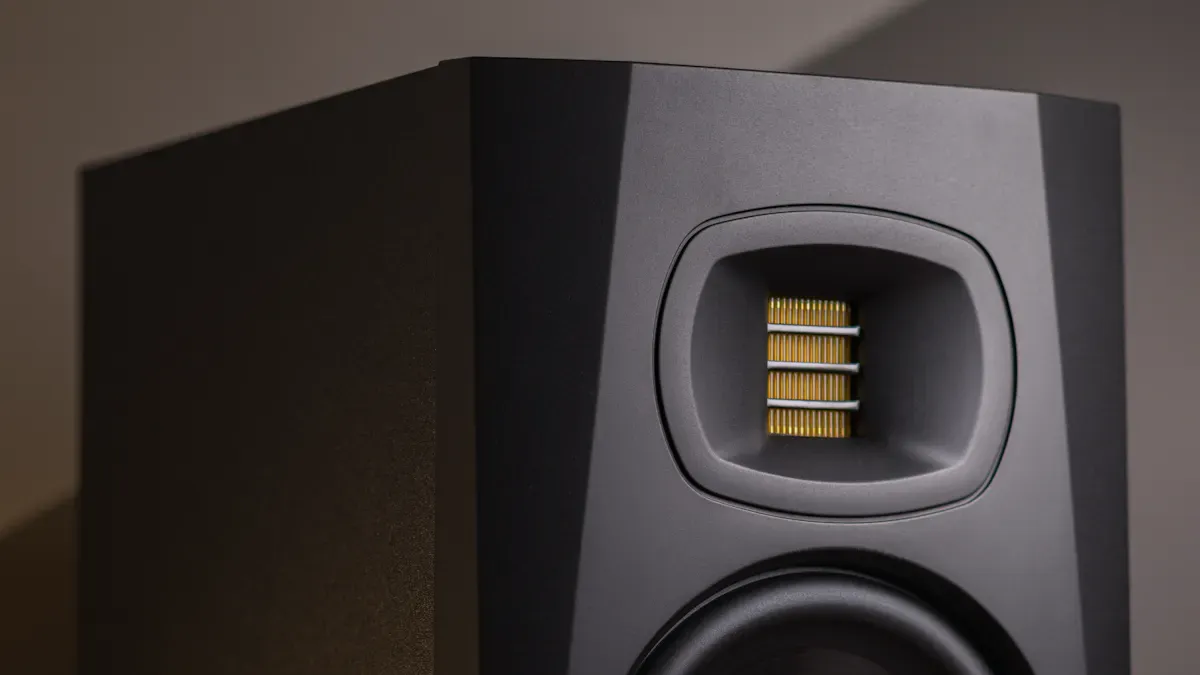
You need to follow a clear plan to ensure that speaker customization meets both quality and safety standards. Good communication helps you avoid confusion. Careful design and selecting the right materials prevent problems from arising. Testing everything checks for mistakes.
Important things to check are if the finish looks the same, if the color matches, and if it lasts long. These steps help you create speakers that not only work well but also prioritize quality and safety.
Key Takeaways
Make clear goals for your speaker project. This helps your team stay on track. It also helps everyone work well together.
Write down all the details about what you want. A good plan helps guide your project. It makes sure everyone knows what to do.
Ask clients for feedback often. Listening to clients helps you make the product better. It also helps you find and fix problems early.
Pick strong materials for your speaker. Good materials make the speaker last longer. They also help it sound better and stay safe.
Test your prototypes a lot before making many speakers. Early tests help you find problems. They make sure your design is what you want.
Defining requirements and communication
Demand analysis and goal setting
First, you need to know what you want from your speaker project. Setting clear goals helps your team stay on track. When everyone knows the goals, they work together better. Using OKRs or SMARTER makes things more organized. These tools help you avoid confusion. If goals are not clear, teams can fail.
Tip: Write your goals down and share them with your team. This helps everyone know what to do and lets you see how you are doing.
Goals help your team stay on task.
Clear goals make people want to work harder.
Using frameworks helps you handle changes.
Working together means everyone does their part.
Specification documentation
You need a detailed document to guide your project. This paper lists what you want, who does what, and how things should work. It also talks about data and keeping it safe, which is important for rules and understanding. User stories explain what you need in simple words. They help you remember what is needed during the project.
Note: Good measurements and details are important for speaker design. Use good tools to check speaker responses and impedance.
Find out how you will use the speaker, what it needs to do, what it is made of, and how it looks.
Guess the cost based on what you need.
Make sure the design is right before you start making it.
Add details about transducers, drivers, and crossovers.
A good document helps you make sure everything is clear and can be checked. This helps you keep quality and safety high.
Ongoing client feedback
You make your speaker better by listening to what clients say. When clients give feedback, you can test and change the product. For example, you can use real ear tests to check sound and fit. If clients find problems, you can fix them by changing the fit or vents.
Feedback helps you find mistakes and make clients happier.
Feedback makes sure the fit and sound are right.
Testing uses feedback and sound checks together.
Making changes helps you build better speakers.
You keep getting better by listening and making changes. This helps you meet industry rules and make speakers that last a long time.
Design and material selection
Component selection for quality and safety
You must pick each speaker part carefully. Good parts help your speaker work well and stay safe. A strong frame made from stamped steel or cast aluminum holds everything together. It also stops rust. Neodymium magnets are great for powerful speakers. Aluminum voice coils are light and help control heat. The spider uses treated cloth to keep moving parts steady. This is important for speakers that move a lot, like subwoofers. Every part you choose affects how safe and long-lasting your speaker will be.
Tip: Always check if each part fits your design and safety needs.
Material durability and acoustic balance
You want your speaker to last and sound good. Picking strong materials matters a lot. Carbon fiber and aluminum are strong and sound excellent. Polypropylene is tough and sounds good but costs less. The cone material changes how your speaker sounds and how long it lasts. Look at the table below to compare common materials:
Material | Durability | Acoustic Performance |
|---|---|---|
Specially designed paper | Moderate | Good |
Polypropylene | High | Good |
Aluminum | High | Excellent |
Carbon fiber | High | Excellent |
Acrylic-coated cloth | Moderate | Good |
Abacá fibers | High | Good |
Polyether foam | Moderate | Excellent |
You should also think about the T-yoke. It is made from low-carbon steel. It helps control heat and keeps your speaker safe for a long time.
Finish and coating standards
You need to check how your speaker looks and feels. Quality checks should include finish, color, and coating. These steps help you stop problems and keep your speaker looking good. Set clear rules for each check:
The finish must look even everywhere.
The color should match your sample.
The coating must stick well and not peel.
By following these steps, you make sure your speaker is high quality and safe. Careful design and picking good materials help you avoid problems and build speakers that last.
Prototyping and validation
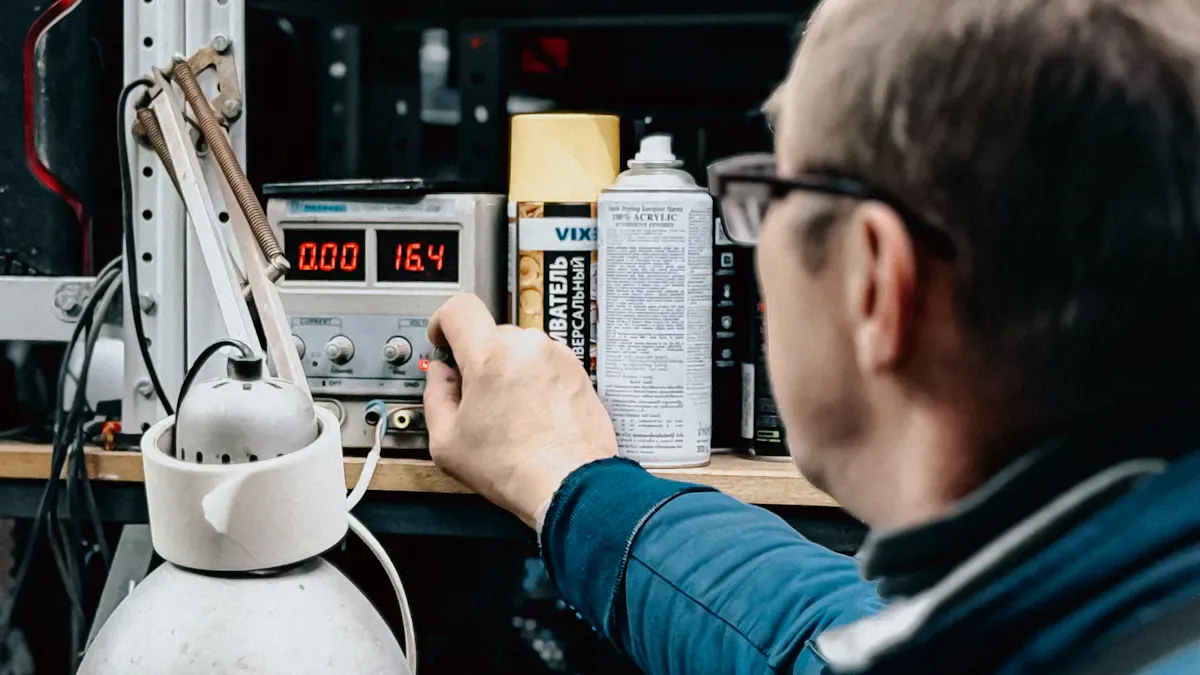
Pre-production sample testing
You begin by making a prototype of your custom speaker. This helps you see if your design works well. First, you decide what your speaker needs to do. You make a list of all the parts. Next, you put the prototype together and test it. You check things like total harmonic distortion and intermodulation distortion. You also test power handling and sound pressure level. Special tools like Klippel analysis and laser scanning help you check performance. These tests show if your speaker meets your goals before you make many of them.
Tip: Always test your prototype with your first requirements. This helps you find problems early.
Acoustic and safety assessments
You must check how your speaker sounds and if it is safe. The industry uses many tests to make sure your speaker is good. Here is a table that shows some common checks:
Parameter | Target Specification | Tolerance Range | Current Yield Rate | Industry Average |
|---|---|---|---|---|
Frequency Response Flatness | ±1.5dB (100Hz-10kHz) | ±3.0dB | 98.7% | 94.2% |
Total Harmonic Distortion | <0.5% @ 90dB (1kHz) | <1.0% | 99.1% | 97.3% |
Voice Coil Alignment | 0.15mm concentricity | <0.3mm | 99.4% | 98.1% |
Impedance Match | ±7% of nominal | ±15% | 99.8% | 98.9% |
Assembly Defects | 0 per unit | <0.02% | 99.95% | 99.5% |
You also test for frequency response, distortion, impedance, and sensitivity. For safety, you use tests like temperature cycling and thermal shock. You also use humidity, salt spray, and UV exposure tests. These steps help you make sure your speaker will last and stay safe in many places.
Client approval process
You ask your client to check the prototype before you make a lot of speakers. This step helps you find problems, like water getting inside. You can use special tools like industrial X-ray CT scanning to look for hidden issues. Sometimes, you may find glue gaps that let water in. When you fix these problems, your speaker gets better and safer. Client approval helps you know your product is good and meets the rules.
Note: Always get client feedback before you move forward. This helps you avoid mistakes and build trust.
Production controls and quality and safety standards
Consistency in manufacturing
Every speaker should be the same, even when making many. ZEH Audio uses strong rules to help with this. First, you check pre-production samples. This lets you fix problems before making a lot. You follow ISO 9001:2015 to keep quality high. You check each step with careful inspections. You track shipments and make sure they arrive on time. You use scorecards to rate suppliers on delivery and quality. You test parts during assembly to see if they fit and work. At the end, you test speakers before shipping.
Check samples before making speakers.
Use ISO rules for every step.
Inspect each step to find mistakes early.
Rate suppliers with scorecards.
Test parts as you put them together.
Test speakers at the end before sending them out.
New materials or technology can cause problems. Supply chain issues can slow things down and cost more. Communication problems can make teamwork hard. Factories have different skills, which can slow production. You need to watch and check batches to keep quality steady. ZEH Audio solves these by talking clearly, checking factory skills, and checking batches often.
Challenge | Explanation |
|---|---|
Supply Chain Issues | Delays and higher costs from many suppliers. |
Communication Barriers | Language and culture differences slow teamwork. |
Manufacturing Capability | Factories may not meet sales goals or timelines. |
Quality Control | You need regular checks to keep quality steady. |
Difficult to Custom Features | Custom branding needs skilled teams and strong development. |
Compliance with certifications
You must follow safety and quality rules in every country. ZEH Audio helps you get the right certifications for your speakers. You check for CE Marking in Europe, FCC and UL in North America, and CCC in China. You also look for RoHS, EMC, LVD, and WEEE in Europe. You need certifications like TELEC in Japan, KC in Korea, and BSMI in Taiwan. You make sure your speakers pass tests for electrical safety, overheating, and short-circuit risks.
Region | Certification Type | Description |
|---|---|---|
Europe | CE Marking | Shows health, safety, and environmental protection. |
RoHS Compliance | No hazardous materials. | |
EMC Directive Compliance | Meets electromagnetic compatibility rules. | |
LVD Compliance | Safe operation at set voltage limits. | |
WEEE Compliance | Meets waste management and recycling rules. | |
REACH Compliance | No dangerous substances above set levels. | |
ErP Directive Compliance | Meets energy efficiency rules. | |
North America | FCC Certification | Meets electromagnetic interference rules. |
UL Certification | Meets safety standards. | |
ISED Certification | Meets radio frequency and EMC rules in Canada. | |
IC Certification | Meets radio frequency and EMC rules in Canada. | |
NOM Certification | Meets safety and quality rules in Mexico. | |
Asia | CCC Certification | Meets safety and quality rules in China. |
TELEC Certification | Meets telecom rules in Japan. | |
KC Certification | Meets safety and EMC rules in South Korea. | |
BSMI Certification | Meets safety and quality rules in Taiwan. | |
ISED Certification | Meets safety and quality rules in India. | |
MCMC Certification | Meets telecom and multimedia rules in Malaysia. | |
Middle East | G-Mark | Meets safety, health, and environmental rules in GCC countries. |
SASO Certification | Meets Saudi standards and rules. | |
TRA Certification | Meets telecom rules in UAE. | |
ICT Commission Certification | Meets telecom rules in Qatar. |
ZEH Audio helps you with each step of certification. You get help with paperwork, testing, and checks. You make sure your speakers follow all the rules for quality and safety.
Staff training and SOPs
You need trained workers to keep your speakers safe and high quality. ZEH Audio teaches staff to follow strict rules. You use Standard Operating Procedures so everyone knows what to do. You teach workers to spot and fix problems fast. You hold training often to keep skills sharp. You show workers how to test for electrical safety, overheating, and short-circuit risks.
Train staff to follow SOPs.
Teach how to spot and fix problems.
Hold training often.
Test for electrical safety and overheating.
Prevent short-circuit risks.
You use careful testing to check your speakers. You improve designs and watch production closely. You find and fix flaws before they cause trouble. You test final products with good and frequent methods. You manage risks and keep quality and safety high.
Tip: Always update SOPs and training when you use new materials or technology. This helps you stay ready and keep your speakers safe.
ZEH Audio uses these best ways to help you build speakers that meet industry rules. You get speakers that last, sound great, and stay safe.
Testing and continuous improvement
In-line and post-production testing
You need to check your speakers while making them and after they are done. In-line testing looks at each speaker as it goes down the line. This helps you find problems early and fix them fast. Post-production testing happens after the speaker is built. You check if the speaker sounds good, lasts long, and is safe. Tools like frequency analyzers and thermal cameras help you measure how well the speaker works and if it can handle tough conditions.
Check each speaker during assembly.
Use tests after production to check sound and strength.
Measure temperature, vibration, and electrical safety.
You should plan regular audits to keep your process strong. Many companies do audits every month, quarter, or year. Annual system audits and frequent process audits help you meet industry rules. These checks make sure your speakers stay safe and reliable.
Tip: Always keep a record of every test. This helps you track problems and make your process better.
Addressing defects and corrective actions
You must act quickly when you find defects. Start by writing down every failure. Write the symptoms and note where it happened. Make a timeline to see when the problem started. Collect data and compare broken speakers to good ones. Use tools like the 5 Whys or fishbone diagrams to find the main cause. Make fixes that solve the problem for good. Give clear jobs for each step and check if the fix works.
Write down all failures and conditions.
Make a timeline of events.
Collect and study data.
Find the main cause using problem-solving tools.
Make actions that fix the issue for good.
Do the fix and check if it works.
You may find defects from installation, design, or stress from the environment. Review your rules and update standards. Make protection better against heat, moisture, or dust. Change maintenance steps and train your team more. The CAPA process helps you look into problems and stop them from happening again. You make requests, review them, and check if your fix works.
Note: Always check if your fixes stop the problem from coming back.
Integrating feedback and new technologies
You make your speakers better by listening to customers and using new technology. Customer feedback gives you ideas for new features. You ask customers to test your products and share their thoughts. After you launch a speaker, you collect feedback to find issues and make changes.
Use feedback to help new designs.
Test products with customers to learn about use.
Gather feedback after launch to fix problems.
You can use new technology to make speakers safer and better. Voice commands let workers use speakers without hands. Audio-visual alerts warn users about dangers. Custom voice messaging and alarm sounds help health and safety. Using light and sound together scares away intruders and protects users. These features make your speakers safer and more useful.
Technology Feature | Benefit |
|---|---|
Voice Commands | Hands-free use |
Audio-Visual Alerts | Safety warnings |
Custom Messaging | Health and safety support |
Light-Sound Integration | Scares away intruders |
Cost-Efficient Ownership | Custom features |
You keep getting better by updating your process and using new tools. Regular audits and feedback help you reach quality and safety goals. You build speakers that last, sound great, and keep users safe.
Tip: Stay open to new ideas and technology. This helps you keep your speakers ahead of others.
You can make sure your speakers are good and safe by doing these things: First, write down what you want and make your goals clear. Next, pick strong materials and test your first models. Then, check your work often and test during each step. After that, listen to feedback and use new technology to improve.
Stage | Key Checkpoints | Tools Used | Standard Met |
|---|---|---|---|
IQC | Look at raw materials | Write down inspections | Use quality levels |
IPQC | Find problems early | Test right away | Follow control limits |
FRI/OQC | Check how it works at the end | Use a sample plan | Use the product sheet |
You should talk to experts if you want the best custom speakers.
FAQ
What steps help you ensure speaker quality during customization?
You check each part for defects. You test the speaker at every stage. You use clear rules for finish, color, and coating. You keep records of all tests. You fix problems fast when you find them.
How do you make sure speakers stay safe?
You use strong materials. You test for electrical safety and overheating. You follow safety rules for each country. You train workers to spot risks. You update safety checks when you use new technology.
Why is client feedback important in speaker customization?
Client feedback helps you find mistakes early. You use feedback to improve fit and sound. You test changes with clients. You build trust by listening and making improvements.
What certifications should you look for in custom speakers?
You check for CE, FCC, UL, and RoHS certifications. You make sure your speakers meet rules for electrical safety, environmental protection, and quality. You ask experts to help with paperwork and testing.
How can you improve speaker quality over time?
You review test results often. You listen to customer feedback. You use new technology to make speakers better. You update training and rules. You run audits to keep your process strong.