
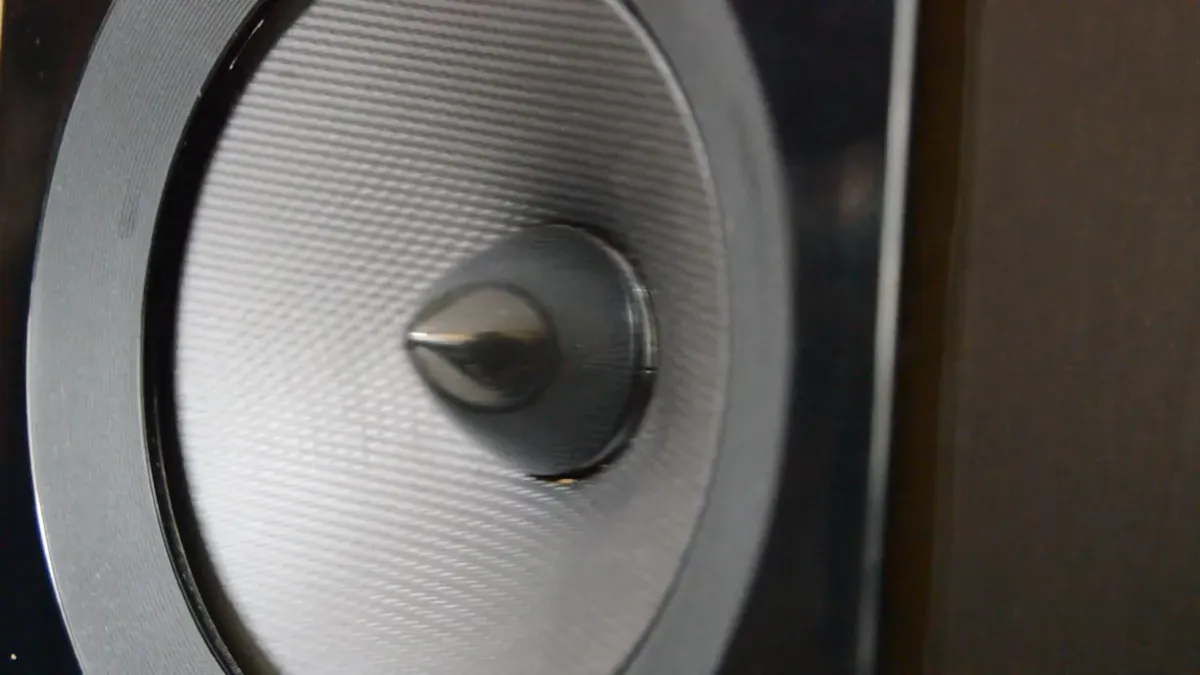
You can see a big difference between full-range speakers and midrange speakers when you set up your audio system. Full-range speakers play low, mid, and high sounds with one driver. Midrange speakers only play the middle sounds. Knowing these differences helps you pick the right speakers, amplifiers, and cables for the best sound. This helps you make better choices and enjoy your music more.
Key Takeaways
-
Full-range speakers can play low, mid, and high sounds with one driver. This makes them simple to use and good for small rooms.
-
Midrange speakers play middle sounds. They make voices and instruments sound clear. But you need extra woofers and tweeters to hear all sounds.
-
Pick full-range speakers if you want an easy setup or a small design. Midrange speakers are better for clear sound in pro audio systems.
-
Think about your room size and how you like to listen before picking speakers. This helps you get the best sound.
-
Using both types of speakers together can make your system better. You get more sound and clearer music for a richer experience.
What are full-range speakers?
Frequency range and design
Full-range speakers can play low, mid, and high sounds using just one driver. They cover a wide range of sounds, usually from 38Hz to 50kHz. Most full-range speakers play from 50Hz up to 25kHz, but some can go as low as 30Hz. The -3dB point is the strict rule for high-quality sound, and the -6dB point means the sound gets quieter. Full-range speakers have special parts, like a whizzer cone on top of the main diaphragm. This cone helps the speaker sound better at high notes and keeps the music balanced.
How full-range speakers work
Full-range speakers use one driver for all the sounds you hear. The driver pushes air to make bass, mids, and highs. The whizzer cone and diaphragm work together to cover all the notes. You do not need extra tweeters or woofers with this speaker. This makes the setup simple and easy to use. You can put these speakers in without tricky wiring or lots of parts.
Typical uses
You can find full-range speakers in many sound systems.
-
Stores and public places use them in ceilings or small boxes for music and announcements.
-
Multimedia loudspeakers, from simple to fancy, use full-range drivers.
-
Hi-fi systems sometimes use big boxes to make the bass louder.
-
These speakers are good when you do not have much space or want a simple setup.
Pros and cons
Tip: Think about the good and bad sides before picking full-range speakers for your project.
Advantages:
-
Gives balanced sound from one speaker, so you do not need to match different drivers or worry about crossover points.
-
Plays loud even if you do not have a strong power source.
-
Saves space because it is small, so it works well in tight spots.
-
Makes your sound better and clearer without needing extra drivers, which saves money.
Disadvantages:
-
You might need to run extra power cables with signal cables, which can make setting up harder.
-
If you connect many speakers in a row, you can lose high sounds because of more capacitance.
-
If the amplifier part breaks, the whole speaker stops unless you have another one.
What are midrange speakers?
Frequency focus and design
Midrange speakers play the middle sounds in music. They do not play deep bass or high treble. Most midrange speakers work from 500 Hz to 2 kHz. This range covers many main notes in music and voices. You can check the table below for more details:
|
Frequency Range |
Description |
|---|---|
|
500 Hz to 2 kHz |
Midrange speakers play in this range. They cover higher main notes from instruments like the violin and piccolo. |
Midrange speakers are made for clear and accurate sound. They do not try to play all sounds like full-range speakers. They only play four or five octaves. This helps you hear voices and instruments clearly.
How midrange speakers work
A midrange speaker is part of a bigger speaker system. You need to use it with woofers for bass and tweeters for highs. The midrange speaker plays the middle sounds. The other speakers play the rest. This setup lets each speaker do its job. You get better sound because every speaker works on its own part.
Common applications
You can find midrange speakers in car audio systems. They fit in places like:
-
Front door panels
-
Custom door pods
-
A-pillar spots
-
Rear door builds
-
Show car speaker walls
They also work in home theaters and pro audio setups. Use them when you want clear voices and detailed sound.
Pros and cons
Note: Think about what midrange speakers do well and what they cannot do before you pick them.
Advantages:
-
Midrange speakers give better sound and less distortion.
-
You can hear voices and instruments more clearly.
-
They make your audio system sound more lively and show more details.
-
They come in many sizes, so you can use them in custom setups.
-
Good midrange speakers can make your product better.
Disadvantages:
-
Midrange speakers only play a small range, from about 300 Hz to 5 kHz.
-
They do not play deep bass or very high sounds.
-
You need woofers and tweeters for full sound.
-
They focus on clear sound but do not play all notes.
Full-range speakers vs. midrange speakers
Frequency coverage
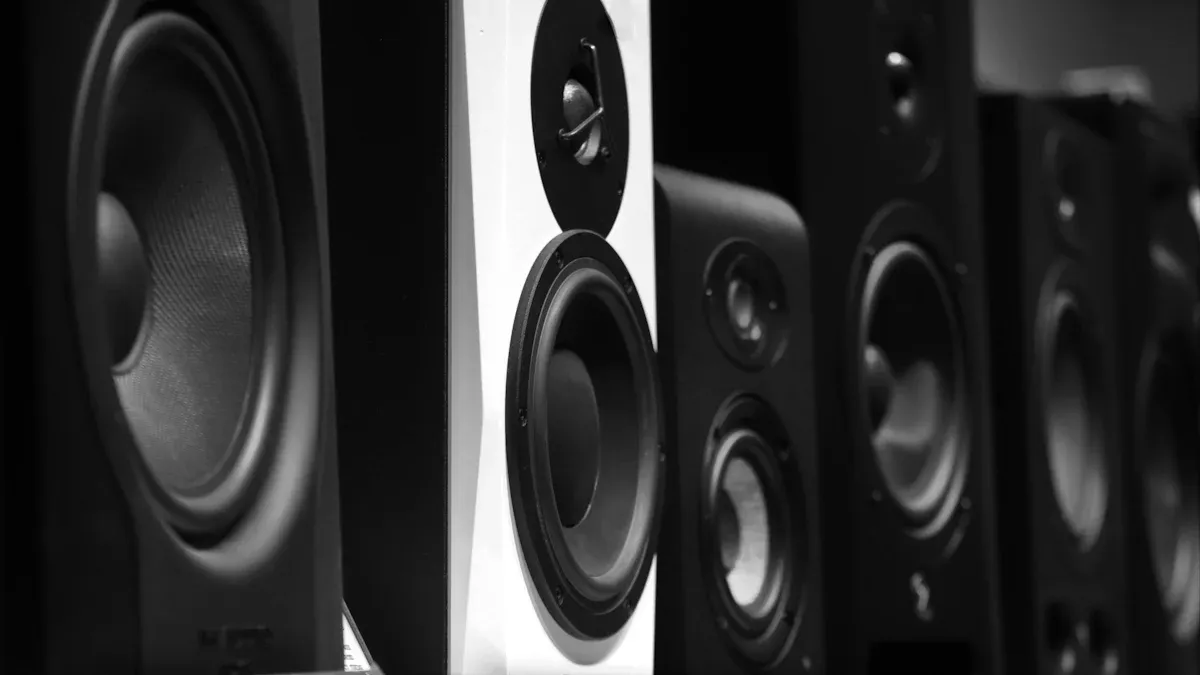
You need to know how each speaker type handles different parts of the audio spectrum. Full-range speakers cover a wide range of frequencies. They play low, mid, and high notes with one driver. Midrange speakers focus on the middle part of the spectrum. They do not play deep bass or very high treble. The table below shows the main differences:
|
Speaker Type |
Frequency Range |
Characteristics |
|---|---|---|
|
Full-Range |
Wide range (includes mid-bass and highs) |
Designed to cover a broad spectrum of sound, often includes a tweeter for higher frequencies. |
|
Midrange |
300 Hz to 5 kHz |
Specializes in mid frequencies, providing clarity and detail for vocals and instruments, but does not handle deep bass or high frequencies. |
You can see that full-range speakers give you more coverage. You get all the main parts of music and speech from one speaker. Midrange speakers give you a smaller range, but they focus on the most important sounds for voices and instruments.
Sound quality and performance
You want your system to sound clear and balanced. Full-range speakers create a cohesive soundstage. You hear all parts of the music from one point. This makes the sound feel natural and smooth. You do not need to worry about matching different drivers.
Midrange speakers give you extra clarity in the middle frequencies. These speakers make voices and instruments stand out. You get less distortion and better detail. Many audio systems use midrange speakers with woofers and tweeters. This setup lets each speaker do its job. You hear cleaner sound, especially for vocals and movie dialogue.
Tip: If you need the best sound quality for voices or instruments, use midrange speakers in your system.
Installation and setup
You want your installation to be simple and reliable. Full-range speakers make setup easy. You only need one speaker for each spot. You do not need to connect extra drivers or crossovers. This saves time and space. You can use full-range speakers in small rooms, ceilings, or portable systems.
Midrange speakers need more planning. You must use them with woofers and tweeters. You need to set up crossovers to split the sound. This takes more work, but you get better control over each part of the audio. You can build custom systems for cars, home theaters, or pro audio.
Best use cases
You should choose the right speaker for your project. Full-range speakers work well when you want a simple system. Use them in background music systems, public spaces, or small rooms. They also fit well in portable speakers and compact designs.
Midrange speakers shine in systems where clarity matters. Use them in car audio, home theaters, or professional setups. You get better detail for voices and instruments. These speakers help when you need to reduce distortion and improve dynamic range.
-
Midrange speakers are best for:
-
Clear vocals and instruments
-
Multi-driver systems with specialized roles
-
Custom audio projects that need detailed sound
-
-
Full-range speakers are best for:
-
Simple installations
-
Limited space or budget
-
Projects that need all-in-one solutions
-
You can combine both types in one system. This gives you the wide coverage of full-range speakers and the clarity of midrange speakers. You get the best of both worlds for your audio project.
Choosing the right speaker
Factors to consider
When you select speakers for your project, you need to look at several important factors:
-
Room size: Large rooms need bigger speakers to fill the space. Small rooms work better with compact options.
-
Listening preferences: If you want strong bass, you should choose larger speakers. If you want clear and balanced sound, midrange speakers will help you reach that goal.
-
Type of sound system: The setup you use, such as stereo, home theater, or portable, will affect your speaker choice.
Tip: Always match the speaker size and type to the space and the main use of your system.
Music genre also plays a role in your decision. Some people like a warmer midrange or brighter highs, which can make certain speakers better for specific music styles. However, many audio professionals aim for neutral and transparent sound. This means the system should play music as it was recorded, without adding extra color. You should also check technical details like sensitivity and impedance, as these affect how loud the system can play and how much work the amplifier does. Your final choice depends on your music taste and the balance you want between a natural or colored sound.
Now you know the big differences between these two speakers. Full-range speakers play many sounds and are easy to set up. Midrange speakers make voices and music clear in the middle range. Pick the speaker that fits your system and what you want to do. Before you choose, remember these important steps:
-
Check the product ID and model number.
-
Make sure of the RMS power and impedance.
-
Ask for a sample to look at.
-
Look at the supplier’s delivery and warranty rules.
The table below lets you see how both types compare:
|
Feature |
Full-Range |
Midrange |
|---|---|---|
|
Audio Coverage |
Wide, all-in-one |
Focused, detailed |
|
Installation |
Simple |
Needs crossover |
|
Best For |
Quick upgrades |
High-fidelity |
ZEH Audio has full-range, mid-range, and custom choices for you. Pick the best speaker for your project and think about how you want your sound to be.
FAQ
What is the main difference between full-range and midrange speakers?
Full-range speakers play low, mid, and high sounds. Midrange speakers only play the middle sounds. Full-range speakers can work by themselves. Midrange speakers need woofers and tweeters to play all sounds.
Can you use full-range speakers in professional audio setups?
Full-range speakers are good for simple systems or public places. In pro setups, you should add special drivers for better sound. This helps make the music clearer and stronger.
Why do midrange speakers need other drivers?
Midrange speakers only play the middle sounds. Woofers play the bass, and tweeters play the high notes. Each driver does its own job. This makes the sound clearer and more detailed.
How do I choose the right speaker for my project?
Think about what your project needs. Check the room size and what kind of sound you want. Full-range speakers are easy to set up. If you want more detail, use midrange speakers with other drivers.
Are full-range speakers easier to install?
Full-range speakers are quick to put in. You do not need extra drivers or crossovers. They are a good pick if you have little space or time.