
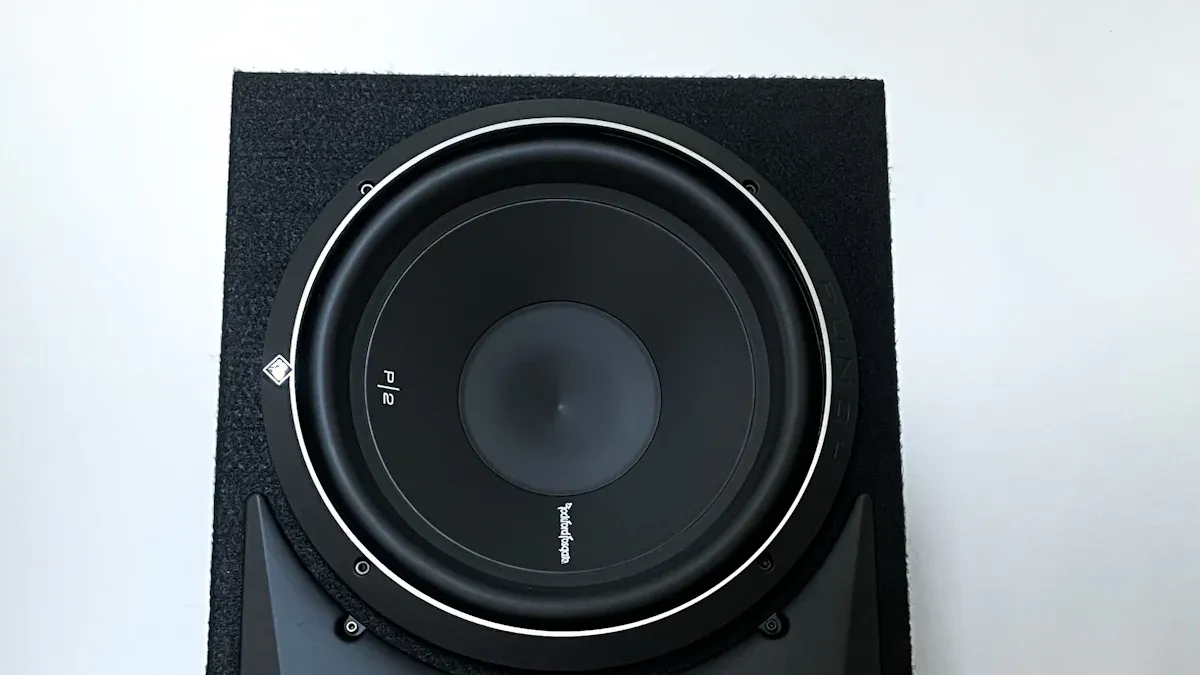
When you look at woofers vs subwoofers in sound systems, you see they perform different roles. A woofer handles a range of low and middle frequencies, while a subwoofer is designed specifically for the deepest bass sounds. Many people opt for subwoofers in their home audio setups because they deliver powerful bass. Understanding these differences is essential for selecting the best speaker for your space, listening preferences, and budget.
Key Takeaways
- Woofers play low and middle sounds. Subwoofers play deep bass sounds.
- Using both woofers and subwoofers gives balanced sound. This makes music clear and deep.
- Pick woofers for clear sound in small rooms. Pick subwoofers for strong bass in big rooms.
- Think about the size and power of your speakers. Make sure they fit your room and what you like.
- Always match your amplifier to your speakers. This gives the best sound and keeps them safe.
Woofers vs Subwoofers: Key Differences
Woofer Basics
Woofers are found in most speaker systems. They help make bass and midrange sounds. When you play music or watch movies, woofers handle drums, guitar, and some singing. Here are some important facts about woofers:
- Woofers work with low sounds you can hear.
- They turn electric signals into sound waves.
- Woofers are used in two-way or three-way speakers.
- They cover bass and midrange until tweeters take over.
- Woofers have smaller cones and magnets, so they use less power than subwoofers.
You can compare woofers and subwoofers by looking at their features. The table below shows the differences:
| Feature | Woofer | Subwoofer |
|---|---|---|
| Frequency Range | 40Hz to 2500Hz | 20Hz to 200Hz |
| Size Volume | 8 to 15 inches | 12 to 21 inches |
| Number of Drive Units | Multiple drivers (two-way or three-way) | One dedicated bass driver |
| Power Consumption | 100W to 500W | 300W to 1000W (up to 2000W for pro models) |
| Crossover Requirements | Less strict, no special low pass filter | Needs low pass filter for low sounds |
Subwoofer Basics
Subwoofers focus on the lowest sounds you can hear and feel. You notice them when movies rumble or music thumps. A subwoofer has one big driver inside a strong box. The box is made from wood and comes in different shapes, like bass reflex or acoustic suspension. These designs help the subwoofer handle air and make strong bass.
Subwoofers are important for low sounds. They make music and movies feel deeper and stronger. When you compare woofers and subwoofers, subwoofers have thicker cones, bigger voice coils, and stronger magnets. This lets them move more air and make deeper bass.
You can also see how woofers and subwoofers change sound quality:
| Characteristic | Woofer | Subwoofer |
|---|---|---|
| Frequency Range | Wider, includes bass and midrange | Made for low bass |
| Power Handling | Lower power | Handles more power |
| Construction | Lighter parts, smaller magnets | Thicker cone, bigger voice coils |
| Usage | Part of multi-way systems | Used alone in boxes |
| Excursion | Smaller movement | Bigger movement for strong bass |
Working Together in Audio Systems
You get the best sound when woofers and subwoofers work together. Woofers cover bass and midrange. Subwoofers handle deep bass. This makes the sound balanced and rich. You hear clear singing, strong drums, and powerful effects.
Tip: When you set up your speakers, make sure each covers its own range. This keeps the sound clear and stops distortion.
Many home theaters and car audio systems use both woofers and subwoofers. This gives you all the sounds, from high notes to deep lows. When you compare woofers and subwoofers, remember each does a special job. Together, they make your music and movies sound complete.
Frequency Range
Woofer Coverage
You hear woofers in many speaker systems. They handle a wide range of sounds, from deep bass to mid frequencies. This makes them important for music and movies. Woofers usually cover these frequencies:
- 40 Hz to 2500 Hz
- Bass notes and midrange sounds
- Drums, guitars, and vocals
Woofers give you clear sound for most instruments and voices. You notice their work when you listen to songs or watch action scenes.
Subwoofer Coverage
Subwoofers focus on the lowest sounds. You feel their power when the bass shakes the room. Subwoofers cover these frequencies:
- 200 Hz down to at least 30-35 Hz
- Many subwoofers reach 20 Hz or lower
- Main range: 80 Hz to 20 Hz and below
Subwoofers make deep bass strong and clear. You hear them in movie explosions and music with heavy beats. They fill in the lowest notes that woofers cannot reach.
Sound Quality Impact
You get better sound when you use both woofers and subwoofers. Woofers vs subwoofers shows how each covers a different part of the sound spectrum. Woofers handle most music and voices. Subwoofers add depth and power to the bass. When you combine them, you enjoy balanced audio. You hear every detail, from soft vocals to booming bass.
Tip: If you want rich sound, choose a system with both woofers and subwoofers. This gives you clear highs, strong mids, and deep lows.
A good speaker system uses each type for its best range. You notice the difference in sound quality when you match the right speakers to your needs.
Design and Build
Woofer Construction
Woofers are made from different materials. These materials change how music sounds. The cone, surround, and voice coil are important parts. Paper cones make warm bass but do not last in wet places. Polypropylene cones fight moisture and work well in cars. Carbon fiber cones are strong and give clear sound. The voice coil can be copper or aluminum. Copper makes strong force but gets hot. Aluminum stays cool and keeps sound steady. Surrounds can be rubber, foam, or cloth. Rubber lasts long and keeps sound stable. Foam lets the cone move more but wears out fast. Cloth is light and helps with sound quality.
| Material Type | Characteristics | Performance Impact |
|---|---|---|
| Paper Cones | Makes warm bass, does not handle water well | Good for warm sound but not good in wet places. |
| Polypropylene Cones | Tough, fights moisture, handles power well | Works well in cars and different temperatures. |
| Carbon Fiber Cones | Strong and light, handles more power | Great for high-performance setups and clear sound. |
| Copper Voice Coils | Conducts electricity well, very efficient | Makes strong force but can get hot. |
| Aluminum Voice Coils | Light, cools well, less conductive | Stays cool and works well for a long time. |
| Rubber Surrounds | Tough, stays the same in heat or cold | Lasts long and keeps sound steady. |
| Foam Surrounds | Flexible, wears out faster than rubber | Good for big cone movement but not as tough. |
Tip: Pick woofer materials based on where you use them and how much power you need.
Subwoofer Construction
Subwoofers use strong materials for deep bass. Cones can be paper, polypropylene, or carbon fiber. Carbon fiber gives clear sound and handles more power. Polypropylene is tough and works in many places. The voice coil can be copper or aluminum. Copper makes strong sound but gets hot. Aluminum cools better and keeps sound steady. Subwoofers use ferrite or neodymium magnets. Ferrite is heavy and stable. Neodymium is small but powerful. Surrounds are usually rubber or foam. Rubber keeps bass strong and lasts longer. Foam lets the cone move for big bass but wears out fast.
- Rubber surrounds make bass strong and cut vibrations.
- Foam surrounds help with big bass but do not last long.
- Cloth surrounds change sound and how long the subwoofer works.
Note: ZEH Speaker Systems use special materials and designs. This makes sure you get clear bass and reliable sound.
Enclosure Types
The box around your woofer or subwoofer changes the sound. Sealed boxes give tight and clear bass. Ported boxes use vents to make bass louder and deeper. Passive radiators mix both styles and give strong bass in a small box.
- Sealed boxes control cone movement for clear bass.
- Ported boxes make bass louder and reach lower notes.
- Passive radiators balance size and bass power.
Callout: The right box helps your speaker sound great. ZEH matches each speaker and box for the best performance.
Size and Space
Woofer Sizes
You find woofers in many sizes. Most home speakers use woofers between 4 and 8 inches. Car audio systems often use 6.5-inch woofers. Large floor-standing speakers may use 10-inch or even 12-inch woofers. The size of the woofer affects how much air it can move. Bigger woofers create deeper bass and louder sound. Smaller woofers fit in compact spaces and work well for clear midrange sounds.
When you choose a woofer, think about where you want to place it. Small rooms or cars need smaller woofers. Large rooms or home theaters can use bigger woofers for more powerful sound. You should also check the speaker box size. Some boxes need more space for bigger woofers.
Subwoofer Sizes
Subwoofers come in several common sizes. Each size gives you a different listening experience:
- 8-inch subwoofers: These fit in small spaces. You get good bass for smaller cars or rooms.
- 10-inch subwoofers: These offer a balance of size and power. You hear deeper bass, but they still fit in many places.
- 12-inch subwoofers: These are the most popular. You enjoy deep bass and strong sound quality. Many people use these for music with heavy bass.
- 15-inch subwoofers: These give you the deepest bass. You need a lot of space for them. They work best if you love strong, booming bass.
You should match the subwoofer size to your space and how much bass you want.
Space Needs
You need to plan for space when you set up your speakers. Large woofers and subwoofers need bigger boxes. These boxes may take up a lot of room in your car or home. Small speakers fit on shelves or in doors. Large subwoofers may need their own spot on the floor.
Tip: Measure your space before you buy speakers. Make sure you have enough room for the box and wires.
ZEH Speaker Systems design speakers for many spaces. You can find options for small rooms, cars, or large home theaters. This helps you get the best sound without wasting space.
Power and Amplification
Woofer Power
You should know how much power your woofer needs. Most woofers use amplifiers with 100 to 500 watts. Woofers are found in home speakers, cars, and pro setups. The power rating shows how loud and clear the sound is. If your woofer gets too little power, the sound may get fuzzy. Too much power can break the speaker. Always check the power range before buying.
Tip: Match your amplifier to your woofer. This gives you good sound and keeps your woofer safe.
Subwoofer Power
Subwoofers need more power than woofers. You feel strong bass when the subwoofer gets enough energy. Modern subwoofers use powerful amplifiers. Check the table below for usual power needs:
| Specification | Value |
|---|---|
| Recommended amplifier power | 1,000 watts |
| Subwoofer power handling | 600 watts |
| Maximum amplifier output for bass | 1,200 watts |
| Impedance configuration | 2-ohm or 0.5-ohm |
| Warranty | At least 2 years |
You get deep bass with the right amplifier. Subwoofers with high power ratings work well in home theaters and cars. Always check the impedance and warranty before picking one.
Active vs Passive Subs
You can choose active or passive subwoofers. Active subwoofers have their own amplifiers inside. You plug them in and connect them to your receiver. They are easy to set up and use. You get volume and crossover controls for tuning.
Passive subwoofers need an outside amplifier. You connect wires and set up crossovers yourself. This lets you customize your system, but setup is harder.
| Feature | Active Subwoofers | Passive Subwoofers |
|---|---|---|
| Amplification | Built-in amplifier | Needs outside amplifier |
| Setup | Easy to set up and use | More steps to set up |
| Customization | Fewer ways to customize | More ways to customize |
- Active subs are easy to connect and use.
- Passive subs let you change your system but take more work.
Note: ZEH Speaker Systems have both active and passive subwoofers. You can pick what fits your space and needs. ZEH helps brands make strong and reliable audio systems for any use.
Integration in Audio Systems
Woofer Integration
When you add woofers, you want all sounds to mix well. Good setup makes music and movies sound clear and even. Here are some tips for using woofers:
- Set the crossover right. Try special filter types, like Linkwitz-Riley or Butterworth, for smooth sound between speakers.
- Make sure woofers and subwoofers play together in the same phase. Even small phase changes can change how bass and mids sound together.
- Always check and adjust your system. This keeps sound correct and stops problems like weak or muddy audio.
Tip: If you skip setup or use wrong settings, your sound can get worse fast.
Subwoofer Integration
Subwoofers give deep bass, but you must set them up right. Follow these steps for better sound:
- Use two subwoofers if you can. This gives smoother bass in the room.
- Even if your main speakers are strong, a subwoofer makes sound better.
- Take time to set up. Good setup needs patience and some skill.
- Pick active crossovers for the best results.
Subwoofers help main speakers by playing the lowest notes. This lowers distortion and lets your system play more sounds. When you set the crossover well, you get cleaner and stronger sound.
System Setup
How you set up your system changes how woofers and subwoofers sound. Where you put a subwoofer matters. A bad spot can make it too loud or too quiet. Change the volume and crossover for each speaker. Think about your room, because walls and furniture change how bass sounds.
ZEH Speaker Systems have solutions for both woofers and subwoofers. You get parts that work well together and sound great. ZEH can build audio systems for homes, cars, or businesses. Their team knows how to set up systems so you get the best sound anywhere.
Application Scenarios
When to Use Woofers
You should use woofers when you want clear sound for music, movies, or games. Woofers work well in most home speakers and car audio systems. They handle bass and midrange, so you hear drums, guitars, and voices clearly. If you listen to pop, rock, or classical music, woofers give you a full sound. You do not need a subwoofer for small rooms or if you do not want very deep bass. Woofers fit well in bookshelf speakers, soundbars, and portable systems.
Tip: Choose woofers if you want good sound for everyday listening and do not need extra bass power.
When to Use Subwoofers
You should use a subwoofer when you want to feel deep bass. Subwoofers make action movies, hip-hop, and electronic music more exciting. You notice the difference when explosions shake the room or when music thumps. Subwoofers work best in home theaters, large living rooms, or cars with custom audio setups. If you love strong bass or want to fill a big space with sound, add a subwoofer to your system.
Note: Subwoofers need more space and power. Make sure you have room for the box and the right amplifier.
Using Both for Balance
You get the best sound when you use both woofers and subwoofers together. This setup gives you a balanced and rich audio experience. Here is why:
- Subwoofers play the lowest sounds, usually from 20Hz to 80Hz. These deep notes make music and movies feel full.
- Woofers focus on higher bass and midrange. This lets them play instruments and voices with more clarity.
- When you use a subwoofer, your main speakers do not have to work as hard. This improves the overall sound and power handling.
- Low bass sounds travel in all directions. One subwoofer can fill a room with balanced bass.
If you want clear highs, strong mids, and deep lows, use both types of speakers. This setup works well for home theaters, music studios, and car audio systems. You enjoy every detail, from soft vocals to powerful effects.
Cost and Value
Woofer Pricing
Woofers come in different prices. Cheap woofers are good for simple setups. Middle-priced woofers use better parts and sound clearer. Expensive woofers have special designs and new technology. They give strong bass and last longer. The price changes with size, materials, and brand. Bigger woofers or ones with carbon fiber cones cost more.
| Woofer Type | Price Range | Features |
|---|---|---|
| Entry-Level | $20 – $50 | Basic sound, small size |
| Mid-Range | $50 – $150 | Better materials, clear sound |
| High-End | $150 – $500+ | Advanced design, strong bass |
Subwoofer Pricing
Subwoofers usually cost more than woofers. You pay extra for deep bass and strong sound. Small subwoofers are cheaper and fit tight budgets. Bigger subwoofers with thick cones and strong magnets cost more. Active subwoofers have built-in amplifiers and are more expensive. Passive subwoofers need an outside amplifier, so you must add that cost. You can find subwoofers for homes, cars, and pro setups.
| Subwoofer Type | Price Range | Features |
|---|---|---|
| Compact | $50 – $150 | Fits small spaces, basic bass |
| Standard | $150 – $400 | Deeper bass, more power |
| Premium | $400 – $1,000+ | Built-in amp, strong bass |
Note: ZEH Speaker Systems have many woofers and subwoofers. You can pick products that fit your budget and needs. ZEH works with brands to make custom solutions for every price.
Budget Tips
You want the best value for your money. Try these tips when buying woofers and subwoofers:
- Set your spending limit before shopping.
- Choose one subwoofer or more based on your needs.
- Make sure your budget matches your audio system.
- Look at different prices to find a woofer you like.
You make better choices when you plan your budget. You do not spend too much and find speakers that fit your needs. ZEH helps you pick the right products for your space and budget. You get quality and reliability every time.
Choosing the Right Speaker
Assessing Your Needs
You should start by thinking about what you want from your sound system. Ask yourself what kind of music or movies you enjoy. Think about where you will use your speakers. Here are some important things to consider:
- Frequency response: Decide if you want deep bass or clear mids.
- Efficiency and output: Check how loud you want your system to be.
- Enclosure design: Look at the type of box or cabinet you prefer.
- Application: Choose speakers for home, car, or business use.
- Room size: Measure your space to see what fits best.
- Placement: Plan where you will put each speaker.
Tip: Write down your answers. This helps you compare different options and pick the right speaker.
Space and Power Factors
Space and power matter when you choose between woofers and subwoofers. Woofers are smaller and use less power. They fit well in small rooms or cars. Subwoofers are bigger and need more power. You need more space and a strong amplifier for them. Think about your budget and how much room you have.
- Woofers work well in tight spaces and use less electricity.
- Subwoofers need bigger boxes and more power.
- Your choice depends on your needs, budget, and space.
Note: Always check your room size and power supply before buying new speakers.
Making the Best Choice
You make the best choice when you match your needs with the right speaker. If you want clear music for a small room, choose woofers. If you love deep bass and have enough space, add a subwoofer. For the best sound, use both.
ZEH Speaker Systems can help you find and customize the perfect setup. As a leading B2B manufacturer, ZEH offers one-stop audio solutions for homes, cars, and businesses. You get quality, reliability, and expert support. ZEH works with you to design a system that fits your space, power needs, and budget.
Callout: Trust ZEH Speaker Systems to guide you in building a sound system that matches your style and needs.
Woofers and subwoofers do not do the same job. Woofers play bass and mid sounds. Subwoofers make deep and strong bass. Pick speakers that match your room and what you want. Think about your budget before you buy. For great sound, use systems that work well together.
Tip: ZEH Speaker Systems builds custom audio setups for businesses. You get good sound and easy setup with their products.
FAQ
What is the main difference between a woofer and a subwoofer?
A woofer plays both bass and midrange sounds. A subwoofer focuses only on deep bass. You hear woofers in most speakers. You feel subwoofers when the music or movie rumbles.
Do I need both a woofer and a subwoofer in my sound system?
You get the best sound when you use both. Woofers give you clear music and voices. Subwoofers add deep bass. Your system sounds full and balanced.
How do I choose the right size subwoofer for my room?
You should measure your space first. Small rooms work well with 8-inch or 10-inch subwoofers. Large rooms need 12-inch or 15-inch models for strong bass.
Can I use a subwoofer without a special amplifier?
Most subwoofers need a strong amplifier. Active subwoofers have built-in amps. Passive subwoofers need an external amp. Always check your subwoofer type before buying.
What makes ZEH Speaker Systems a good choice for businesses?
ZEH specializes in B2B audio manufacturing. You get custom speaker solutions, reliable quality, and expert support. ZEH helps brands build complete audio systems for homes, cars, or commercial spaces.