

When you look inside a speaker, you can observe its internal structure, which consists of many important parts. These parts include the diaphragm (cone), voice coil, magnet, spider, surround, frame, crossover circuit, and enclosure. Each part has its own job. The diaphragm pushes air to create sound waves, while the voice coil and magnet work together to move the diaphragm. The spider and surround ensure that the parts remain in the correct position. By understanding how these parts interact within the internal structure, you can see how design choices influence sound quality and the longevity of the speaker.
Key Takeaways
A speaker has many parts. These include the diaphragm, voice coil, magnet, spider, surround, and enclosure. Each part is important for making sound.
The diaphragm pushes air to make sound waves. The material of the diaphragm changes how the sound is heard. Pick speakers with the right diaphragm for what you need.
The crossover circuit splits audio signals into different frequencies. This lets each speaker unit play the sounds it is best at. This makes the sound clearer and lowers distortion.
The enclosure shapes the sound and stops extra shaking. A good cabinet makes the sound better and helps the speaker last longer.
Knowing how speaker parts work together helps you pick the right speaker for you. This lets you enjoy music even more.
Internal structure overview
What makes up a speaker
A speaker is more than just a box for music. It is a system with many important parts. Each part does something special. The diaphragm, or cone, moves air to make sound. The voice coil sits in the magnetic circuit and gets electric signals. The magnet makes a steady magnetic field. The frame keeps all the parts together. The spider and surround help the moving parts stay in place and move smoothly. Terminals let you connect the speaker to your music player. The enclosure, or chamber, shapes the sound and keeps the inside parts safe.
Every part of a loudspeaker must meet strict quality rules to work well.
Sound Pressure Level (SPL)
Max Input (W)
Nominal Input (W)
Impedance (Ohm)
Resonant Frequency (Hz)
Size (mm)
Total Q
The inside of a speaker is not just one thing. It is a group of parts that work together. This design helps the speaker make clear and strong sound. It also helps the speaker last a long time.
How components work together
The parts inside a speaker do not work by themselves. They make a system that changes electric signals into sound. When you play music, the voice coil gets an electric current that goes back and forth. This current changes the coil’s magnetic side. The coil and the magnet push and pull each other. The coil moves and makes the diaphragm move too. The diaphragm shakes the air, and you hear sound that matches the music.
Speaker makers test the inside parts to make sure they work right. They use different ways to check how good the sound is and how steady the speaker is:
Testing Methodology | Description |
|---|---|
Subjective Listening Tests | People listen to music to judge the sound. |
Objective Measurements | Special tools measure how the speaker sounds. |
Installation Setup | Speakers are put in a special room to block outside noise. |
Equipment Used | Experts use monitors and microphones to record test sounds. |
How a speaker is built inside changes how it sounds and how long it works. When you know how these parts work together, you can better understand the science and design in every speaker.
Speaker driver components
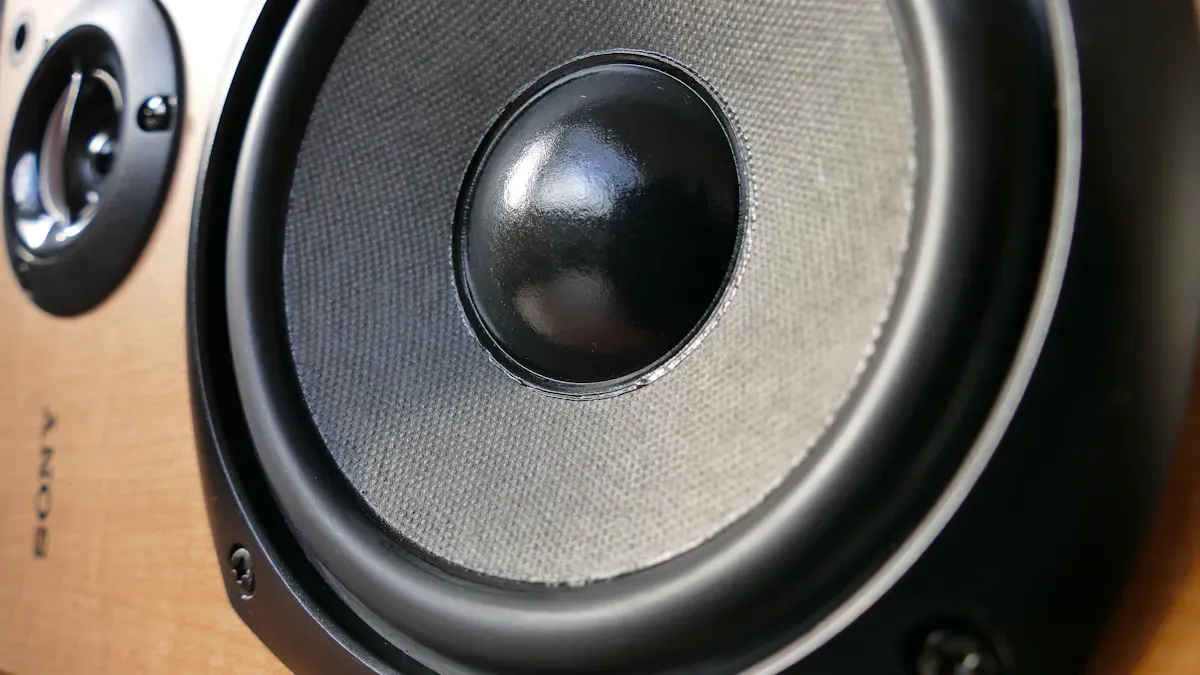
When you explore the internal structure of a speaker, you find that the driver is at the heart of sound production. The driver is a system made up of several key parts. Each part has a special job, and together they turn electrical signals into the music and voices you hear. Let’s look at these main components and see how they work as a team.
Cone (Diaphragm)
The cone, also called the diaphragm, is the part you see moving when the speaker plays sound. You can think of it as a thin, semi-rigid membrane that vibrates to create sound waves. The cone acts like a piston, pushing and pulling air to send sound into the room. It must move quickly and accurately to match the electrical signal from your music.
The material of the cone changes how your speaker sounds. Some cones use paper, which is light and good for midrange sounds but can be affected by moisture. Polypropylene is another common material. It resists water and works well for low sounds. Aluminum cones are strong and handle deep bass but can add weight and sometimes sound metallic at high notes. Synthetic fibers, like Kevlar, are light and strong but cost more and need special manufacturing.
Here’s a table to help you compare cone materials:
Material | Advantages | Disadvantages |
|---|---|---|
Paper | Good for midrange frequencies, lightweight, and cost-effective. | Can be affected by moisture and may not handle low frequencies well. |
Polypropylene | Moisture-proof, good damping characteristics, and cost-effective. | Average rigidity, not ideal for high frequencies, and can distort. |
Metal (Aluminum) | High rigidity, good dynamic response, and low distortion. | Heavier, poor damping characteristics, and can produce a metallic sound at high frequencies. |
Synthetic Fibers | High strength, lightweight, and excellent rigidity. | High cost and requires advanced manufacturing processes for optimal performance. |
The cone’s ability to move air with precision is central to the internal structure of the speaker. If the cone cannot move smoothly, the sound will not be clear.
Voice coil
The voice coil sits at the center of the driver. When you play music, the electrical signal flows through the coil. This creates a magnetic field. The voice coil’s magnetic field interacts with the permanent magnet in the speaker. This interaction makes the coil move back and forth, which pushes the cone and creates sound waves.
Most voice coils use copper wire because it conducts electricity well and is affordable. Some high-end speakers use aluminum or even silver for lighter weight or better conductivity. The coil wraps around a bobbin, which can be made from materials like paper, aluminum, or fiberglass to help with heat resistance. Good heat management keeps the speaker working well for a long time.
Heat is a big challenge for voice coils. If the coil gets too hot, it can change the sound or even break. That’s why the choice of materials and the design of the internal structure matter so much.
Magnet
The magnet is a powerful part of the speaker’s internal structure. It creates a steady magnetic field. When the voice coil receives an audio signal, it becomes an electromagnet. The two magnetic fields push and pull against each other. This force moves the coil and the cone, making sound.
A strong magnet gives you clearer sound, higher volume, and better response to quick changes in music. The quality and strength of the magnet affect how well the speaker performs. If the magnet is weak, the sound can become muddy or distorted. High-quality magnets also keep their strength over time, so your speaker stays reliable.
Tip: When you compare speakers, check the magnet size and material. Bigger and stronger magnets often mean better sound, but they also add weight.
Spider
The spider is a round, flexible part that sits under the cone. It acts as a suspension system for the moving parts. The spider holds the voice coil in the right place and stops it from moving sideways or tilting. This keeps the coil centered in the magnetic gap, which is important for clear sound.
Spiders are usually made from treated cotton, polyester-cotton blends, or nomex. The material and shape of the spider control how stiff or flexible it is. If the spider is too loose, the cone can wobble and make noise. If it is too stiff, the cone cannot move enough to make good sound.
The spider’s job is to keep everything lined up inside the speaker. This helps the internal structure work as a system, so you get accurate and stable sound.
Surround
The surround is the ring that connects the edge of the cone to the speaker frame. It forms part of the suspension system with the spider. The surround lets the cone move forward and backward while keeping it from moving side to side. This movement is key for making sound waves that match the music.
Surrounds also help control unwanted vibrations and reduce distortion. They protect the cone from dust, moisture, and bumps. You will find surrounds made from foam, rubber, fabric, or advanced materials like Kevlar. Foam is light and flexible but does not last as long as rubber. Rubber surrounds last longer and give better bass, making them good for outdoor or high-power speakers. Fabric surrounds are strong and flexible, used in high-end speakers for the best sound.
The surround’s material affects both the sound and the life of your speaker. Choose a speaker with a surround that matches where and how you plan to use it.
When you look at the internal structure of a speaker, you see that each part of the driver has a special role. The cone, voice coil, magnet, spider, and surround must all work together. If one part fails, the whole system suffers. That’s why speaker design is about building a balanced and integrated system, not just picking good parts. Understanding these components helps you appreciate how speakers turn electricity into the sounds you love.
Crossover circuit

Purpose in sound separation
Most speakers have a crossover circuit inside. This circuit is important for clear and balanced sound. The crossover splits the audio signal into different frequency ranges. Low frequencies go to the woofer. Midrange sounds go to the midrange driver. High frequencies go to the tweeter. Each speaker unit gets only the frequencies it can handle best. This keeps distortion away and protects parts like tweeters from low frequencies.
The crossover circuit lets each speaker unit do its job well. You hear crisp highs, rich mids, and deep bass. The crossover sends the right sounds to the right drivers. This makes the sound clearer and keeps your speaker system steady for a long time.
When you play music, the crossover makes sure every note goes to the correct driver. You hear all the sounds without muddiness or harshness. The crossover circuit is a key part of the internal structure. It helps the speaker system work together as one unit.
Types of crossovers
There are different kinds of crossover circuits. Each type has its own strengths:
Passive Crossovers
These use simple parts like capacitors, inductors, and resistors. Most home speakers have them. They split the audio signal and send it to the right driver. They do not need extra power.Active Crossovers
These circuits use electronic devices to process audio signals. You can control the frequency response very well. Active crossovers are used in professional audio setups. They need their own power source.Digital Crossovers
These use digital signal processing (DSP) technology. You can adjust filters and equalization with high accuracy. Digital crossovers are good for complex systems. They give you flexibility for advanced sound shaping.Active Filters
These are a special kind of active crossover. They have an amplifier to reduce signal loss and distortion. You find them in high-end and professional speakers.
Crossover Type | Power Needed | Control Level | Typical Use |
|---|---|---|---|
Passive | No | Basic | Home speakers |
Active | Yes | Precise | Professional systems |
Digital | Yes | Advanced | Complex setups |
Active Filters | Yes | High | High-end speakers |
The crossover circuit is not just one part. It works with the whole speaker system. It helps each driver do its job. This teamwork improves sound quality and keeps your speaker working well for years.
Enclosure and damping
Role of the speaker cabinet
You might think the speaker cabinet is just a box, but it does a lot for sound. The cabinet changes how air moves inside and outside the speaker. It helps control echoes and stops bad vibrations from reaching your ears. The cabinet uses different materials and shapes to do this job.
The material of the cabinet changes the sound. Birch plywood makes music sound warmer than MDF or concrete.
The type of enclosure, like sealed or ported, changes bass and how clear the music is. If the Q factor is under 0.4, a ported box works best. If it is over 0.5, a sealed box is better.
Designers put stiff, small pieces in the cabinet. This pushes echoes to higher sounds and keeps low sounds from getting messy.
Here is a table that shows common cabinet materials and how they affect sound:
Material | Acoustic Properties |
|---|---|
Medium-Density Fiberboard (MDF) | Very dense, stops echoes inside, and keeps sound clear. |
Plywood (Birch and Marine Grade) | Strong but light, makes music lively, but needs extra padding inside. |
Plastics and Polymers | Not as strong, does not stop echoes well, can sound “plastic” if not made right. |
Damping materials and sound quality
Damping materials inside the cabinet help make the sound clear. When music plays, the panels can shake and make their own sounds. These shakes can add extra noises you do not want. Damping materials soak up these shakes and keep the music clean.
Cabinet panels soak up energy and shake at their own sounds.
These shakes act like extra speakers and change the music.
Picking the right materials keeps these shakes small, so only the driver makes sound.
Acoustic foam is a common damping material. It soaks up sound, stops echoes inside, and cuts down on waves that mess up the music.
Here is a table of good damping materials and what they do:
Damping Material | Properties and Applications |
|---|---|
Fiberglass Insulation | Soft and cheap; helps sound stay clear when used right. |
Acoustic Foam | Soaks up sound, stops echoes and waves; makes music and bass clearer. |
Mineral Wool | Cuts down on echoes and waves; helps music sound better. |
Damping Sheets | Controls shakes and echoes; works with other padding for best results. |
You can see that the cabinet and damping materials work together. They move air, stop echoes, and keep the sound clean. The inside of the speaker is a team. Every part must work together to make good sound.
ZEH Audio is very good at making speaker parts, cabinets, PCBA, tuning, and custom designs. You get better sound because all the parts work together. ZEH Audio picks good materials, builds strong cabinets, and tunes speakers carefully. Their speakers give you steady sound and clear music. If you pick a ZEH Audio speaker, you get one made with science and smart design.
You can see that the inside of a speaker changes every sound you hear. All the parts, like the diaphragm, voice coil, and magnet, work together as a team. When you learn about these parts, you can:
Know what to expect from your speaker’s sound.
Pick the right speaker for how you listen.
Enjoy music and movies even more.
New speaker technology makes things simpler and the sound better:
Advancement Type | Impact on Speaker Performance |
|---|---|
Powered Speakers | Makes setup easy and saves room |
Digital Audio Transport | Makes sound clearer and cuts down on delay |
If you want great sound, look inside the speaker and see how the parts work together.
FAQ
What is the most important part inside a speaker?
You might think the cone is most important, but every part matters. The cone, voice coil, magnet, and enclosure all work together. If one part fails, the whole system cannot make good sound.
How does the enclosure affect sound quality?
The enclosure shapes the air movement inside your speaker. It stops unwanted echoes and vibrations. A strong, well-designed enclosure helps you hear clear music and deep bass.
Why do speakers need both a spider and a surround?
The spider keeps the voice coil centered. The surround lets the cone move back and forth. Both parts help the cone move smoothly, so you get accurate sound without distortion.
Can better materials improve my speaker’s sound?
Yes! High-quality materials in the cone, magnet, and enclosure help your speaker last longer and sound better. Good materials reduce unwanted noise and keep the sound clear.