
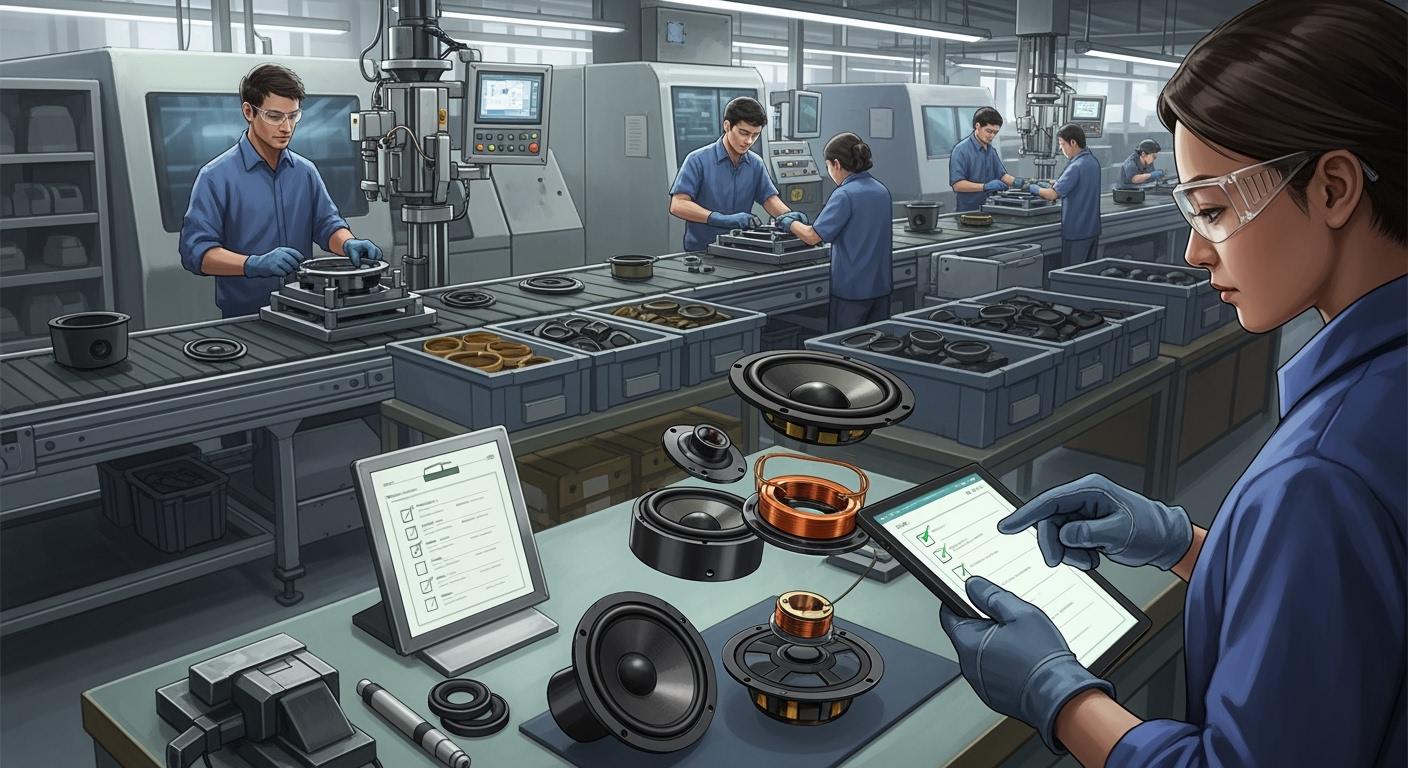
OEMs use process control to keep speaker quality high. They plan each step to match brand rules. They set up clear checks for quality. The loudspeaker design starts with setting exact audio goals. They make prototypes and test them a lot. OEMs do acoustic tests to reach sound pressure level goals. Their engineers check sound quality at all frequencies. End-of-line testing makes sure each speaker meets tough quality rules.
Key Takeaways
OEMs focus on process control to make sure speakers are good. They plan carefully and test a lot.
Setting clear audio goals helps engineers design better speakers. Following industry standards also helps meet what customers want.
Testing prototypes and picking the right materials is very important. This makes speakers last longer and sound better.
Checking quality during production finds problems early. This saves time and money for the company.
Teams work together and have good relationships with suppliers. This makes speaker production better and faster.
Loudspeaker Design Process for OEMs
Setting Audio Parameters
Engineers start by talking with customers about audio goals. They decide how the loudspeakers should sound. They also think about where the speakers will be used. Industry standards help guide these choices. The table below lists some important standards:
Standard | Organization |
|---|---|
AES2-1984 | Audio Engineering Society |
EIA-426B | Electronic Industries Alliance |
IEC 60027 | International Electrotechnical Commission |
These standards help engineers set goals for sound pressure and frequency response. They also help with durability. By following these rules, teams make sure their products meet global needs for good loudspeakers.
Prototype Development and Testing
After setting goals, teams build prototypes. They make drawings and a Bill of Materials. Then, they put together sample speakers for testing. The process has several steps:
Sales, technical, and production teams review the design.
Teams test the sound and check frequency response.
They look for problems using burn-in and charge-discharge tests.
They scan the whole machine to make sure it meets rules.
They ask customers for feedback to make things better.
These steps are important for testing how well the speaker works. Careful testing makes sure each prototype is good before making many speakers.
Materials Selection
The materials used change how the speaker sounds and lasts. Engineers pick materials for strength, flexibility, and reliability. The table below shows common materials and why they are chosen:
Material | Properties | Reason for Selection |
|---|---|---|
Paper | Lightweight, good damping | Cost-effective, traditional |
Polypropylene | Durable, moisture-resistant | Balances rigidity and weight |
Carbon Fiber | High stiffness, low weight | Enhances performance and durability |
Aluminum | Lightweight, strong | Controls distortion |
Kevlar | High strength, flexible | Handles high power, accurate sound |
Titanium | Very strong, lightweight | Superior sound quality in high-end applications |
Cones made from Kevlar, aluminum, or titanium are strong and flexible. Carbon fiber makes the speaker stiff and tough. These choices help OEM teams make speakers that last a long time and work well.
Process Control in Speaker Manufacturing
Component Alignment and Soldering
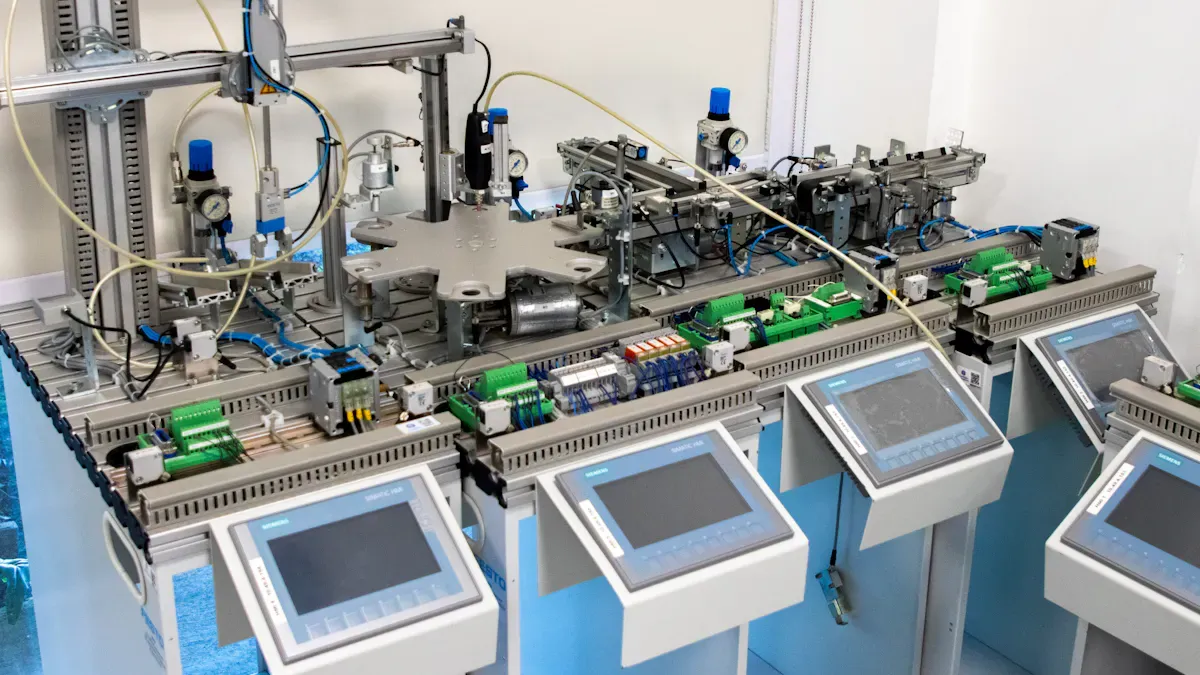
OEM factories use process control to make every speaker the same. Workers must line up each part very carefully. They put the magnet, frame, and terminals in the right places. If a part is not lined up, the speaker might not work right. Soldering wires and terminals must be done with care. This helps the speaker last longer and sound better. Teams check every connection to make sure it is strong. They use quality gates to find mistakes early. These gates stop broken speakers from moving forward.
A table below shows some main process control steps OEMs use:
Process Control Measure | Description |
|---|---|
ISO9001:2015 Compliance | Controls all parts of making speakers and keeping records. |
Quality Assurance Tools | Uses Value Stream Mapping to make the process better. |
Six Sigma and Lean Manufacturing Principles | Keeps quality high and costs low for customers. |
Checks and improves material quality, delivery, and safety. | |
Rigorous Testing | Tests every speaker to make sure it meets tough rules before shipping. |
Advanced Testing Tools | Uses tools like Soundcheck and Klippel QC for final testing. |
Performance Metrics | Checks frequency response and distortion, shown as Cpk for proof. |
Enclosure Construction
The enclosure changes how the loudspeaker sounds. OEM teams use process control to make sure each box matches the plan. They cut aluminum or wood to the right size. This makes the fit and finish perfect. Workers check wall thickness and surface treatments. These things help control resonance and make the sound better. Good construction also makes the speaker look nice.
Tip: Building the enclosure well is important for sound and looks. Teams must get the shape and surface just right for the best results.
Quality control steps at this stage include:
Checking if all parts line up for the best sound.
Looking at the fit and finish for a smooth look.
Measuring wall thickness to control resonance.
Testing the box for leaks or weak spots.
Voice Coil and Cone Assembly
Voice coil and cone assembly is a very important step. OEM workers glue the cone, spider, and surround to the frame by hand. They use glue carefully on each part. The magnet must be in the center of the voice coil. If not, the speaker may lose power or make bad sounds. Teams look at the magnet for chips or cracks. They check the cone for holes or other problems. After putting it together, they connect the speaker to an audio generator. This test checks the frequency response and makes sure the speaker meets the plan.
A table below shows the main quality control steps for this part:
Process Step | Quality Control Measure |
|---|---|
Cone assembly attachment | Gluing the spider and surround to the frame by hand |
Magnet inspection | Looking for chips or cracks |
Cone inspection | Checking for holes or problems in the cone |
Overall assembly inspection | Making sure everything matches the plan |
Final testing | Testing frequency response with an audio generator |
Process control at every step helps OEMs make good speakers. These controls stop mistakes and make the product better. By following strict rules, teams can meet customer needs and keep making speakers without problems.
Quality Assurance and Verification
Incoming Quality Control (IQC)
OEM teams begin by checking every part before building speakers. They look at magnets, cones, and other pieces for problems. Picking the right materials is very important. Engineers test paper, polypropylene, and special composites for strength and how long they last. They use stress tests and check for wear to make sure parts are strong. Digital models and computer tests help improve the design before making real speakers.
A table below lists common IQC steps:
Procedure | Description |
|---|---|
Material Selection and Validation | Testing materials for strength and long-term reliability. |
Digital Prototyping and Simulation | Using computer models to predict speaker behavior. |
Design for Manufacturing (DFM) | Making sure parts are easy to assemble and consistent. |
Precision Manufacturing and In-Line Testing | Setting up checkpoints to catch defects early. |
Automated Optical Inspection (AOI) | Cameras scan parts for flaws. |
Real-Time Acoustic Testing | Measuring speaker performance in isolation chambers. |
Statistical Process Control (SPC) | Monitoring production parameters to prevent out-of-spec products. |
Quality gates stop bad parts from going to the next step. Engineers use gaussmeters to check magnet strength. They use testers to see if cones are stiff enough. They compare these results to approved data sheets. Teams also check the factory and tools to keep quality high.
In-Process Quality Control (IPQC)
While making speakers, teams check parts at important steps. They look at solder joints, glue weight, and screw tightness. Workers use special scales to measure glue. They use their eyes and tools to find problems early. Teams teach workers how to spot mistakes and write down what they find.
Note: In-process quality control helps catch problems early. This saves time and money before the speaker is finished.
Some important IPQC checks are:
Testing screw and rivet tightness.
Checking glue weight with special scales.
Looking at solder joints to meet rules.
Doing rub-and-buzz tests to find bad sounds.
Testing acoustic parameters for Thiele-Small values.
Teams use LCR meters and audio analyzers to check these things. They set limits for each test and train workers to use both their eyes and tools. Statistical process control helps keep quality steady during production.
Problem: Too much solder bridging happened on SMT Line 2.
Action: Teams added more checks after placing parts and taught workers to clean stencils more often.
Result: The solder problem dropped from 2.1% to 0.4% in three days.
Final Quality Control (FQC)
Before shipping, OEM teams do tough tests on every speaker. They check frequency response, total harmonic distortion, and impedance. Final checks include rub-and-buzz tests and sensitivity checks. Teams use special rooms and audio analyzers to make sure results are right.
A table below shows the last quality control steps:
Step | Description |
|---|---|
1 | Getting parts from other factories |
2 | Checking parts with incoming quality control |
3 | Putting all parts together |
4 | Testing Bluetooth features with a test bench |
5 | Doing final quality checks |
6 | Packing the finished product |
Teams check each speaker against the product sheet. They approve golden samples before making many speakers. Acoustic and reliability tests check power and how well the speaker handles stress. Final checks make sure the speaker is good for customers.
Some main FQC tests are:
Frequency response margin
Total harmonic distortion margin
Rub-and-buzz test
Impedance margin
Average sensitivity
Quality checks at every step help stop common problems. Broken voice coils, bad materials, and wrong crossover settings can cause bad sound. Teams fix these problems with careful checks and strong quality systems.
OEM Audio Solution Collaboration
Supplier Qualification
OEMs pick suppliers very carefully to keep speaker quality good. They ask for samples to check how clear the sound is and how strong the bass sounds. They also check if the speaker housing is tough. Teams make sure the supplier has ISO 9001 for quality management. They also look for CE, FCC, RoHS, or UL certifications. Teams study the supplier’s past work and see if they worked with big brands. They visit factories or hire other companies to check the supplier’s skills. Teams talk about warranty rules to make sure they get good help if something goes wrong.
A skilled manufacturer checks each batch of materials and changes process steps to keep products the same.
Long partnerships with important suppliers help OEMs get parts first when there are not enough.
These partnerships let teams make special parts and make the product better.
Cross-functional Communication
People from engineering, manufacturing, and quality control all work together. Visiting the factory helps groups trust each other more. Talking in person helps teams fix hard design problems. Working together at the factory lets everyone see what is happening and talk about problems and ways to improve.
Tip: Talking openly helps teams solve problems faster and keeps making speakers easy.
Supply Chain Integration
OEM audio solution providers use vertical integration to control many steps of making speakers. This control makes things faster and saves money. Teams run the supply chain so they can react quickly to changes and what customers want. This way, customers are happier and companies can get bigger.
Supply chain integration helps process control and makes designing and building speakers more steady.
Audit Process and Continuous Improvement
Audit Frameworks
OEM teams use strong audit frameworks to check all parts of making speakers. They follow clear rules so every step meets company and customer needs. Auditors go to factories and look at records, machines, and finished speakers. They use checklists to see if workers do each step right. These audits help teams find problems early and fix them fast. Regular audits also show workers how to keep quality high.
Identifying Red Flags
Auditors look for warning signs when they visit factories. These red flags can show if a supplier is not following the rules. Some common red flags are:
Hidden subcontracting, when suppliers send work to other factories without telling OEM teams.
Fake documents, like changed certificates or false work records.
Staged processes, where factories only follow rules when someone is watching.
Restricted access, when auditors cannot see some areas or talk to certain workers.
Finding these problems helps teams protect the speaker brand and keep customers happy.
Process Optimization
OEM teams use process optimization to make speaker production better and faster. They use special tools and methods to improve each step. The table below shows some top techniques and what they do:
Technique | Description | Impact on Quality and Efficiency |
|---|---|---|
Design for Manufacturing (DFM) | Makes parts easy to build and keeps sizes exact. | Fewer mistakes, faster assembly. |
Precision Manufacturing and In-Line Testing | Checks quality at many points during production. | Stops problems early, gives quick feedback. |
Automated Optical Inspection (AOI) | Uses cameras to find tiny defects in parts. | Very high accuracy, finds small errors fast. |
Real-Time Acoustic Testing | Tests many sound features quickly for each speaker. | Makes sure every speaker sounds right. |
Statistical Process Control (SPC) | Watches production numbers to keep everything steady. | Keeps quality high over time. |
These methods help teams make better speakers and keep costs low. They also help workers learn new skills and make the whole process better.
Cost Analysis and Reliability
Balancing Quality and Cost
Speaker makers use smart strategies to balance quality and cost. They want to give customers great sound without making the price too high. Here are some ways they do this:
They choose premium materials and use advanced engineering for high-quality speakers.
They test speakers in special rooms to make sure they sound good and last a long time.
They pick strong parts that can handle heat and tough conditions.
They keep two ways to make speakers, so they can pick the best one for the price.
They plan inventory and use smart money strategies to keep the factory running well.
These steps help companies make speakers that sound good and do not cost too much.
Efficiency Improvements
Teams look for ways to make speaker production faster and better. They use machines that cut and shape parts with high accuracy. Workers follow clear steps to put speakers together. This keeps mistakes low and saves time. Teams check each part during assembly. They fix problems right away. This process helps companies make more speakers in less time. It also keeps costs down for customers.
Tip: Using machines and clear steps helps teams build more speakers with fewer errors.
Impact on Product Reliability
OEM speakers must work well for many years. They face hard tests like shaking, water, and hot or cold weather. Engineers use careful design and light parts to make sure the speakers last. They pick materials that do not break easily. Teams follow strict rules like ISO 9001 and IATF 16949. These rules help keep the process steady and lower the chance of mistakes. Good process control means the speakers will keep working, even in tough places like cars.
OEM speaker production teams use good steps to keep quality high:
They work with skilled manufacturers.
They follow ISO 9001 standards.
They test speakers with advanced tools like the Klippel Near Field Scanner.
Technique | Contribution to Quality Control | Impact on Customer Satisfaction |
|---|---|---|
Statistical Process Control (SPC) | Watches for changes to keep speaker quality steady. | Fewer defects mean sound is better and more reliable. |
Taguchi Method | Makes products strong and helps stop mistakes. | Better performance makes customers happier. |
Systematic quality management gives teams a clear plan to follow. It helps them get better, work faster, and keep customers happy.
FAQ
What is process control in speaker production?
Process control means teams follow clear steps to make every speaker the same. They check each part and test the sound. This helps keep quality high and stops mistakes.
Why do OEMs use quality gates?
Quality gates help teams find problems early. They stop bad parts from moving forward. This keeps the final speaker strong and reliable.
How do teams test speaker sound quality?
Teams use special tools like audio analyzers. They check frequency response, distortion, and sensitivity. These tests make sure each speaker meets the brand’s standards.
What standards guide OEM speaker production?
Standard | Purpose |
|---|---|
ISO 9001 | |
IEC 60027 | Safety and performance |
Teams follow these rules to make safe and high-quality speakers.