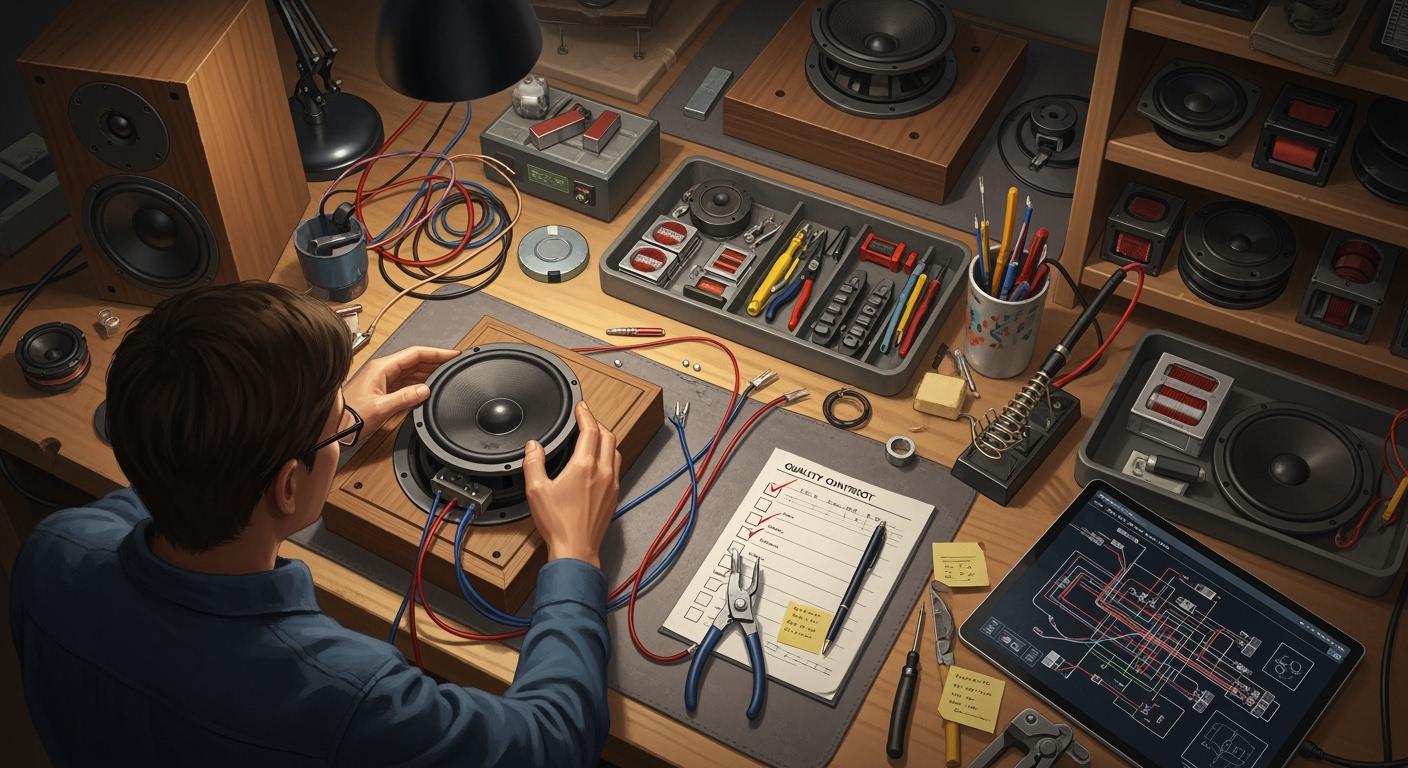
Even with new technology, people still make mistakes in speaker production. To reduce human errors, you can lower mistakes by providing clear instructions, good training, and smart error-proofing tools. Use simple steps to fix problems with machines, processes, and management in your production line.
Key Takeaways
Give clear instructions and use pictures to help workers know their jobs. This lowers mistakes and makes the products better.
Have training often for new and current workers. Learning all the time keeps skills good and stops mistakes.
Use tools that stop errors and machines that work by themselves to find mistakes early. These tools help work go faster and make sure speakers are made well.
Common Human Errors
Speaker production has many steps. Each step can have mistakes if you do not use best practices. Knowing about these mistakes helps you make fewer errors. This also helps you make better speakers.
Assembly Mistakes
Assembly mistakes often happen with new workers. They may not know how to fit speaker cones or connect wires. Sometimes, tools get old and cause problems. Weather, like high humidity or heat, can hurt sensitive parts like cones.
Tip: Check your tools often. Teach new workers to find and fix problems early.
Some assembly mistakes are:
Wires connected the wrong way
Magnets or cones not lined up right
Using tools that are too old
Component Placement Errors
Putting the wrong part in the wrong place can break speakers. This happens when workers hurry or skip steps. Parts like diaphragms need gentle care. If you do not keep the area clean, dust or water can cause problems.
Factor | What to Measure | Key Metric | Alert Threshold |
|---|---|---|---|
Accuracy | Transcription correctness | Word Error Rate (WER) | >10% warning, >15% critical |
Drift | Performance change over time | WER delta from baseline | >2% investigate, >5% critical |
Environment | Noise robustness | WER under noise | >5% degradation vs clean |
Demographics | Speaker group fairness | WER by age/accent | >3% variance across groups |
Latency | Processing speed | Time-to-transcript P90 | >300ms warning, >500ms critical |
You should watch these numbers to find mistakes before they hurt your speakers.
Testing and Documentation Issues
Testing and documentation mistakes can hurt your company. If you do not write test results the right way, you might miss problems. You may not find out what went wrong later. Documentation mistakes can cause:
More support costs because customers need extra help.
Lower productivity since workers use wrong information.
Wrong steps, which can slow down work and cost money.
Compliance risks, which can lead to legal trouble.
Damage to your reputation, so customers may not trust you.
If you work on these areas, you can make fewer mistakes. You will also make better speakers for your customers.
Standardized Work Instructions to Reduce Human Errors
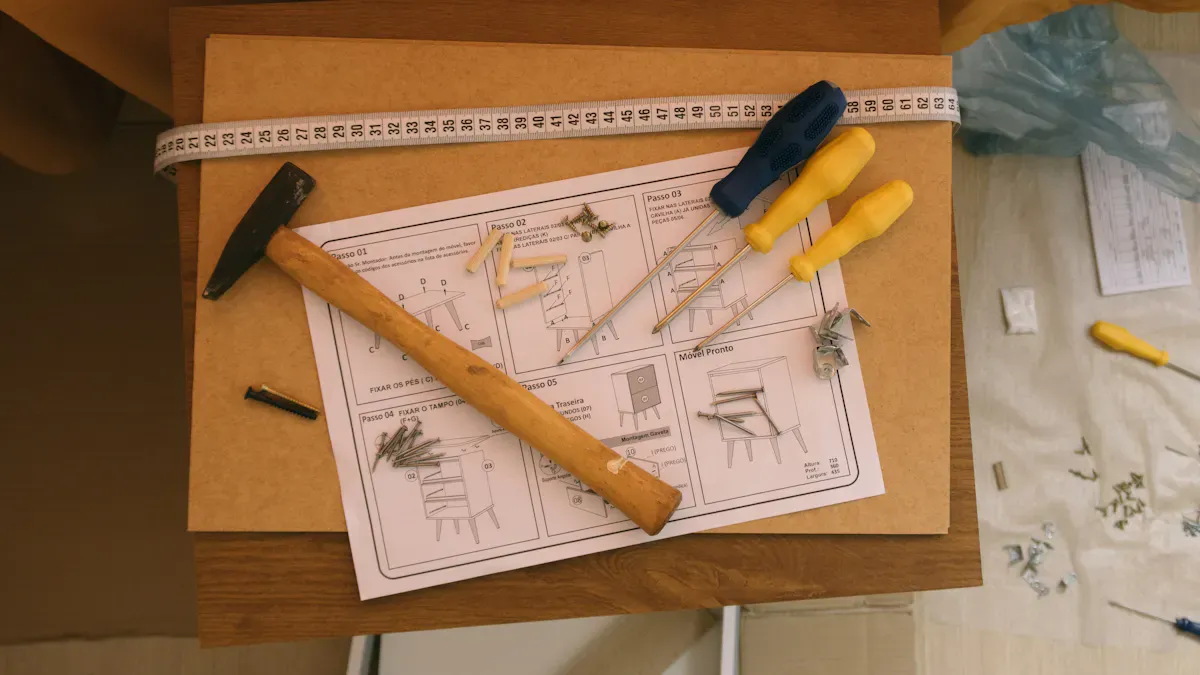
Clear and simple work instructions help lower mistakes in speaker production. When you use easy steps, checklists, and pictures, your work gets better. These tools make your team faster and help you build good speakers. ZEH Audio suggests these ways to help your team do well and get the same results every time.
Step-by-Step Procedures
Step-by-step procedures show you what to do for each job. You follow each step in order to stop mistakes. These steps make your work simple and easy to repeat. New workers learn faster and can follow the right way. Digital instructions let you change steps quickly, so your team always knows what to do.
Benefit | Explanation |
|---|---|
Standardization | Makes sure jobs are done the same way, so there are fewer mistakes. |
Clear, Repeatable Steps | Gives workers clear steps, so they make fewer errors. |
Visual Aids | Uses pictures or videos to make hard jobs easier. |
Quick Onboarding for New Hires | Helps new workers learn fast and do things the right way. |
Access to Up-to-Date Information | Digital steps give new info fast, so mistakes go down. |
Step-by-step procedures also help you work faster and make better speakers. You see fewer mistakes and do not have to fix as much. Your team works safely and meets quality rules every time.
Aspect | Impact on Production Efficiency and Quality |
|---|---|
Standardization | Makes sure all jobs are done the same way. |
Consistency | Workers do jobs the same way, which helps with quality. |
Error Reduction | Fewer mistakes mean better speakers. |
Task Execution Speed | Jobs get done faster and with fewer errors. |
Rework Reduction | Less fixing means more work gets done. |
Safety Improvement | Clear steps help keep everyone safe. |
Quality Standards | Workers meet the rules for good speakers. |
Tip: Use digital guides for fast changes and easy use. This helps your team make fewer mistakes and stay up to date.
Effective Checklists
Good checklists help you remember every step. You use them to check machines, safety gear, and emergency plans. Checklists make your work safer and more organized. You can also track training and make sure everyone follows the rules.
Key Element | Description |
|---|---|
Equipment Inspections | Check machines often to make sure they work and are safe. |
Personal Protective Equipment (PPE) | Make sure you use the right safety gear for each job. |
Emergency Procedures | Check exits and plans so everyone is safe in an emergency. |
Training and Compliance Monitoring | Watch training to make sure everyone uses the checklist. |
Checklists help you make sure nothing is missed. Your team stays safe and does each step the right way. You stop accidents and keep your line working well.
Note: Look at your checklists often. Change them if you get new machines or change your process.
Visual Guides
Visual guides help you see how to do hard jobs. You look at pictures, diagrams, or videos for each step. These guides make your instructions clear and simple. Workers who do not speak English well or read much can use visual guides to do jobs right.
Visual instructions make hard jobs easier and help stop mistakes.
They help workers understand by showing each step with pictures.
Visual guides make sure everyone does the job the same way, which is important in factories.
They help workers who do not speak English well or read much, so everyone can do the job.
You use visual guides to stop mistakes and make better speakers. Your team feels sure about their work and makes fewer errors. ZEH Audio uses visual guides to help workers do each step right and keep high standards.
Callout: Visual guides are great for training and daily work. They help you build a strong and skilled team.
When you use clear work instructions, you make your speaker production strong. You lower mistakes, work faster, and make better speakers for your customers. ZEH Audio helps you with good ideas and expert help.
Employee Training Programs
Onboarding Essentials
Strong onboarding helps new workers do well in speaker production. Clear training shows new hires each step and helps them avoid mistakes. You can use digital work instructions that let new workers interact. Real-world practice lets new hires see and fix problems. AI-driven learning changes to fit each person’s needs and speed.
Digital work instructions help new workers pay attention and remember.
Real-world practice lets workers see real problems and make fewer mistakes.
AI-driven learning works for many ways people learn.
Tip: Use digital onboarding tools. They help new workers learn faster and make fewer mistakes.
Ongoing Skills Development
You need to keep training your team to help them get better and make fewer mistakes. Regular training keeps workers ready and helps them follow new steps. You can use workshops, practice, and feedback to help your team. These ways help your team fix problems fast and keep quality high.
Benefit | Description |
|---|---|
Better Representation | Trained workers show your company is good at public events. |
Increased Confidence | Training helps workers feel sure about their jobs. |
Higher Employee Satisfaction | Training shows you care about your team, so they like their jobs more. |
Effective Communication | Training helps your team share your company’s goals clearly. |
Improved Internal Communication | Training helps your team work together better every day. |
Training for New Technologies
You need to train your team when you get new machines or software. Fast training helps workers use new tools safely and the right way. You can use videos, digital guides, and practice to teach new things. This keeps your line working well and helps you stay ahead.
Callout: ZEH Audio gives expert training for new technologies. This helps your team always meet high standards.
Error-Proofing and Automation
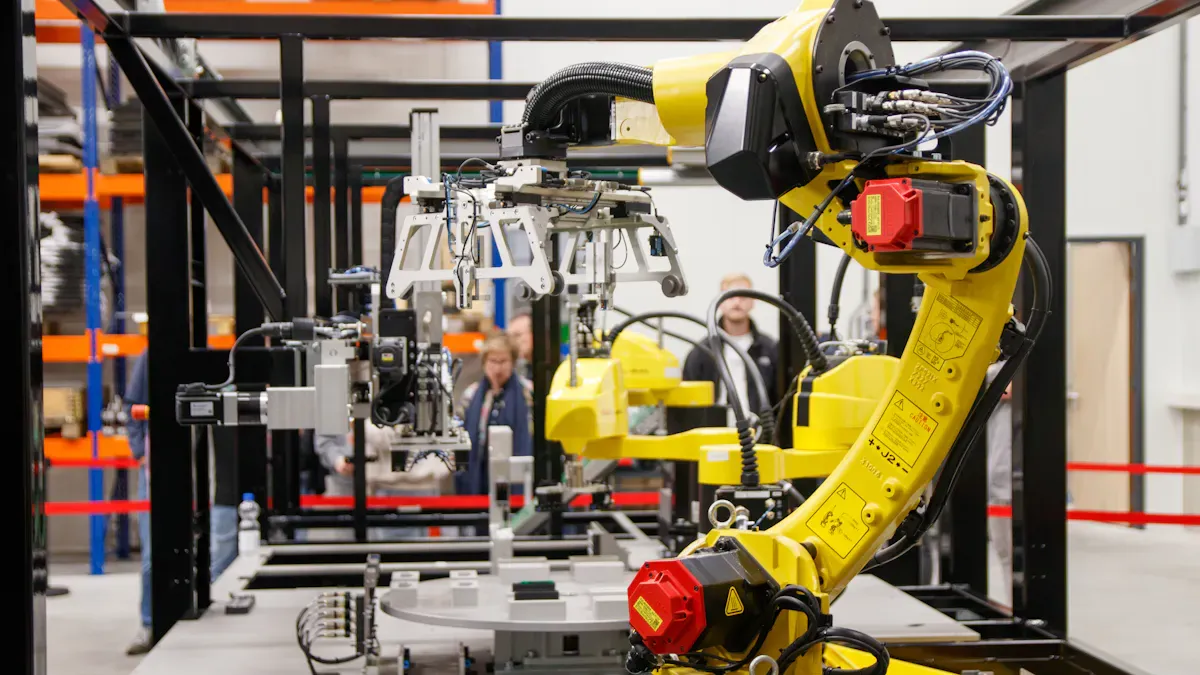
You can make your speaker line better with error-proofing and automation. These tools help you find mistakes before they happen. They also make your work faster and more steady.
Automated Systems
Automated systems use machines and software to do jobs people did by hand. Robots and PLC controls do the same tasks over and over. This helps workers not get tired and keeps work steady. Sensors and IoT devices watch your line and warn you if something is wrong. Digital work instructions show each step so you do not miss anything. Software and analytics check your data and tell you if quality drops.
Automation Technique | Impact on Human Errors |
|---|---|
Robots/PLC Control | Automates repetitive tasks, reducing fatigue-related mistakes and boosting consistency. |
Sensors and IoT | Early detection of issues through sensors, preventing assembly errors by notifying operators of deviations. |
Digital Work Instructions | Provides interactive instructions that improve comprehension and ensure steps are verified before proceeding. |
Software and Analytics | Tracks production data to catch quality drifts and alerts managers to recurring issues, enhancing overall quality control. |
Tip: Use automated systems to keep your line smooth and catch problems early.
Error-Proofing Tools
Error-proofing tools, called poka-yoke, help you stop mistakes before they reach customers. You can use jigs, fixtures, and guides to make sure parts only fit one way. Color coding and sensors help you pick the right part every time. These tools make your line safer and help you meet high standards.
Jigs and fixtures hold parts in the right spot.
Sensors check if you use the right part.
Color codes help you not mix up parts.
Digital Monitoring
Digital monitoring lets you watch your whole line as it works. You can find problems fast and fix them before they get worse. Software checks your data and shows where mistakes happen most. This helps you see patterns and make your process better.
ZEH Audio uses smart automation and digital tools to help you lower human errors. Their custom solutions fit your needs and give your team expert help. You get better quality, faster work, and fewer mistakes.
Callout: ZEH Audio’s automation and monitoring systems help you build speakers you can trust and meet world standards.
Communication and Feedback
Strong communication helps your team work better and make fewer mistakes. You need clear messages and fast feedback to keep your speaker production line running smoothly.
Team Communication Practices
You can build a strong team by using good communication habits. Start by planning your messages. Make sure you know what you want to say before you speak. Change your workspace to help people talk easily. Lower noise and use visual aids so everyone understands. Always encourage your team to ask questions and share ideas. This helps everyone feel included and stops confusion.
Practice | Description |
|---|---|
Planning Messages | Think about your message before you share it. |
Optimizing the Communication Environment | Make your space quiet and use visuals to help people understand. |
Fostering Two-Way Communication | Let team members ask questions and give feedback. |
Improving Active Listening Skills | Listen carefully and show you value what others say. |
Set clear rules for how often your team should talk.
Keep meetings short and clear to avoid mistakes.
Tip: Focus on the speaker, ask questions, and repeat what you hear to check understanding.
Immediate Corrective Feedback
You need to give feedback right away when you see a mistake. Quick feedback helps your team fix problems before they grow. When you notice an error, talk to the worker in a positive way. Show them what went wrong and how to do it right. Use simple words and examples. This helps your team learn fast and keeps your line safe.
Follow these steps for better feedback:
Focus your attention on the person.
Stay present and listen.
Ask questions to make sure you both understand.
Repeat what you heard to check.
Think about how you can listen better next time.
You can reduce human errors by building a culture where everyone talks openly and learns from mistakes. ZEH Audio supports your team with tools and training to keep communication strong and your speakers top quality.
Process Monitoring and Continuous Improvement
Continuous improvement means you always try to get better. You start by watching your process closely. Track what happens and check your steps often. This helps you find problems early. Then you can fix them so your team works better.
Identifying Error Patterns
You need to look for mistakes that happen again and again. Use acoustic analysis to check how the sound works and find deletion errors. Neurocognitive theories help you learn why workers make mistakes. Repetition training helps workers who have trouble with motor errors get better. Here is a table with common ways to find errors:
Method | Description |
|---|---|
Acoustic Analysis | Looks at sound to find different kinds of errors. |
Neurocognitive Theories | Uses ideas and tests to spot error differences. |
Repetition Training | Checks if practice helps fix motor errors. |
You can use these ways to find patterns and fix them before they hurt quality.
Regular Process Reviews
You should check your process all the time. Real-time monitoring with Statistical Process Control (SPC) keeps your quality high. For example, you can track magnetic flux density with control limits to stop bad products. Machine learning models use test data every day to find patterns. If you compare how you make things with how they work in the field, you can see problems early and fix them. Here are some things you can measure:
Measurable Outcome | Description |
|---|---|
Throughput | How much you make in a certain time. |
Margins | The difference between what it costs and what you sell it for. |
Cycle Times | How long it takes to finish one job. |
Defect Rates | How many products do not meet the rules. |
Pick key performance indicators (KPIs) and see if you meet your goals. Find where you need to get better and change your process.
Fostering Accountability
You make your team strong by building accountability. Set clear goals and tell everyone what you expect. Build trust and respect in your team. Let people talk openly and give feedback often. Leaders should show how to be accountable and help workers grow.
Set clear goals and tell your team what you want
Build trust and respect with everyone
Let people share ideas and talk about problems
Give feedback often so people can improve
Leaders should show how to be responsible
Help workers learn and get better
When you watch your process and try to improve, you make fewer mistakes. Your speaker production stays strong and reliable. ZEH Audio can help you use these ideas to reach high standards.
You can lower human mistakes by giving clear instructions and good training. Using mistake-proofing tools also helps a lot. Many companies see better quality and safer work with mistake-proofing.
Mistake-proofing helps people do things right and makes teams want to get better.
Subtitle errors in ASR systems make speaker scores worse for all users.
Check your process often and ask your team to keep learning new things.
FAQ
What is the most common human error in speaker production?
The most common mistake is during assembly. Workers might put parts in the wrong place or connect wires the wrong way. These mistakes can make the speakers not work well and cost more money to fix.
How can you quickly train new workers to avoid mistakes?
You can use digital guides to show steps. Let new workers practice with real parts. Use pictures and videos to help them understand. These tools help new workers learn faster and make fewer mistakes.
Why should you use error-proofing tools in your process?
Error-proofing tools help stop mistakes before customers get the speakers. They make your speakers better and save time. These tools also help protect your company’s good name.