
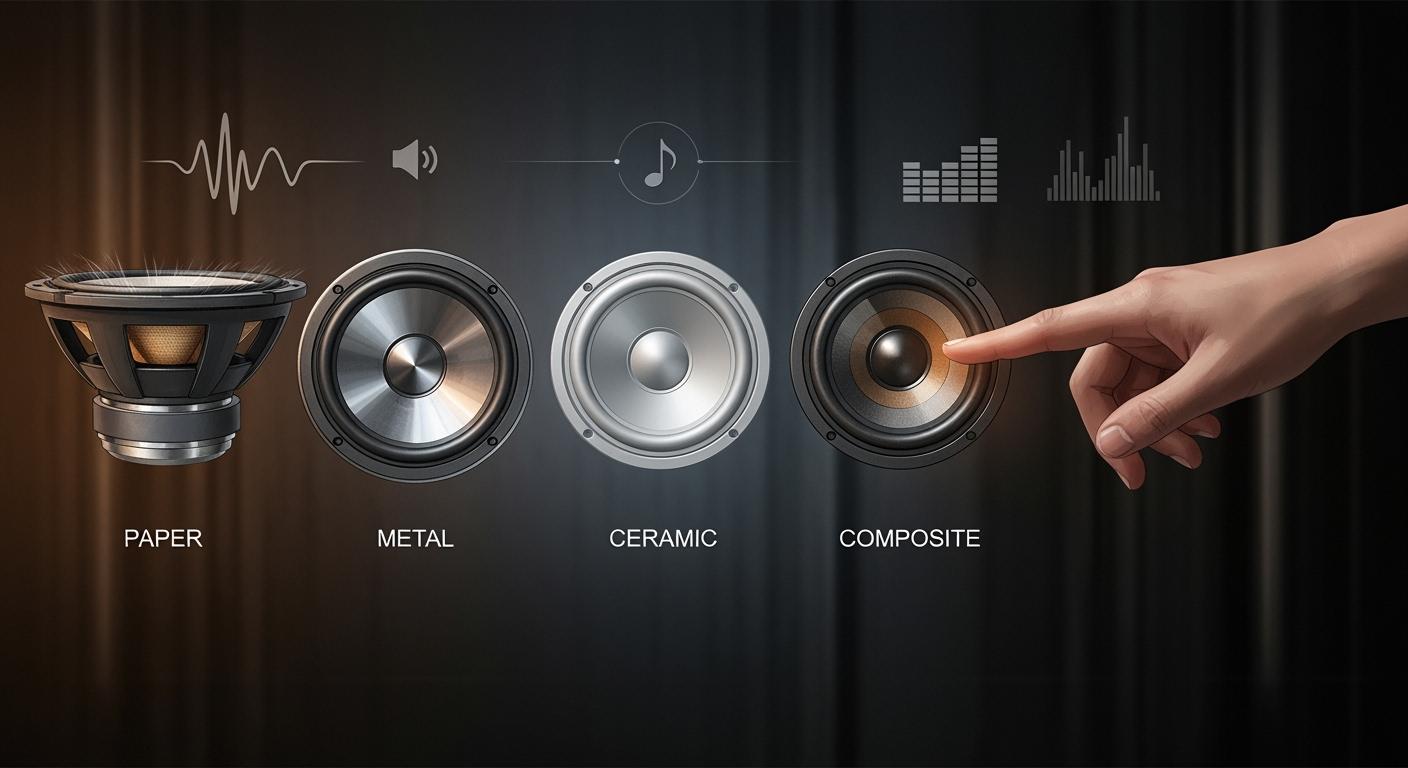
The materials used for speaker driver units affect the sound you hear. Your needs will be different depending on where you use your speakers. Here are some common situations:
Homes need clear and balanced sound in small rooms.
Studios need precise sound for careful listening.
Live sound setups can be for small talks or big concerts, and each needs special speaker designs.
Think about your space and the sound you want before you choose.
Key Takeaways
Pick speaker driver materials for your room. Paper cones sound warm at home. Polypropylene works well outside.
Learn how materials change sound. Aluminum makes sound clear. Kevlar gives accurate sound. These are good for studio monitors.
Think about how long materials last and how well they work. Rubber surrounds are tough for outdoor speakers. Foam is lighter but does not last as long.
Choose driver types for the sound you like. Cone drivers make strong bass. Dome drivers give clear treble. This helps you get balanced sound.
Try speakers in your own room if you can. The way your room is built changes the sound a lot. Make sure your speakers fit your space.
Why Material Choice Matters for Speaker Driver Units
Impact on Sound Quality
The material of speaker driver units changes how music and movies sound. Each material affects how the speaker moves and makes sound. Some materials help you hear clear highs. Others make the bass louder. For example, high-linearity materials like aluminum keep distortion very low. Sometimes distortion is less than 2%. Premium studio monitors can have distortion under 0.5% at normal volume. If distortion goes above 3–5%, the sound will not be as clean.
You should also think about how the material changes frequency response. The right material helps the speaker play all notes evenly. This includes deep bass and sharp treble. The design of the speaker driver units matters too. Good design can make frequency response better. It can also lower unwanted noise.
Here is a table that shows how different things affect sound quality, durability, and efficiency:
Factor | Influence on Sound Quality, Durability, and Efficiency |
|---|---|
Driver characteristics | Important for sound quality. They affect frequency response, distortion, and power handling. |
Mechanical design | Helps speakers last longer. It makes them strong and able to handle tough conditions. |
Power consumption | Using power well means matching low-power amplifiers to driver units. This makes everything work better. |
Durability and Efficiency
The material you choose for speaker driver units affects how long they last and how well they work. Rubber surrounds are strong and resist water and sunlight. They are good for outdoor speakers. Foam surrounds are light and bend easily. But they can break down in tough places. Fabric surrounds last a long time and stay flexible. They can cost more.
You need to pick the right material for your space and system. For example:
Matching mechanical impedance helps speakers send sound into the air better.
Horns and enclosures help match speakers to the room. This makes sound clearer and stronger.
If you want your speakers to last, pick materials that can handle where you use them.
By thinking about these things, you can choose speaker driver units that sound great and last a long time.
Speaker Driver Materials Overview

When you pick speaker driver units, the material of the cone or diaphragm changes how your music sounds. Each material has good and bad points. Here are some common choices.
Paper Cones
Paper cones have been used for a long time. You can find them in cheap and expensive speakers. Paper is light, so it moves fast and gives clear, natural sound. It also stops sharp or harsh noises. This makes music sound warm and nice. Many people like paper cones because they are light, stiff, and stop extra noise. But paper does not do well with water, and it can change shape as time goes by.
Tip: If you want your music to sound natural and balanced, paper cones are a good pick for home audio.
Feature | Paper Cone | Other Materials |
|---|---|---|
Rigidity and Flexibility | High | Varies |
Internal Damping | High | Varies |
Tone Performance | Natural and full bass | Varies |
Moisture Resistance | Poor | Generally better |
Manufacturing Consistency | Difficult to control | Generally better |
Cost | Low, widely used in budget speakers | Higher for premium materials |
Polypropylene and Plastics
Polypropylene is a kind of plastic used in many speaker driver units. It is strong, light, and does not let water in. This makes it good for outdoor or portable speakers. Polypropylene cones give smooth sound, mostly in the middle and low notes. They last a long time and do not change much as they get older. But they are not as stiff as some other materials, so high notes may not sound as clear.
Pros: Durable, moisture resistant, affordable, consistent sound.
Cons: Less rigid, weaker high-frequency response.
Kevlar and Composites
Kevlar is a strong, woven material. You see it in high-performance speakers. Kevlar cones are very strong and light, so they move fast and do not bend easily. This gives clear sound with little distortion. Kevlar lasts a long time and does not break easily. Some people think Kevlar sounds a bit sharp, but it is good if you want very clear sound.
Best for: High-end home audio and studio monitors where you need clear, detailed sound.
Note: Kevlar costs more and takes longer to make than paper or plastic.
Aluminum and Metals
Aluminum and other metals make speaker driver units very stiff. This means they react fast to sound and give sharp, detailed music. Metal cones handle heat well and last a long time. But they can sound a bit metallic or cold if not made right. Metal cones are heavier, which can make them less efficient.
Property/Characteristic | Description |
|---|---|
High Rigidity | Accurate sound, especially in high notes. |
Heat Dissipation | Good for high-power use. |
Durability | Handles moisture and temperature changes. |
Sound Character | Can sound metallic or cold. |
Weight | Heavier than paper or plastic. |
Best Use Cases | Studio monitors, tweeters, high-end systems. |
Remember: The best material depends on what sound you want and where you use your speakers. Paper gives warmth, polypropylene gives strength, Kevlar gives accuracy, and aluminum gives detail.
Types of Speaker Driver Units
Cone and Dome Drivers
Most speakers use cone and dome drivers. Cone drivers have a cone-shaped diaphragm. This part is usually made from paper, polypropylene, or metal. Paper cones make sound warm and natural. They also keep distortion low. Polypropylene cones do not let water in. They last a long time, so they are good for outside. Metal cones, like aluminum or titanium, give clear high notes. But they might sound harsh if not made well.
Dome drivers have a dome-shaped diaphragm. You often see silk, aluminum, or composite domes. Silk domes sound smooth and clean, especially for high sounds. Aluminum domes make highs crisp and detailed. Composite domes are strong and light. This helps control the sound.
Driver Type | Common Materials Used | Sound Qualities | Best Applications |
|---|---|---|---|
Cone | Paper, Polypropylene, Metal | Warm, natural, or bright | Woofers, midrange, full-range |
Dome | Silk, Aluminum, Composite | Smooth, detailed highs | Tweeters, high-frequency drivers |
Tip: Use cone drivers for bass and middle sounds. Pick dome drivers for clear treble in two-way or three-way speakers.
Planar, Ribbon, and Heil AMT Drivers
Planar drivers use thin films like Mylar or polyester. These films have a special coating that lets them carry sound. Planar drivers move air evenly. This makes the sound wide and open. Ribbon drivers use thin strips of metal, like aluminum or titanium. They react fast and make very clear, detailed highs. Heil AMT drivers use folded polyimide film with metal lines. They move air quickly and give crisp, accurate sound.
Driver Type | Diaphragm Materials | Sound Qualities | Best Applications |
|---|---|---|---|
Planar | Mylar, Polyester | Open, wide sound | High-end speakers, studio monitors |
Ribbon | Aluminum, Titanium | Fast, detailed highs | Tweeters, audiophile systems |
Heil AMT | Polyimide film with metal | Crisp, accurate highs | Studio monitors, premium speakers |
You should pick planar, ribbon, or AMT drivers for high detail and fast sound. These types are best for studio monitors or high-end home speakers. For deep bass, use cone drivers as woofers. For full sound, use more than one driver type in your system. This way, you can match each material and driver to the sound you want.
Comparing Sound Qualities by Material

Clarity and Detail
You want your music and movies to sound clear. The material in your speaker driver units changes how much detail you hear. Beryllium is very fast and makes sharp, clear highs. It works best in tweeters and mid-range drivers. But it can be hard to match with woofers. ZYLON is a strong fiber that gives balanced sound for all notes. Speakers like the Yamaha NS-5000 use ZYLON. Paper cones help you hear natural sound and good detail. Polypropylene gives smooth sound, but highs may not be as sharp.
Warmth and Naturalness
You may want your speakers to sound warm and real. The right material helps with this.
Paper and mylar are both light and stiff.
These materials let the speaker move fast and keep its shape.
Mylar also keeps out water, so your sound stays warm and natural.
Bass and Dynamics
Bass and dynamics make music feel strong and exciting. The material and design of the driver matter here. Look at this table to see how different drivers work:
Driver Type | Key Properties | Impact on Bass Response and Dynamic Range |
|---|---|---|
Mass Loaded Pistonic Drivers | Heavy, springy, and uses a resonant system | Small frequency range, slow response, and uneven sound direction |
Tympanic or Membrane Drivers | Light, big surface, and quick response | Best for high notes, not good for bass because of low power |
DDD Driver | Very light, bends and spreads sound in many ways | Wide frequency range, fast response, and no crossover problems |
If you want strong bass, pick drivers with the right weight and stiffness. Kevlar and aluminum help make deep bass and lively sound.
Longevity and Reliability
You want your speakers to last a long time. The material you choose matters a lot.
Feature | Description |
|---|---|
Advanced technology | Voice coils and diaphragms that resist heat for tough jobs |
Durability | Top materials last long and stay stable in big setups |
Exceptional sensitivity | High output and steady sound even in hard places |
Pick materials that fit your space and needs. For outdoor or high-power use, choose strong, heat-resistant parts. This way, your speakers will sound good for many years.
Selecting Speaker Driver Units for Different Applications
Home Audio
You want your home speakers to sound clear and nice. The size of your room and your furniture change the sound. Pick speaker driver units that fit your space and how you listen. Paper woofers make bass sound warm and natural. Composite materials help you hear voices and instruments clearly. Soft dome tweeters made from silk give smooth high notes. Metal dome tweeters make highs crisp and bright. If you want loud sound for movies, use a compression driver with a metal diaphragm.
Here is a table to help you choose drivers for home audio:
Driver Type | Material Options | Characteristics |
|---|---|---|
Woofer | Paper, Composite | Light, natural sound, low distortion, good bass |
Tweeter | Soft dome (silk), Metal | Fast high-frequency response, better sound spread |
Midrange Driver | Composite | Clear voices and instruments |
Compression Driver | Metal | High sound pressure, good for home theater |
Tip: Put your speakers away from walls for better sound. ZEH Audio uses special materials to help you get the best sound in your room.
Studio Monitors
Studio monitors help you hear sound accurately. This is important for mixing music or editing audio. Choose speaker driver units with low distortion and flat frequency response. Paper cones give clear and true sound. Polypropylene cones resist water and last a long time. Metal cones move fast and give sharp detail. Carbon fiber and Kevlar drivers are strong and light. They help you hear every detail in your mix.
Check this table for the best materials for studio monitors:
Material Type | Key Properties | Suitability for Studio Monitors |
|---|---|---|
Paper Cones | Light, rigid, good damping | Very accurate sound, low distortion |
Polypropylene Cones | Light, moisture-resistant, good damping | Good for many uses, less rigid |
Metal Cones | Stiff, light, precise | Best for mid and high frequencies |
Carbon Fiber/Kevlar | Strong, light, durable | Top choice for high-end monitors |
Acrylic-Treated Cloth | Moisture and heat resistant | Good for tough studio environments |
Note: ZEH Audio picks materials so you hear every detail. You can trust your mixes on these speakers.
Live Sound and PA
Live sound and PA speakers are used for concerts, events, or speeches. These speakers must play loud and fill big spaces. Pick speaker driver units that handle lots of power and last a long time. Metal and composite drivers work well for these jobs. They give strong sound and resist damage. Think about sound pressure level (SPL). High SPL means your speakers can play louder without breaking.
Use efficient drivers to get more sound from the same power.
Pick wide coverage for main speakers and narrow coverage for stage monitors.
Match your speaker size and power to the room and audience.
ZEH Audio makes speaker driver units for live sound that deliver high SPL and last through many shows. You get clear sound, even in big places.
Portable Speakers
Portable speakers should be light, strong, and sound good. The material of the speaker driver units and the enclosure changes the sound and how easy it is to carry. Plastic enclosures keep the speaker light and cheap. Composite materials make the sound better and last longer. Rubber parts protect the speaker from water and bumps. Wood gives warm sound but makes the speaker heavy.
Here is a table to help you compare materials for portable speakers:
Material | Pros | Cons |
|---|---|---|
Wood | Warm, natural sound, strong | Heavy, more costly |
Plastic | Light, cheap, easy to shape | Can change sound, may distort at high volume |
Composite Materials | Good sound, strong, lasts long | More costly than plastic |
Rubber | Waterproof, tough, resists damage | Can lower sound clarity and volume |
Use full-range drivers to save space.
Choose Class D amplifiers for better battery life.
ZEH Audio uses smart material choices to balance sound, weight, and power in portable speakers.
Remember: The right material and driver type help you get the best sound for your needs. Always match your speaker driver units to your space, style, and use.
Matching Driver Materials to Listener Preferences
Bass-Heavy Sound
Some people like music with a lot of bass. To get this, you need the right speaker driver materials and designs. Think about what music you listen to most. If you like hip-hop, EDM, or pop, you probably want deep bass. Check your favorite albums and artists. See if you like electronic beats or live bands more. Decide if you care more about deep bass or strong beats. Big woofers and bass reflex designs help you feel the music. Here are some ideas:
Think about what music you listen to most.
Look at your music for patterns in sound.
Choose speakers with big woofers or bass reflex for more bass.
Tip: For strong bass, pick drivers made from polypropylene or Kevlar. These materials are good for low sounds and last a long time.
Balanced and Neutral
Some people want their speakers to sound clear and real. Balanced and neutral sound is good for many kinds of music. Paper, Kevlar, and wool fiber help you get this sound. These materials are stiff but also bend a little. This gives you deep bass and clear voices. Oxygen-free copper makes the sound full and keeps voices clear. Here is a table to compare materials:
Material | Characteristics | Sound Influence |
|---|---|---|
Oxygen-Free Copper | Makes mid and low sounds full, keeps voices clear | Good for most music, best with bright speakers |
Paper Cone | Stiff and flexible, stops extra noise | Full sound, strong bass |
Kevlar Cone | Plays many notes, low distortion | Deep bass, rich middle sounds |
Wool Fiber Cone | Soft, easy to listen to | Pure, natural voices |
Oxygen-free copper gives full and clear sound.
Paper cones give strong bass and natural sound.
Kevlar cones give deep bass and rich middle sounds.
Wool fiber cones make voices sound soft and pure.
High Detail and Clarity
Some people want to hear every small sound in music. Materials and designs that stop distortion help make sound clear. Steel support in speakers lowers bad vibrations. This makes music clearer and more detailed. Concentric point source designs line up the drivers. This means sound waves reach your ears at the same time. You hear sharp highs and clear middle sounds. Here is a table with more details:
Material/Design | Benefits |
|---|---|
Enhanced Steel Structural Support | Lowers distortion, makes sound clearer and more detailed |
Concentric Point Source Design | Lines up drivers, stops phase problems, sound waves arrive together |
Note: If you want clear sound, pick speaker drivers with steel support and point source design. These help you hear every note and instrument.
Step-by-Step Selection Guide
Choosing the right speaker driver units can feel confusing. You can make a smart choice by following these steps. This guide will help you match your sound needs with the best materials and designs.
Define Sound Priorities
Start by thinking about what matters most to you in sound. Ask yourself what you want to hear when you play music or movies. Here is a simple process you can follow:
Check if your speakers will work well with your audio system. This helps you avoid distortion and poor sound.
Focus on sound quality. Pick high-quality woofers, tweeters, and crossovers for the best results.
Look at speaker sensitivity and power handling. High sensitivity means you get more sound with less power. Good power handling lets you play music louder without damage.
Study the materials used in the drivers. Materials like Mylar and mica-infused polypropylene give better sound and last longer.
Research brands and read reviews. Choose brands that have a good reputation and happy customers.
Tip: Write down your top three sound goals. For example, you might want deep bass, clear voices, or bright highs. This will help you focus as you compare options.
Assess Environment and System
Your room and equipment change how your speakers sound. You should look at these things before you decide:
Think about your amplifier. Make sure it has enough power and headroom for your speakers.
Look at your room. Is it full of soft things like carpets and curtains, or is it empty and echoey? Soft rooms absorb sound, while hard rooms reflect it.
Check where you will put your speakers. Good placement helps you hear all the details.
Remember that showrooms are not like your home. Take notes when you listen in a store, but test the speakers in your own space if you can.
Pay attention to frequency response. This tells you how well the speaker plays all the notes you can hear.
Look at total harmonic distortion plus noise (THD+N). Lower numbers mean cleaner sound.
Note: Even the best speaker driver units can sound bad in the wrong room or with the wrong setup. Always think about your whole system.
Compare and Decide
Now you can compare your choices. Use a table to look at the most important features side by side. This will help you see which speaker driver units fit your needs best.
Criteria | Description |
|---|---|
Driver Types | Choose from cone, dome, or horn drivers. Each works best for certain sounds. |
Key Specifications | Look at size, material, frequency response, sensitivity, impedance, and power handling. |
Material Influences | Materials like paper, polypropylene, Kevlar, and aluminum change sound, durability, and efficiency. |
Frequency Response | Check the range of notes the driver can play, measured in Hertz (Hz). |
Sensitivity | Higher sensitivity means more sound with less power, measured in decibels (dB). |
Directivity | See how sound spreads in the room. Some drivers send sound in all directions, others are focused. |
Enclosure Compatibility | Make sure the driver works well with your speaker box, like sealed or ported enclosures. |
Thiele-Small Parameters | These numbers show how the driver will perform in different boxes and setups. |
Listen to different speakers if you can. Trust your ears.
Match your top sound priorities with the features in the table.
Pick the speaker driver units that give you the sound you want, fit your room, and work with your system.
Remember: The best choice is the one that matches your sound goals, your room, and your equipment. Take your time and enjoy the process!
Quick-Reference Table and Checklist
You can use this table and checklist to help pick speaker driver unit materials. This section lets you compare materials quickly and make smart choices.
Speaker Driver Material Comparison
Material | Sound Quality Traits | Durability | Best Use Cases | Notes |
|---|---|---|---|---|
Paper | Warm, natural, balanced | Moderate | Home audio, midrange | Good for vocals and warmth |
Polypropylene | Smooth, soft, less detail | High | Portable, outdoor, bass | Water-resistant |
Kevlar/Composite | Clear, detailed, low distortion | Very High | Studio, high-end home | Accurate, more expensive |
Aluminum/Metal | Bright, crisp, detailed | Very High | Tweeters, studio, PA | Can sound metallic |
Silk (Dome) | Smooth, gentle highs | High | Tweeters, home audio | Softens harsh treble |
Ribbon/Planar | Fast, airy, high clarity | Moderate | Studio, audiophile | Needs careful setup |
Tip: Always pick the material that fits your sound goals and where you will use your speakers.
Speaker Driver Selection Checklist
Write your top sound goals.
(For example: deep bass, clear vocals, crisp highs)Look at your listening space.
(Is it home, studio, outdoors, or live events?)Match the driver material to your needs.
(Use the table above to help you decide)Check if your system fits the driver.
(Make sure your amp and enclosure work with your driver)Try listening before buying, if you can.
(Trust your ears and compare different options)Think about how long the material will last.
(Pick materials that stay strong in your space)
✅ Use this checklist every time you shop for speakers. It helps you get the best sound for your needs.
You now know that speaker driver materials and types change how sound is heard and work for different things.
Dynamic drivers make strong bass, but the middle and high sounds are not as clear.
Balanced armature drivers are great for high sounds, but their bass is weak.
Planar magnetic drivers give clear and detailed sound, but they need powerful amplifiers.
Electrostatic drivers make very accurate sound, but they cost more and need strong amps.
Pick the right materials and driver types for what you want. Use the checklist to help you choose. Listen to speakers before you buy them.
FAQ
What material should you choose for the best bass?
You should pick polypropylene or Kevlar drivers for strong bass. These materials move air well and handle low notes with power. Large woofers made from these materials give you deep, punchy bass for music and movies.
Do metal cones sound harsh?
Metal cones, like aluminum, can sound bright or harsh if not designed well. You get crisp highs and clear detail from them. If you want softer treble, choose silk or paper for your tweeters.
Are paper cones good for outdoor speakers?
Paper cones do not resist water well. You should avoid them outside. For outdoor speakers, pick polypropylene or treated composite materials. These last longer and keep your sound clear in any weather.
How do you match driver material to your room?
Look at your room size and how much sound you want. For small rooms, paper or silk drivers give warm, balanced sound. In big rooms, metal or composite drivers help you fill the space with clear, strong audio.
Can you mix different driver materials in one speaker?
Yes, you can mix materials. Many speakers use paper woofers for warmth and metal or silk tweeters for clear highs. Mixing lets you balance bass, midrange, and treble for the sound you want.