
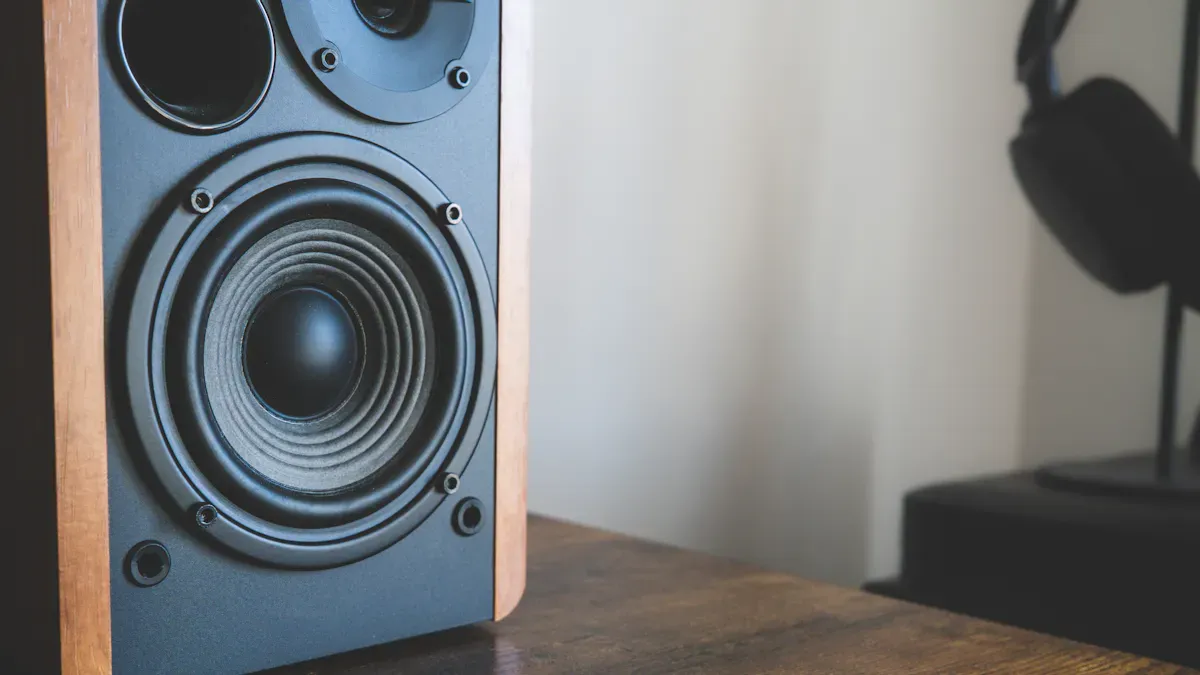
You depend on speaker inspection to make sure your audio products work well every time. Standard steps and known benchmarks help keep speaker quality the same for all makers. The table below explains how these steps help with quality control:
|
Aspect |
Description |
|---|---|
|
Pre-production Samples |
Giving samples for customer approval makes sure the final product is what they want. |
|
ISO Compliance |
Following ISO 9001:2015 rules keeps quality control strong during production. |
|
Quality Inspections |
Careful checks at each step keep quality and performance high. |
End-of-line testing looks at each speaker before it is packed, but how closely it is checked can change. You need strong rules to stop results from being different.
Key Takeaways
-
Use set standards like IEC 60268-3. This helps keep speaker quality the same for all products.
-
Use careful quality control steps at each part of making speakers. This helps find problems early and keeps speakers working well.
-
Teach inspectors well so they get better at finding problems. They also learn to use inspection tools the right way.
-
Test every speaker at the end of the line often. This makes sure each speaker is good before sending it to customers.
-
Ask your team to always try to get better. This helps them keep up with market changes and make better products.
Key Standards for Speaker Inspection
IEC 60268-3 and Industry Benchmarks
You must use well-known quality control standards so your speakers are good everywhere. IEC 60268-3 is a very important standard for testing speakers. This standard tells you how to measure frequency response, distortion, and sensitivity. Many companies use IEC 60268-3 to check their products. There are also industry benchmarks that help you see if your speakers are as good as others. These benchmarks show what is expected for sound quality and reliability.
Audioholics and Other Measurement Standards
You can look at places like Audioholics to learn about measurement standards. Audioholics gives guides and reviews that teach you how to test speakers in real life. These standards help you check things like frequency response, distortion, and output levels. When you use these standards, your quality control stays strong for every batch. Your team can also find problems early and fix them before customers get the products.
Why Standards Matter
Standards are important to keep your speaker quality the same. When you follow quality control standards, every speaker works just as well. Many companies use mystery shopping to see if their products meet these standards. Mystery shoppers give reports with ratings, photos, and audio recordings. These reports help you find ways to make your speakers better. When you use this feedback, customers are happier and trust your brand more. You also help your business do well in a tough market.
Quality Control Processes in Speaker Manufacturing
Systematic Quality Control Steps
You need a good plan to keep speaker quality high. Many factories have special teams for quality control. These teams check each step and make sure rules are followed. You should use systems to check all parts when they arrive. Checking during production helps you find problems early. You also need to test how each speaker works. Reliability and durability tests show if speakers last under stress. Before shipping, you must check every product one last time. The table below lists common steps:
|
Quality Control Step |
Description |
|---|---|
|
Independent Quality Control Departments |
Separate teams check and enforce quality standards. |
|
Incoming Material Inspection Systems |
Inspect all materials for defects before use. |
|
In-Process Quality Monitoring |
Check quality at key points during production. |
|
Functional and Performance Testing |
Test electrical and acoustic performance of each unit. |
|
Reliability and Durability Testing |
Stress tests to ensure long-term use. |
|
Final Inspection and Shipment Approval |
Last check before products leave the factory. |
Raw Materials to Final Delivery
You must check quality from start to finish. Begin with technical documents and a list of parts. Make sure your machines can build the product. Check part quality and look for problems that could hurt mass production. Study the whole process and review your quality checks. Use tests like salt spray, product life, and thermal shock. Watch production with computer-aided stations. Check every speaker with Klippel systems to see if transducer parameters are correct.
Identifying Defects in Mass Production
You need clear ways to find defects in big batches. Use Total Harmonic Distortion to check sound quality. Check dynamic range and frequency response to see if speakers work well. Go/No Go gauges help you find bad parts fast. Acceptance sampling lets you test a few units to judge the batch. If you find problems, check your board design or test stations. These steps help you keep quality high and make sure every speaker meets your standards.
Speaker Inspection Procedures
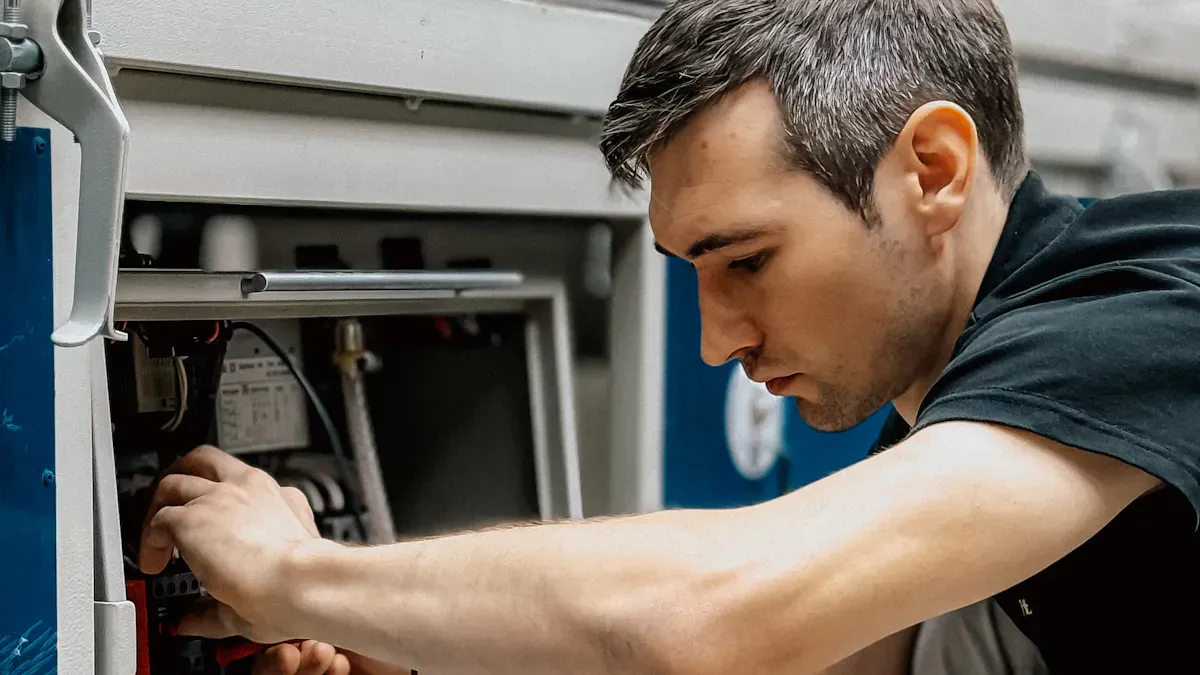
Pre-Test Visual and Physical Checks
You begin by looking at and touching the speakers. These checks help you find problems before testing with sound. You must follow industry standards so every speaker is good.
-
Train your workers with defect test sets. This helps them find common problems.
-
Make clear groups for defects. This makes sorting and reporting easier.
-
Set up inspection tables with good lighting and plain backgrounds. Block sunlight and glare from the area.
-
Keep the light between 2,000 and 3,750 lux for best results.
-
Give workers breaks. No one should check for more than one hour without stopping.
-
Use sampling plans to check groups of speakers.
Tip: Good lighting and breaks help your team find small problems that can hurt how the speaker works.
Frequency Response and Distortion Testing
You need to test speakers for frequency response and distortion. These tests show if your speakers sound good. There are different ways to measure these things.
-
Frequency Response: Check how well the speaker plays low and high sounds.
-
Continuous Sweep: Play a tone that moves through all the sounds.
-
Stepped Frequency Sweep: Play tones at set steps to look for changes.
-
Acoustic Response: Use microphones to hear how the speaker sounds in a room.
-
Multitone and Bandpass Sweeps: Test how the speaker handles many sounds at once.
-
Transfer Function: Use white noise or speech to see how the speaker reacts.
-
Signal Analyzer (FFT): Check the output for extra noise.
You should measure frequency response at 2.83v/1m. This gives you a starting point to compare sensitivity. Use nearfield methods to check for harmonic and intermodulated distortion at different loudness levels.
A good frequency response means the speaker sounds even. If the middle sounds are higher, voices will be stronger. If high sounds drop off, the music will sound dull. Distortion tests help you find extra noise that can make the sound unclear. These tests are important for quality control and meeting industry standards.
Stereo Imaging and Channel Balance
You need to check stereo imaging and channel balance. This makes sure your speakers give a clear sound picture. Follow these steps:
-
Pick 2-3 songs with clear singing and instruments.
-
Play music at a normal volume. Listen for even sound and clear notes.
-
Turn up the volume. Listen for strong bass and clear high sounds.
-
Focus on drums, singing, piano, and cymbals.
-
Move your seat to the side. See if the sound stays even.
-
Try different types of music. Check if the speaker stays clear.
-
Move the speakers. Try turning them in or moving them closer to the wall.
-
Stop and think. Ask if you like the sound or feel tired.
-
Write down what you notice. Compare with other speakers if you can.
-
Listen for a while. Good speakers often sound better the longer you listen.
Note: Good stereo imaging and channel balance help people enjoy music the way the artist wanted.
End-of-Line Audio Testing
End-of-line audio testing is the last step before shipping. You need to find any problems missed before. Common problems are distortion, which can make speakers hard to listen to. You also need to test in hot, cold, and shaking places to make sure speakers last.
-
Test for distortion and extra noise.
-
Run tests for heat, cold, and shaking to check strength.
-
Do long tests to see if the speaker stays good over time.
You must follow strict rules during end-of-line testing. This step makes sure every speaker you send out is good and works well for your customers.
Applying Standards and Procedures
Integrating Standards into Workflows
You must follow industry standards to keep your speaker checks reliable. First, set up clear steps for quality control. Use standards like IEC 60268-3 to help with testing. Make sure your team checks every speaker at each step. ZEH Audio uses these rules in all their work. The company makes custom plans for OEM and ODM clients. ZEH Audio’s technical team looks at each project and changes tests to fit what clients want. This gives you steady results and quick feedback. This way helps you stop mistakes and makes sure your products meet world rules.
Tools and Equipment for Inspection
You need the right tools to test speakers and keep quality high. Each tool has its own job. The table below lists common tools used for speaker checks:
|
Tools/Equipment |
Purpose/Function |
|---|---|
|
PCB manufacturing |
Checks quality and how electronic parts work |
|
PCB components assembly |
Soldering parts together |
|
Lithium batteries assembling |
Cutting and sealing batteries |
|
Plastic injection molding |
Makes housing parts |
|
Aluminum CNC machining |
Makes housing parts with care |
|
Stamping, coating, painting |
Makes aluminum sound grills |
|
Rubber molding |
Makes dampers and keypads |
|
Steel CNC Machining |
Makes screws |
|
Incoming quality control process |
Checks parts from other makers |
|
Test bench |
Tests Bluetooth speaker features |
|
Final quality control |
Checks product quality before shipping |
You can use test benches to check Bluetooth features. Checking parts when they arrive helps you find problems early. ZEH Audio uses new tools and computer stations to make sure every speaker meets tough rules.
Overcoming Testing Challenges
You face many problems when you test speakers in loud rooms or places with bad sound. Background noise can make it hard to hear words. People get tired faster in these places. Echoes and room sounds can change what you hear. Older people with hearing loss have more trouble in noisy rooms. You need ways to fix these problems.
-
Use quiet rooms to lower noise.
-
Measure sound in the room to check conditions.
-
Use auralizations to copy different sound spaces.
-
Do acoustic commissioning to make sure your design works well.
Tip: Quiet rooms and good measurements help you get the right results when you test speakers.
You can make your speaker checks better by following these steps. You make sure your products meet quality rules and work well for your clients.
Ensuring Consistent Speaker Quality
Training for Inspectors
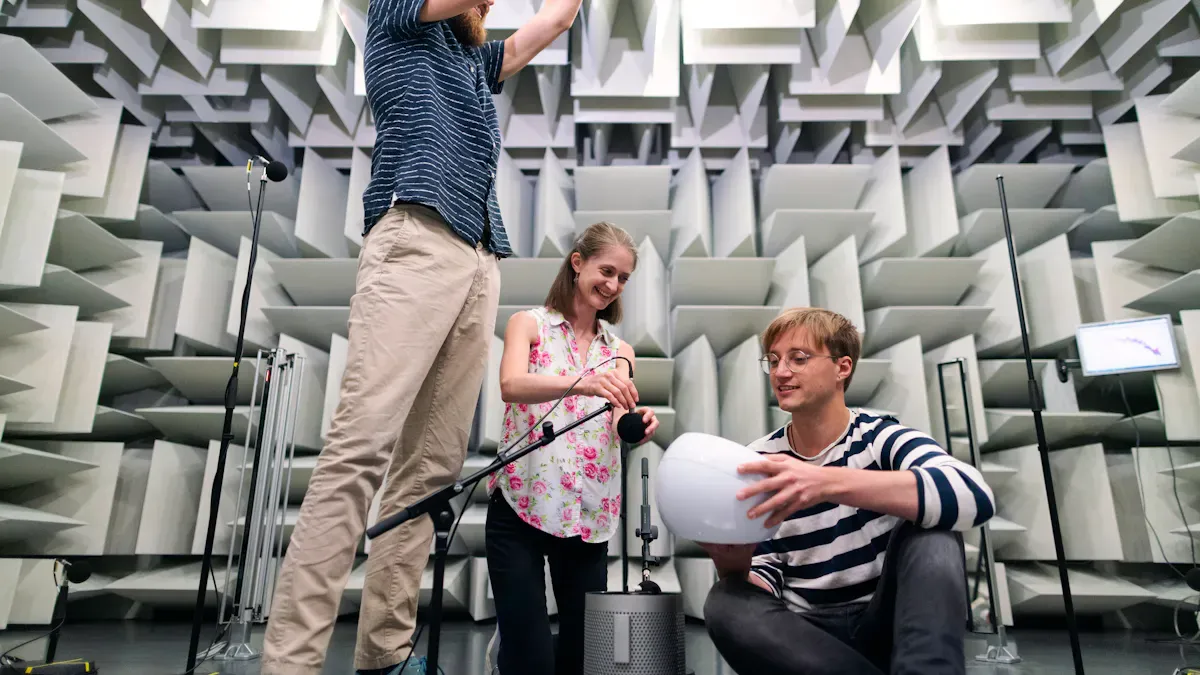
You need skilled inspectors to keep speaker quality high. Training programs help your team learn the best ways to check products. These programs focus on building skills and reducing mistakes. You can teach inspectors to spot problems early and use the right tools for each test. Good training covers the steps of speaker inspection, explains what to look for, and shows how to use visual checks well. You also learn about human factors, like how tired eyes can miss small defects. When you invest in training, you help your team work faster and make fewer errors.
-
Build competency-based programs for your inspectors.
-
Teach key metrics for visual checks.
-
Show how to use effective inspection techniques.
-
Explain how to avoid common mistakes.
Tip: Well-trained inspectors improve inspection outcomes and help you deliver better products to your clients.
Continuous Improvement Practices
You must always look for ways to make your process better. Continuous improvement means you check your methods and change them when you find a better way. This helps you keep up with new market needs and keeps your products strong. You can use regular meetings to talk about problems and find solutions. When you let your team share ideas, you get more ways to fix issues.
-
Find and remove steps that slow down your work.
-
Make small changes often to reduce errors and defects.
-
Encourage your team to share ideas and take ownership.
-
Stay ready to change when the market shifts.
A project showed that when you increase the focus on improvement, you get better results. For example, more practice and feedback led to clearer speech in children. In your factory, this means better speaker sound and happier customers. You keep your quality control strong and make sure every batch meets your standards.
You make your clients trust you when you use set standards for speaker inspection and quality control. These ways help you follow safety rules and give the best performance.
-
International standards like IEC 61305-5 and CEA-2031 help you with your work.
-
Products in the top quality group make customers happier and get sent back less.
-
Using the same test platforms saves time and lets you test more things.
|
Practice |
Benefit |
|---|---|
|
Weekly calibration and golden unit checks |
Speakers work well every time |
|
Data-driven improvement |
Fewer returns and happier customers |
You can get the same good results each time by using these trusted ways.
FAQ
What is the most important standard for speaker quality control?
You should use IEC 60268-3. This standard tells you how to test frequency response, distortion, and sensitivity. It lets you see how your speakers compare to others.
How often should you calibrate your testing equipment?
You must calibrate your equipment at least once a week. Doing this often keeps your test results correct. It helps you find small problems before they hurt product quality.
Why do you need visual and physical checks before audio tests?
Looking at and touching the speakers helps you find problems early. You can see cracks, loose parts, or bad assembly. This step saves time and stops broken speakers from going to customers.
What tools do you need for speaker inspection?
You need tools like signal analyzers, test benches, and Klippel systems. These tools help you check sound, look at parts, and test how well speakers work. Good tools make your checks faster and more correct.
How can you reduce errors in mass production?
You should train inspectors well and use clear steps for checks. Sampling plans and automated test stations help you find problems fast. Team meetings help you fix issues and make your process better.