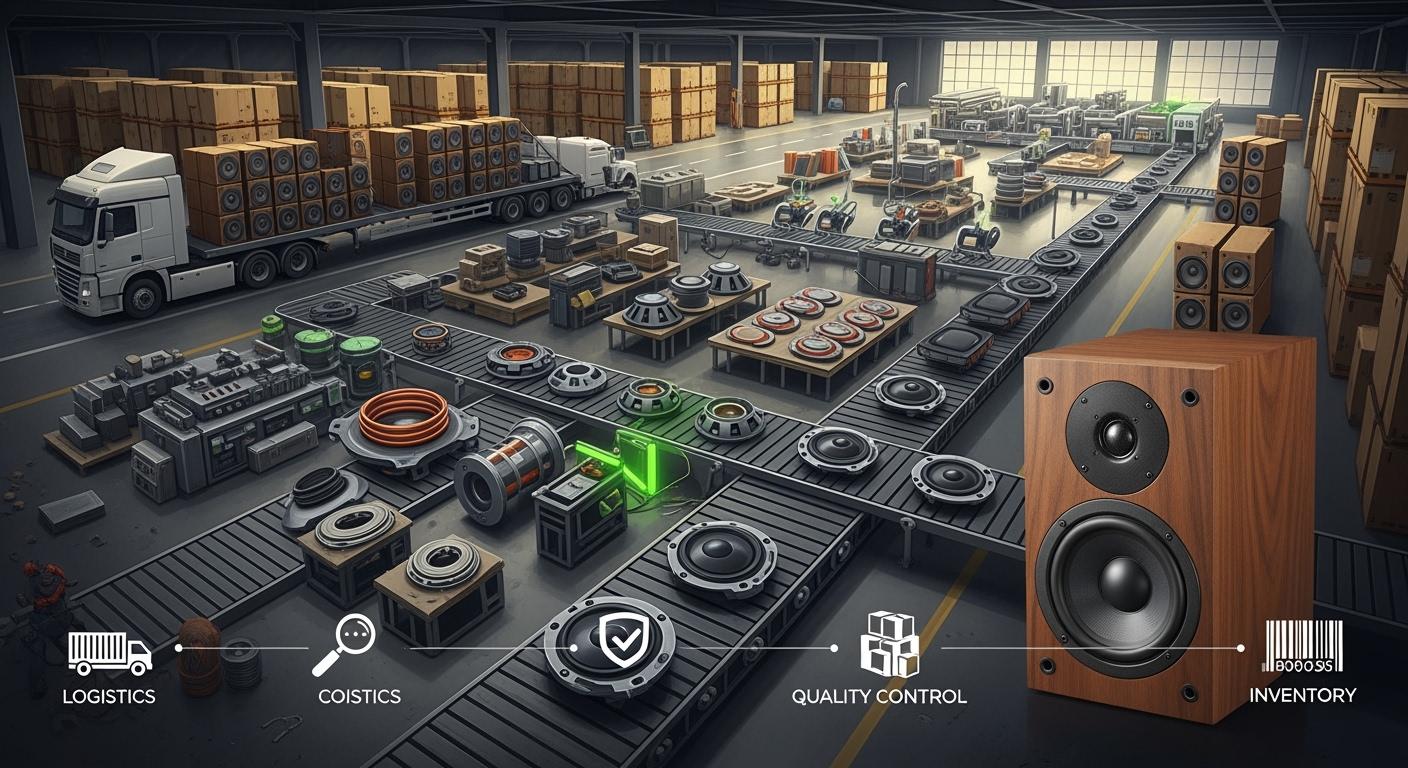
You face many problems when you handle supply chain management for speaker manufacturing. Getting materials from around the world makes supply chain management harder. You must follow many rules and meet what stores want. Supply chain management needs clear information and up-to-date data. You need good planning to stop mistakes that could slow down supply chain management. High quality and following rules in supply chain management keep your products safe. Supply chain management gives you both problems and chances.
Getting materials from many places does not ruin supply chains. Problems usually happen because of wrong ideas in supply chain management.
You can make supply chain management better by keeping it simple but useful.
Key Takeaways
Good supply chain management needs clear talk and current data to stop mistakes. Strong supplier relationships make things more reliable and better, so customers are happier. Planning inventory well means you have enough products for customers and waste less. Using real-time data and technology helps find problems early and makes the supply chain work better. Flexible supply chain plans, like dual manufacturing, help you get ready for surprises.
Global Speaker Supply Chain Overview
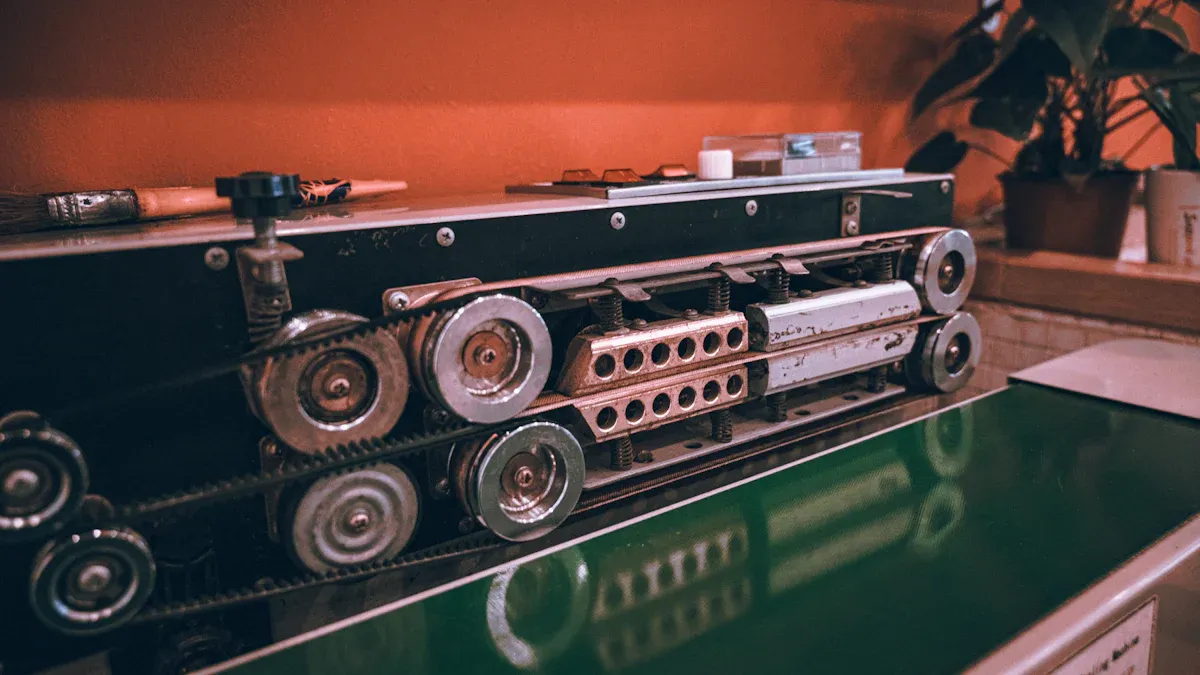
The global speaker supply chain links you to many places. You get help from people and resources around the world. Many countries give you raw materials, new technology, and skilled workers. This network lets you make good speakers. It also helps you send them to many countries.
Raw Material Sourcing
You get raw materials from many continents. Each country helps in its own way. For example:
Country | Contribution to Speaker Manufacturing |
|---|---|
China | PCB assembly and final assembly |
South Korea | Advanced microchips and battery cells |
Japan | Advanced microchips and battery cells |
You need to watch raw material prices all the time. Prices went up by 5.4% in 2025. They might go up another 4.4% in 2026. Many companies pay these extra costs themselves. They do not make customers pay more. U.S. import tariffs also went up from 2.2% to 10.9%. This makes getting parts cost more.
Component Procurement
You pick parts like drivers, crossover networks, and frames. Drivers make sound. Crossover networks keep tweeters safe. Frames hold all the parts together. North America has 27% of the market for advanced parts. Europe and Asia Pacific are also important. More people want smart speakers now. You must follow rules like ANSI E1.8-2005 and IEC 61305-5. These rules help you keep quality high when you buy parts.
Logistics and Distribution
You face many problems when you send speakers around the world. These problems include hard supply chains, higher fuel prices, and last-mile delivery. Shipments can be slow if paperwork is wrong. You must also follow FDA rules for products going to the U.S. You need to show certifications for exports. Good planning and following rules help you deliver speakers everywhere.
Supply Chain Challenges in Loudspeaker Manufacturing
Supplier Reliability and Quality
You need suppliers you can trust. If suppliers do not deliver, your production slows down. Sometimes you must change your plans. Problems happen because of not enough workers, factories moving, or guessing demand wrong. These issues can delay making speakers or stop some products.
You should check how suppliers are doing. Look at price, accuracy, quality, and delivery speed. Talk to suppliers often. Use video calls or visit their factories. Real-time tracking shows if materials come on time and meet your needs.
Quality is important at every step. If quality drops, customers get upset. Repairs cost more money. Bad service makes people complain and hurts your brand. If manufacturing controls fail, you get warranty claims and broken speakers. Keeping quality high builds trust and gets good reviews. Good quality brings loyal customers. Bad quality makes people return products and not buy again. Some companies try to save money by lowering quality. This hurts their brand later. Strong brands keep strict quality rules to protect their name.
Bad service makes customers complain and costs more for repairs. This hurts the brand.
Manufacturing mistakes cause warranty claims and broken speakers. This damages the brand.
Better quality builds trust and gets good reviews. Lower quality causes complaints and hurts the brand.
Good quality keeps customers coming back. Bad quality makes people stop buying and return products.
Some companies lower quality to save money. This helps profits for a short time but hurts the brand later.
Strong brands keep strict quality rules to protect their reputation.
Lead Times and Inventory
You must plan inventory well to keep production going. Good planning means you have enough stock for customers. This helps you serve customers fast and avoid delays. Managing inventory well uses warehouse space better and lowers storage costs.
Good inventory management keeps quality high. You can make products right the first time. This cuts waste and makes manufacturing work better. If you do not plan inventory, you might run out of parts or have too much. Both problems hurt your business.
Good inventory planning helps you serve customers quickly.
It keeps enough stock for smooth production.
Managing inventory well uses warehouse space better and lowers costs.
Good inventory management cuts waste and keeps quality high.
It lets you focus on making products right the first time.
Global Disruptions
You must be ready for events that can stop loudspeaker manufacturing. The COVID-19 pandemic changed supply chains. Companies learned that lean inventory and just-in-time production can fail during big problems. You need stronger plans to keep your supply chain safe.
The Ever Given ship blocking the Suez Canal showed how one event can stop trade. Logistics can break down fast. You must plan for risks and have backup plans. You also need to follow international rules to keep products safe and legal.
COVID-19 Pandemic: This event changed supply chains. Lean inventory and just-in-time production did not work well. Companies now use stronger plans.
Ever Given Blockage in the Suez Canal: This showed how one problem can stop global trade. It is important to have backup plans.
Tip: You can be stronger by using more suppliers and keeping extra parts. This helps you handle problems and keep making speakers.
You must watch for supply chain problems and be ready for new risks. By focusing on reliability, quality, and good inventory planning, you protect your speaker business from disruptions.
Supply Chain Management Strategies
Strategic Planning and Dual Manufacturing
You need good plans to make speaker manufacturing better. Planning helps you find risks and build strong skills. There are many ways to keep your supply chain safe:
Find and check risks early.
Use many suppliers so you do not depend on one.
Use new technology to watch things in real time.
Keep the right amount of inventory for flexible supply.
Use insurance or contracts to share risks.
Make plans for different problems and update them often.
Dual manufacturing makes your business more flexible. You can use two factories to keep making speakers if one has trouble. This helps you deal with big problems and work well. The table below shows how dual manufacturing helps:
Benefit | Explanation |
|---|---|
Risk Mitigation | Dual manufacturing means you do not rely on one factory, so production stays steady. |
Operational Efficiency | If one factory stops, the other keeps making speakers, so you can still deliver. |
Resilience | You can handle things like pandemics or disasters and keep working well. |
Transparency and Real-Time Data
You get better results when you use real-time data and share information. Tools like RAIN RFID, AI, and IoT help you track things and watch how factories work. These tools help you check quality and manage inventory. You can use data to find problems before they happen.
Technology | Application |
|---|---|
RAIN RFID | Tracks items and work in real time |
AI | Uses RFID data to guess when repairs are needed |
IoT | Makes smart factories and digital twins |
You can use RFID with cameras and sensors to do more. Platforms that react to events help you share data fast. Sharing information helps you work better with suppliers. Talking early and sharing wins saves money and builds trust. You stop just checking on suppliers and start working together for growth. You agree on goals and invest in better ways to work.
Tip: Sharing information and working together helps you do more and save money. You can reach your sustainability goals as a team.
Supplier Partnerships and Risk Mitigation
You build strong teams by teaching and helping suppliers. You promise to work together for a long time and set goals together. You team up with other brands to talk to suppliers the same way. You help suppliers learn from each other. These steps make your business stronger.
You spend money on risk management. You make backup supply chains and practice for emergencies. You set up strong backup plans to stay flexible. Not many companies have these risk programs. These programs help you see problems early and keep working well. Good risk management makes customers pick your company.
Note: Working closely with suppliers helps you be more sustainable and do better. You share jobs and agree on ways to make a bigger impact.
Optimizing Loudspeaker Manufacturing
Process Efficiency
You can make speaker manufacturing faster by using smart technology. Automation helps assembly lines move quickly and makes fewer mistakes. Nanotechnology makes drivers and diaphragms stronger and more bendable. This gives you better sound and products that last longer. Acoustical design software and 3D printing let you test and change speaker designs fast. You can use motors with aluminum coils, fiberglass coil formers, and neodymium magnets for great performance. AI and machine learning help you find problems early and keep production running well.
Automation makes driver assembly faster and cuts mistakes.
Nanotechnology makes speakers stronger and sound better.
Acoustical design software and 3D printing help change designs quickly.
AI and machine learning make manufacturing and quality better.
Cost Control and Quality Assurance
You need good cost management to keep speaker manufacturing making money. Lean manufacturing helps you waste less and focus on important things. You can use a pull system to make speakers when customers want them. Continuous improvement keeps your work sharp. Automated inspection and statistical process control check quality right away. Training workers and checking supplier quality stop defects. Root cause analysis helps fix problems before customers get them. Data-driven quality management tracks speaker quality from start to finish.
Cost Control Measure | Description |
|---|---|
Invest in Prevention | Stop defects with good processes and training. |
Efficient Appraisal Systems | Use automated inspection to watch quality. |
Minimize Internal Failure Costs | Fix problems early with lean manufacturing and root cause analysis. |
Control External Failure Costs | Test products and use customer feedback to make things better. |
Utilize Data-Driven Quality Management | Track quality data through the speaker’s life. |
Cross-functional Collaboration | Work with different teams to keep quality strong. |
You can balance cost and quality by picking the right parts and technology. Expensive speakers use high-quality drivers and advanced crossovers. Cheaper speakers use basic drivers and simple crossovers. You can plan your budget by matching features to what customers want.
Case Study: Success in Supply Chain Management
You can learn from companies that use lean manufacturing for speakers. They use pull systems to make speakers only when customers order. They always try to improve and cut waste. This leads to better quality, lower costs, and faster delivery. These companies sell affordable speakers with good features and easy care. Service points and spare parts are always ready. The brand gets stronger because customers trust the quality and delivery.
Tip: You can make speaker manufacturing better by using lean ideas, smart technology, and strong cost management. This helps you plan your budget and keeps customers happy.
You help make supply chain management strong in speaker manufacturing. Sharing clear information helps you stop mistakes. Smart planning keeps things running smoothly. Working with people around the world helps you deliver products faster. Using real-time data makes your supply chain better. Building strong partnerships helps you solve problems. Stay ready for new challenges. Keep learning as the industry changes.
Tip: Keep your supply chain flexible. Always look for ways to improve it.
FAQ
What is supply chain management in speaker manufacturing?
You manage supply chain steps to get materials, make products, and deliver speakers. You track parts, check quality, and plan shipments. This helps you build strong products and keep customers happy.
How do you handle supply chain disruptions?
You prepare backup plans and use extra suppliers. You keep extra parts ready. You watch for risks and act fast when problems happen. This keeps your business running.
Why is quality control important?
You check every step to stop defects. You test parts and finished products. You keep customers safe and protect your brand. Good quality control builds trust and stops returns.
How does real-time data help your supply chain?
You use real-time data to track shipments and inventory. You spot problems early. You make quick decisions. This helps you deliver products on time and avoid delays.
What are the benefits of working closely with suppliers?
You build strong relationships. You share goals and improve together. You learn from each other. This helps you get better parts and keeps your supply chain strong.