
You should check the sound pressure level when picking speakers. It tells you how loud and clear your music will be. Sound pressure level is measured in decibels. It shows how much sound a speaker makes compared to the quietest sound people can hear.
Concept | Description |
|---|---|
Sound Pressure Level (SPL) | Measured in decibels (dB), it shows the pressure of sound compared to a set level. |
Impact on Speaker Performance | Higher SPL means the speaker can make more sound. This affects how clear and loud the speaker is. |
ZEH Audio uses new technology to help you get the best sound for your room and needs.
Key Takeaways
Check the sound pressure level (SPL) in decibels (dB). This helps you know how loud and clear a speaker is.
Pick speakers with higher sensitivity for better sound. These need less power, so they save energy and make less heat.
Think about where you will use the speaker. Different places need different SPL levels for the best sound.
Use a sound level meter to measure SPL the right way. Make sure the meter is at ear level and one meter from the speaker.
Match the SPL to your room size and how you will use it. This makes the sound better and stops distortion.
Sound Pressure Level Basics
SPL and Speaker Performance
Sound pressure level shows how strong a sound is. It is measured in decibels, or dB. The formula is Lp = 20 log10(p/p0) dB. In this formula, p is the sound you hear. p0 is the quietest sound people can hear, which is 20 μPa. When you check a speaker, sound pressure level tells you how loud and clear it plays.
If a speaker has a higher sound pressure level, it makes more sound using less power. This matters for home and professional audio. To hear music or speech clearly, you need a speaker with the right sound pressure level for your room. Sensitivity shows how well a speaker turns power into sound. Speakers with high sensitivity and good sound pressure level work better and give more detail, even at low volume.
ZEH Audio uses new technology to make speakers that fit your needs. You get custom speakers that focus on clarity, detail, and the right sound pressure level for your space.
SPL in Different Environments
You need to think about where you use your speaker. Small rooms, big halls, and outdoor spaces need different sound pressure levels. For example, a living room does not need as much sound as a concert hall. Here is a table that shows the best sound pressure level for different places and activities:
Environment | Volume Setting | SPL Range (dB) | Activity Type |
|---|---|---|---|
Small Room | 25% Volume | 65-70 dB | Late night practice |
50% Volume | 75-80 dB | Comfortable practice | |
75% Volume | 85-90 dB | Expressive practice | |
100% Volume | 95-100 dB | Performance rehearsal | |
Medium Room | 25% Volume | 60-65 dB | Background level |
50% Volume | 70-75 dB | Standard practice | |
75% Volume | 80-85 dB | Dynamic practice | |
100% Volume | 90-95 dB | Full performance | |
Large Room | 25% Volume | 55-60 dB | Quiet practice |
50% Volume | 65-70 dB | Moderate practice | |
75% Volume | 75-80 dB | Comfortable loud | |
100% Volume | 85-90 dB | Concert level | |
Outdoor Space | 50% Volume | 60-65 dB at 10 meters | |
75% Volume | 70-75 dB at 10 meters | ||
100% Volume | 80-85 dB at 10 meters |
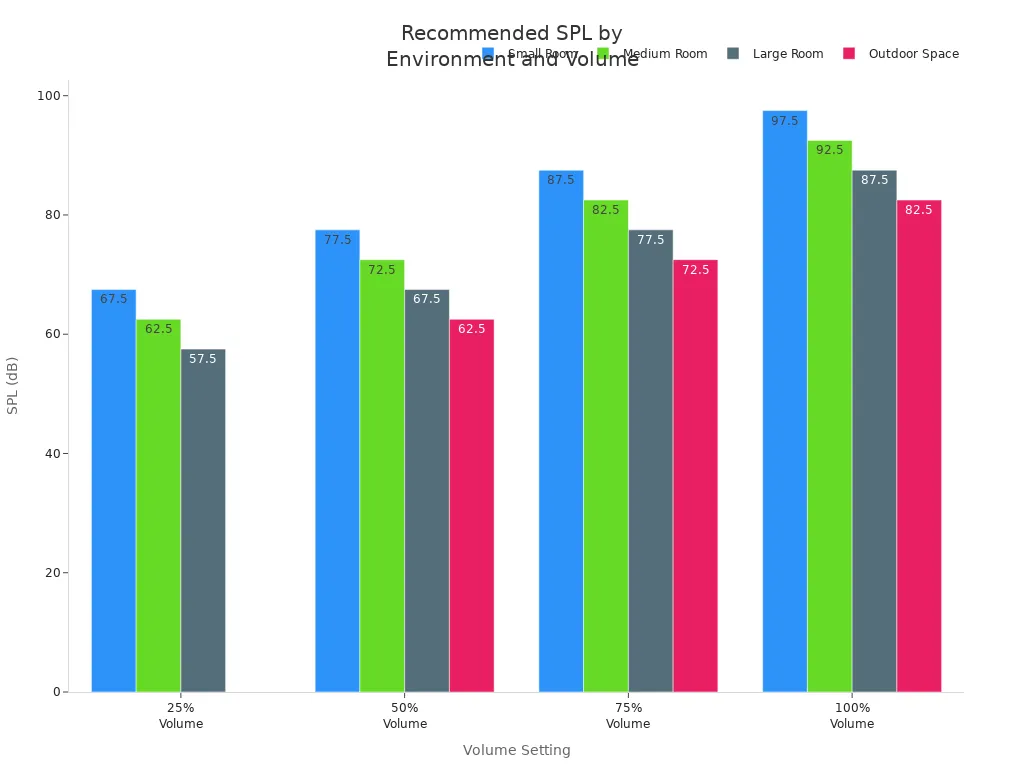
Some places, like factories or amusement parks, need higher sound pressure levels because they are noisy. In restaurants or offices, lower sound pressure levels are fine. ZEH Audio can help you pick or design speakers for your space, so you always hear clear and strong sound.
Check SPL Specs
SPL Ratings and Sensitivity
When you look at speaker specs, you will often see numbers for sound pressure level and sensitivity. These numbers help you understand how loud a speaker can get and how much power it needs. You can use these specs to make smart choices before you buy.
Sensitivity shows how well a speaker turns electrical power into sound. Manufacturers usually measure sensitivity in decibels (dB) at 1 meter with 1 watt of power. For example, if a speaker has a sensitivity of 85 dB/W @ 1m, it means the speaker produces 85 dB of sound at one meter when you give it one watt.
Sound pressure level tells you how loud a speaker can get. It is measured in decibels above the quietest sound people can hear. A higher number means a louder speaker.
Power ratings tell you how much power a speaker can handle. You will see RMS (continuous power), peak, and sometimes program power. RMS is the most important for long-term use.
Maximum SPL is the loudest sound a speaker can make at full power. You can find this by using the formula:
Max SPL = Sensitivity + 10 × log10(Power in watts)
Manufacturers use standard tests to measure these numbers. They place the speaker in a special room called an anechoic chamber. They measure the sound at one meter away while playing tones from 20Hz to 20kHz. Most desktop speakers have a sensitivity around 85 dB/W @ 1m. Bigger speakers often have higher sensitivity.
Tip: Higher sensitivity means you need less power to get the same volume. This can save energy and reduce heat.
Comparing Speaker Models
You can use sound pressure level specs to compare how loud different speakers can get. But you need to look at the details to make a fair comparison.
Spec | What It Means | Why It Matters |
|---|---|---|
Sensitivity (dB/W/m) | How loud with 1 watt at 1 meter | Shows efficiency |
Power Handling (W) | How much power the speaker can take | Affects max volume and safety |
Max SPL (dB) | Loudest sound at full power | Shows peak loudness |
Frequency Response | Range of sounds the speaker can make | Affects sound quality and clarity |
When you compare speakers, check that the measurements use the same distance and power. Some brands use short bursts of sound or measure at closer distances. This can make the numbers look better than they really are. Always look for specs measured at 1 meter with 1 watt for sensitivity, and check if the max SPL uses RMS or peak power.
You should also think about the frequency response. A speaker might have a high sound pressure level, but if it cannot play low or high notes well, the sound will not be clear. The best way to judge is to look at both SPL and frequency response charts.
Note: SPL specs do not tell you everything about sound quality. Room size, shape, and background noise can change how a speaker sounds. ZEH Audio uses advanced testing and custom designs to make sure you get the right sound for your space.
If you want to choose the best speaker, match the sound pressure level and sensitivity to your room and how you plan to use the speaker. For example, a small room needs less SPL than a large hall. ZEH Audio can help you find or design a speaker that fits your needs, giving you clear sound and the right loudness every time.
Measure SPL
Tools for SPL Measurement
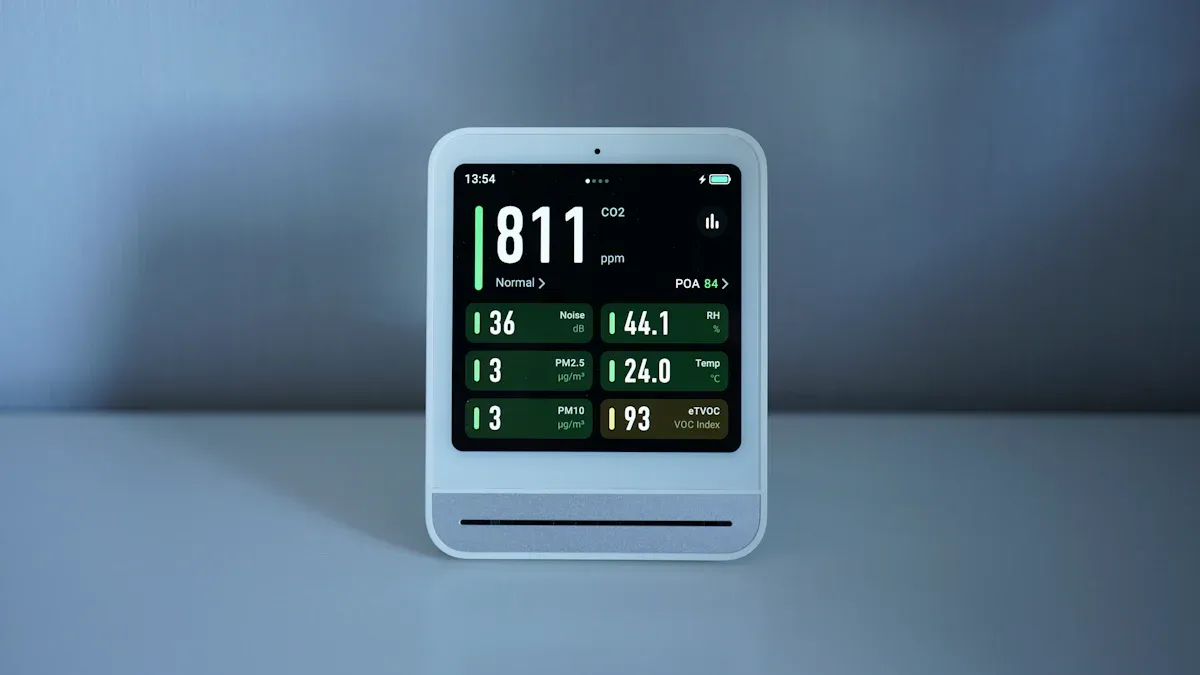
You can measure how loud your speakers are by using special tools. The most common tool is a sound level meter. These meters help you see the sound pressure level in decibels. You can choose from different types of meters, each with its own features and accuracy.
Type of Meter | Features | Accuracy Level |
|---|---|---|
Analogue Sound Meters | Basic and easy to use. Usually less expensive. | Varies, generally lower |
Digital Sound Meters | More common. Offers A or C weighting, slow or fast response options. | Higher, can be very accurate |
Advanced Meters | Many features. Used by professionals. Can be very expensive. | Very high, ±0.5dB accuracy |
Digital sound meters are popular because they are easy to use and give accurate results. Advanced meters work best for professional testing. You can also use smartphone apps to measure sound, but their accuracy changes at higher volumes. Some apps, like SPL Meter dB and Sound Meter (KTW), work well at normal levels. Dedicated meters, like the Precision Gold N09AQ, give the most reliable results, especially when you need to check loud sounds.
When you measure, you should follow these steps:
Place the sound level meter 1 meter away from the speaker.
Make sure the meter is at the same height as your ears.
Use the built-in microphone to read the sound level in decibels.
For speaker tests, use the ‘1W/1m’ setting, which means 1 watt of power at 1 meter.
Tip: Hold the meter away from your body and keep it away from walls. This helps you get the most accurate reading.
If you use a handheld meter, make sure nothing blocks the microphone. You can also put the meter on a stand for better results. ZEH Audio uses advanced meters and careful testing to make sure every speaker meets high standards.
Ambient Noise Considerations
The noise in your room can change how you hear your speakers. If your room is noisy, you need your speakers to be louder than the background sounds. Experts say your speaker should be at least 6 to 10 decibels louder than the noise around you. This helps you hear music or speech clearly.
In a quiet room, you do not need much extra volume.
In a busy place, like a restaurant or factory, you need more volume to hear well.
For background music, just a small increase above the noise is enough.
For clear speech or important sounds, aim for a bigger difference.
Some people suggest keeping the sound pressure level about 20 decibels above the noise for the best sound. This stops problems like distortion and makes sure you hear every detail. If you want to measure the noise, use your meter before you turn on the speaker. Then, turn on the speaker and check the difference.
Note: As noise gets louder, it becomes harder to understand speech. People with hearing problems find it even more difficult. Always check the noise level before you set up your speakers.
ZEH Audio helps you choose speakers that work well in any environment. You get clear sound, even in noisy places, because the speakers are tested for real-world conditions.
Interpret SPL Results
SPL for Common Uses
You need to know the right sound pressure level for your space and activity. Different uses require different SPL benchmarks. For speech, music, and live performances, the needs change. The table below shows common SPL levels for each situation:
Use Case | Recommended SPL (dB) | Notes |
|---|---|---|
Quiet Speech | 60-65 | Small meeting rooms, clear voice |
Conference Room Speech | 70-75 | Large rooms, more people |
Home Music Listening | 75-85 | Comfortable for long periods |
Movie Theater | 85-100 | Immersive sound, large space |
Live Concert | 100+ | Outdoor or large venues |
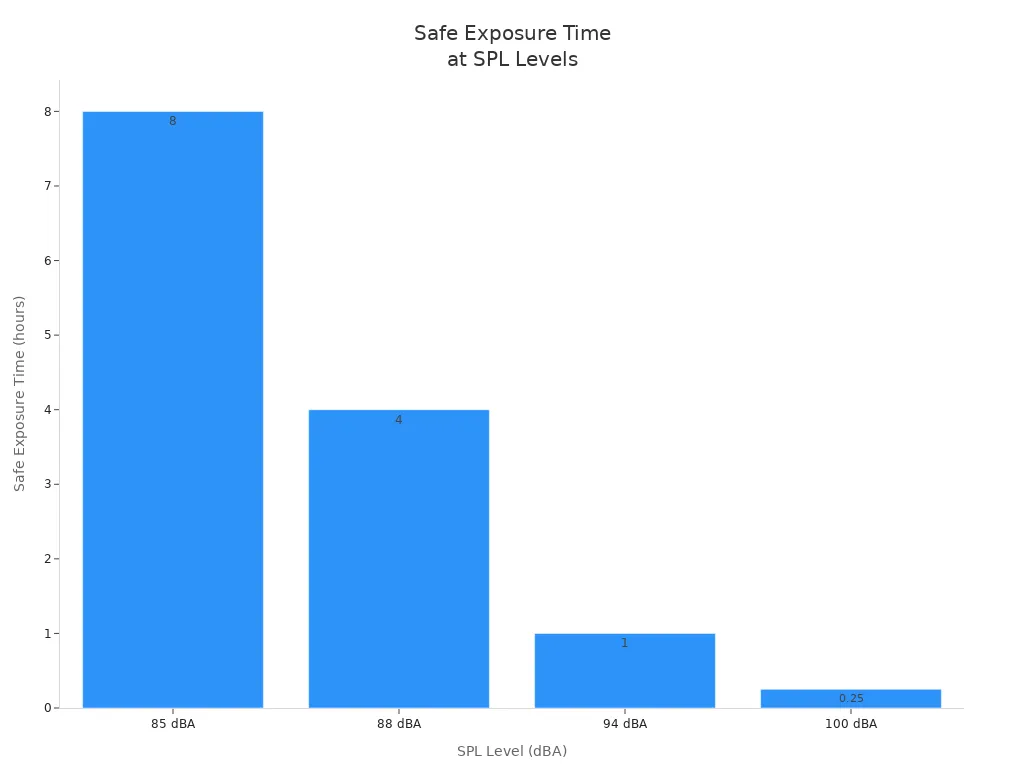
You should also consider safe listening times. Higher SPL means less safe exposure time. The chart below shows how long you can listen safely at different SPL levels:
When you measure SPL, you may see terms like A, C, or Z weighting. These settings help match the measurement to how people hear sound. A weighting works best for speech and normal listening. C weighting is better for loud music or concerts. Z weighting shows the raw sound level.
Weighting Type | Best Use Case |
|---|---|
A Weighting | Speech, environmental noise |
C Weighting | Loud music, live events |
Z Weighting | Raw measurement, technical use |
Confident Speaker Choices
You can use SPL measurements to compare speakers for your needs. Standard tests, like AES75, help you trust the numbers you see. When you know the SPL for your space, you can pick a speaker that fits. For example, a home theater needs a higher SPL than a bedroom speaker.
SPL lets you compare speakers directly.
Standard tests give you reliable data.
You can choose speakers for your exact use case.
ZEH Audio offers custom solutions for every environment. You can get speakers with the right shape, power, and sound quality. ZEH Audio adjusts the enclosure, power output, and acoustic settings to match your needs. This means you always get clear sound, no matter where you use your speakers.
You can pick the best speaker by checking the sound pressure level. Make sure it fits your room and try it out. This helps you hear clear sound and stops distortion.
If you match SPL to your space, you get better sound. It also keeps your speakers working well.
When you choose a speaker, check these things:
Checklist Item | Description |
|---|---|
Physical Inspection | Check for broken or loose parts. |
Placement Optimization | Put speakers where they sound the best. |
Clarity Test | Listen to see if all notes sound even. |
Testing in your own room shows how the speaker really works. ZEH Audio uses special tools to make sure speakers sound good everywhere.
FAQ
What is sound pressure level (SPL) in speakers?
Sound pressure level (SPL) shows how loud a speaker can play. You measure SPL in decibels (dB). A higher SPL means the speaker makes more sound with less power. SPL helps you know if a speaker fits your room or event.
Why does SPL matter when choosing speakers?
SPL tells you how clear and loud your music or speech will sound. If you pick a speaker with the right SPL, you get better sound for your space. You avoid distortion and make sure everyone hears well.
What affects a speaker’s SPL?
Three main things affect SPL: sensitivity, power handling, and frequency response. Sensitivity shows how well the speaker turns power into sound. Power handling tells you how much power the speaker can take. Frequency response shows the range of sounds the speaker can make.
How do you measure SPL at home?
You can use a digital sound meter or a smartphone app. Place the meter one meter from the speaker at ear level. Play music or test tones. Read the decibel value. Make sure the room is quiet before you start.
How does ZEH Audio help with SPL and speaker choice?
ZEH Audio uses advanced tools and custom designs. You get speakers with the right SPL for your needs. ZEH Audio tests every speaker for sound quality and loudness. You can trust your speaker will sound clear in any space.