
Speaker impedance affects how your speakers sound. You should know about this to set up your audio system. This helps you get clear and strong music or speech. If you use the right speakers with the right amplifier, your equipment stays safe. You also get better sound quality.
You will see easy explanations and helpful tips here. There are no hard words—only facts you can use.
Key Takeaways
-
Speaker impedance changes how good the sound is. If the speaker and amplifier impedance match, the sound is clear and strong.
-
Using the wrong impedance can break your equipment. Always look at the impedance ratings to stop overheating or bad sound.
-
Speakers with lower impedance need more power, so they are louder. Make sure your amplifier can give enough power so it does not get damaged.
-
If you use more than one speaker, check the total impedance. It should not go below your amplifier’s lowest rating to keep the sound good.
-
Pick the right wire size for your speakers. Lower impedance speakers need thicker wires so you do not lose power.
What Is Speaker Impedance?
Simple Definition
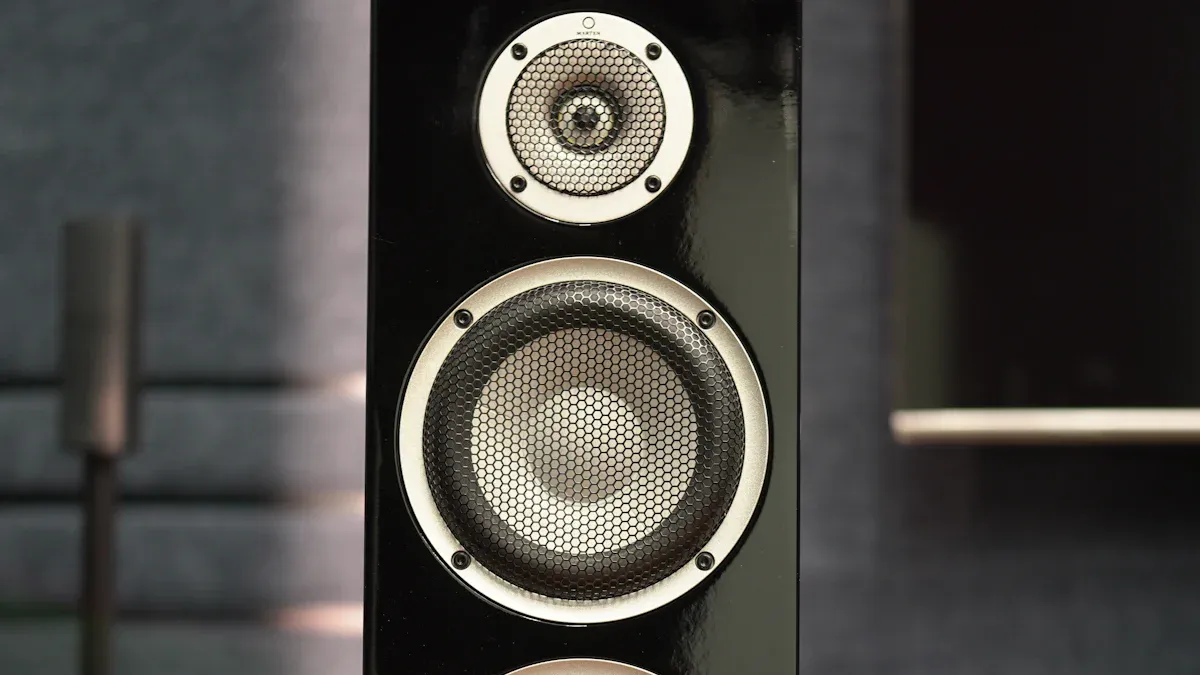
Speaker impedance is how much your speaker resists electricity from the amplifier. You can imagine it like a gate that controls how much electricity goes in. This resistance is measured in ohms, and the symbol is Ω. When you set up your audio system, knowing about speaker impedance helps you pick the right amplifier. This keeps your equipment safe and gives you the best sound.
If you use speakers with the wrong impedance, your sound might not be good. You could even break your amplifier.
How It’s Measured
Speaker impedance is measured in ohms. If the number is higher, the speaker resists more. For example, an 8-ohm speaker needs more power to play as loud as a 4-ohm speaker. You can look at the back of most speakers to find the impedance rating. This rating tells you how much the speaker resists the electrical signal. If you match the impedance of your speakers and amplifier, you get clear sound and protect your equipment.
-
Speaker impedance matters because:
-
It changes how much power your amplifier sends.
-
It affects how loud and clear your music is.
-
It helps stop distortion and damage.
-
Speaker Impedance Ratings
You will see different impedance ratings when you shop for speakers. Most home audio systems use 4, 6, or 8-ohm speakers. Some special systems use 16-ohm speakers. The table below shows common ratings and where you might find them:
|
Impedance Rating (Ohms) |
Description |
|---|---|
|
4 |
Common in many consumer speakers |
|
6 |
Often used in mid-range systems |
|
8 |
Standard for most home audio systems |
|
16 |
Less common, used in specialized setups |
If you buy from a company like ZEH Audio, they help you match speaker impedance to your amplifier. ZEH Audio’s way of working solves problems and makes sure your system gives you strong, clear sound.
Impedance and Sound Quality
Volume and Power
Speaker impedance is important for how loud your speakers get. If you use a lower impedance speaker, like a 4-ohm one, the amplifier sends more power. This makes your music louder. If you use a higher impedance speaker, like an 8-ohm one, the amplifier sends less power. The sound will not be as loud. Lower impedance lets more current move through the speaker. This helps the volume go up. But you need to make sure your amplifier can handle this extra power. If you use low impedance speakers and your amplifier is not strong enough, it can get too hot. Sometimes, it will shut off to keep from breaking.
Always look at your amplifier’s manual to see what impedance it can use. This helps you stop problems like overheating or bad sound.
Clarity and Distortion
You want your music to sound clear and easy to hear. Speaker impedance changes how much power the amplifier sends. If the impedance matches, the amplifier gives power smoothly. This keeps the sound sharp and balanced. If the impedance does not match, you might hear distortion. Distortion makes music sound fuzzy or rough. It happens when the amplifier cannot send the right power. Lower impedance speakers can make the amplifier work too hard. This can cause distortion and even break the amplifier. Higher impedance speakers can make the sound soft or boring.
-
Speaker impedance keeps your sound clear by:
-
Helping the amplifier give power evenly.
-
Stopping distortion from uneven power.
-
Keeping the music full and natural.
-
Effects of Mismatched Impedance
If you use the wrong impedance, you can hurt your equipment and lose good sound. Using speakers with lower impedance than your amplifier can handle makes the amplifier pull too much current. This can make it overheat and shut off. You might also hear strange sounds or distortion. If you use speakers with higher impedance than needed, less power goes to the speakers. Your music will sound quiet and not exciting.
-
Lower impedance speakers can make the amplifier too hot and distort sound.
-
Higher impedance speakers make the sound weak.
-
Wrong impedance can break amplifier parts, like power tubes or transformers.
Matching speaker impedance to your amplifier keeps your system safe and sounding good. ZEH Audio helps B2B customers fix these matching problems. Their team makes sure all parts work together, so you get clear sound and good performance.
|
Impedance Match |
Result |
|---|---|
|
Correct Match |
Clear, strong sound; safe system |
|
Too Low |
Overheating, distortion, damage |
|
Too High |
Weak sound, poor performance |
Speaker impedance is more than just a number. It changes how your music sounds and how long your equipment works. When you pick the right speakers and match them to your amplifier, you protect your gear and enjoy better sound.
Matching Speakers and Amps
Why Matching Matters
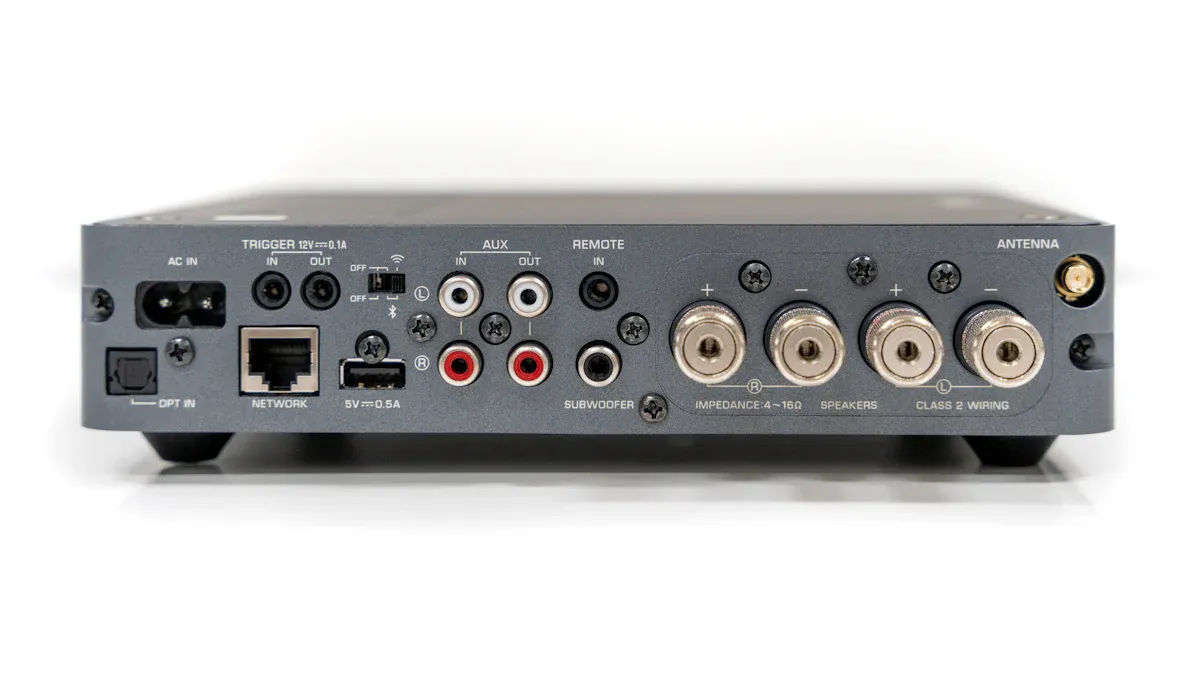
It is important to match your speakers and amplifier. This helps you get the best sound and keeps your equipment safe. When the speaker impedance is right, the amplifier works well. Your music will sound clear and strong. If you do not match them, you can have problems. The amplifier might get too hot or make strange sounds. Sometimes, it can even break. Companies give you the lowest and highest impedance numbers for amplifiers. These numbers help you stop problems like too much current or weak sound. When you match the speaker impedance to the amplifier, you get the best results.
Matching is important because it keeps your equipment safe and gives you good sound every time.
Checking Compatibility
You can check if your speakers and amplifier work together by following easy steps:
-
Read your amplifier’s manual to find the right impedance range.
-
Look at the back of your speaker for its impedance number.
-
If you use more than one speaker, add up the impedance for the whole system.
-
Make sure all speakers in a parallel setup have the same impedance.
-
Pick an amplifier that can handle the lowest impedance in your setup.
Companies often show how much power an amplifier gives at different impedance levels. The power changes when the impedance changes. Amplifiers have safety circuits to stop damage from bad matching. You can use this table to see which amplifier works with each speaker:
|
Speaker Impedance |
Recommended Amplifier Type |
|---|---|
|
8-Ohm Tower |
Class AB or Class A |
|
6-Ohm Tower |
Class AB or Class D |
|
4-Ohm Tower |
Class AB, Class D, or high-current Class A |
Common Mistakes
People sometimes make mistakes when matching speakers and amplifiers. You can overload your amplifier if you connect too many speakers in parallel. Mixing speakers with different impedance can make the sound bad. Not using the right wire size can cause overheating and weak sound. If you use speakers with lower impedance than your amplifier can handle, it can get too hot and sound bad. Using speakers with higher impedance can make your music sound boring.
-
Too many parallel speakers can overload the amplifier
-
Using speakers with different impedance ratings
-
Not using the right wire size
ZEH Audio has over 20 years of experience to help brands fix these problems. Their way of making products helps keep things the same, makes new products faster, and keeps the supply chain strong. ZEH Audio helps B2B customers avoid mistakes and build systems that sound clear and strong.
Practical Scenarios and Tips
Home Theater Setups
When you build a home theater, you want movies and music to sound great. The speaker impedance you pick changes how your amplifier works. If you use a 4-ohm speaker with an 8-ohm amplifier, the amplifier might get too hot or turn off. If the impedance is too high, the sound can be quiet or dull.
-
Impedance changes how much power the amplifier sends.
-
If you mismatch, you might hear fuzzy sounds or lose details.
-
The right match gives you full, clear sound.
For the best home theater, always make sure your amplifier and speakers have the same impedance rating.
Multiple Speakers
Lots of people want to use more than one speaker in a room or in different rooms. You need to check that the total impedance does not go below what your amplifier can handle. If it does, the amplifier might get too hot or break.
-
Use a speaker selector switch to connect many speakers safely.
-
Impedance matching transformers help keep things working right.
-
Make sure the total impedance is above the amplifier’s lowest rating.
-
Series resistors can help stop the impedance from dropping too low.
If you use different speakers, always check their ratings. ZEH Audio’s design helps brands avoid these problems by making sure all parts work together from the start.
Quick Tips for Best Sound
You can use these easy tips to get the best sound from your system:
-
Match the speaker impedance to your amplifier’s rating.
-
Always check the total impedance when you use more than one speaker.
-
Pick the right wire size for your speakers. Lower impedance speakers need thicker wires so you do not lose power.
-
If you hear fuzzy sounds or your amplifier gets hot, unplug the speakers and check the wires.
-
Use a multimeter to measure speaker impedance if you are not sure.
-
Make sure your amplifier has space for air to move.
If you want your system to work well and last a long time, always check impedance matching. Companies like ZEH Audio use their skills to help brands make strong, good audio systems.
|
Feature |
Low Impedance Systems |
High Impedance Systems |
|---|---|---|
|
Impedance Range |
2 to 16 ohms |
70V or 100V systems |
|
Amplifier Requirements |
Needs more current |
Uses transformers |
|
Sound Quality |
High-fidelity |
Good, some loss possible |
|
Wiring Limitations |
Shorter runs |
Good for long runs |
Speaker impedance changes how your audio system sounds and works. If you match your speakers and amplifier, your equipment stays safe. You also get clear and strong sound. Matching helps your amplifier work well. It also makes your system last longer. You should check these things before you set up your system:
|
Factor |
Description |
|---|---|
|
Power Handling (Wattage) |
Every speaker has a power range in watts. This shows how much power it can safely use. |
|
Impedance Matching |
Speaker impedance should match the amplifier’s rating. This stops distortion or damage. |
If you want great sound, always check your gear and make good choices.
FAQ
What happens if you use speakers with the wrong impedance?
You could break your amplifier or get bad sound. The amplifier might get too hot or turn off. You may hear fuzzy or quiet sounds. Always check the numbers before you connect anything.
How do you find your speaker’s impedance?
Check the back of your speaker for a label. The label shows a number and the symbol Ω. Most home speakers have 4, 6, or 8 ohms.
Can you mix speakers with different impedance ratings?
You can mix them, but you need to add up the total impedance. Mixing different numbers can make the sound uneven and hurt your amplifier. Use a speaker selector or an impedance matching device.
Why does wire size matter for speaker impedance?
Thicker wires move more electricity. If you use thin wires with low-impedance speakers, you lose sound and power. Pick the right wire size for your system.
How does ZEH Audio help brands solve impedance matching problems?
ZEH Audio uses special manufacturing and skilled teams. You get steady products and good sound. Their solutions make supply chains easier and fix matching problems for B2B clients.