
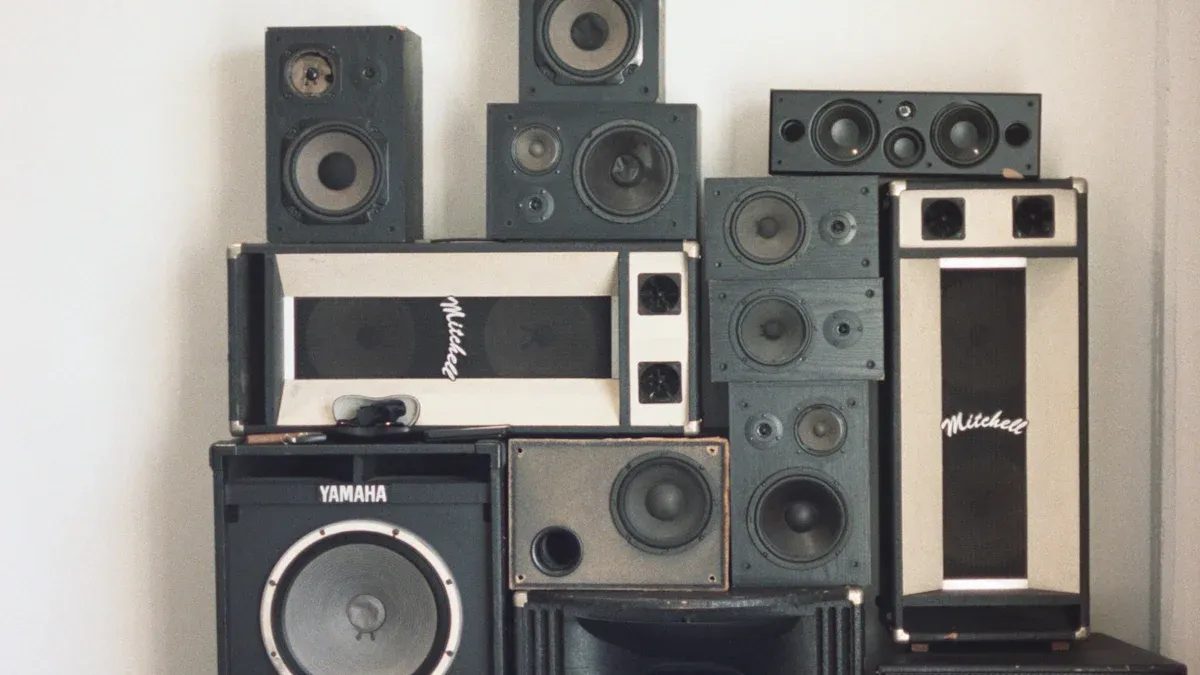
Choosing the right speaker for your product can be challenging. A speaker that fits your space and sound needs can significantly enhance how people experience music. Poor choices can lead to weak or unclear sound.
Tip: Before you choose the right speaker, consider the size of your room, the type of enclosure the speaker will be in, and where you plan to use it. Making good choices will provide you with better sound quality and increase overall satisfaction.
Key Takeaways
Pick the right speaker size for your room. Small rooms need small speakers. Big rooms need bigger speakers for better sound.
Learn about different speaker types and what they do. Subwoofers are good for deep bass. In-wall speakers save space and look neat.
Look at important numbers like frequency response and sensitivity. These numbers show how well a speaker works in your room.
Think about where you will put the speakers. Things like ceiling height and room acoustics change the sound. Plan for these things.
Always match the speaker’s impedance to your amplifier. This helps the speaker work well and keeps your equipment safe.
Why Choose the Right Speaker
Sound Quality Impact
Picking the right speaker helps you get clear and strong sound. Good sound makes your product special and keeps people happy. If you pick the wrong one, you might hear weak bass or low volume. Sometimes, the sound can even stop during important times. Many people have problems like:
Bad sound that makes music or talking hard to hear
Not enough power for the room size
Problems with connections that mess up shows
Short battery life that stops the music
Brands that do not keep their promises
Note: If you forget to check things like wattage, battery life, and how well it works, you might be let down. Always look at these things before you buy.
For B2B clients, these problems can hurt your brand and make customers unhappy. You want your product to give good sound every time.
Product and Environment Fit
Every place is different. Picking the right speaker means it fits the space and how people use it. A speaker that works in a small office may not work in a big hall. People can get used to different speakers, but they hear best when the speaker fits the room and event. Studies show people understand speech better when the sound matches what they expect, like the speaker’s accent or style.
You should also think about where you will use the speaker. Will it be inside or outside? Will there be background noise or a big area to fill? Picking the right speaker for the place helps everyone hear well and have fun.
If you want to avoid mistakes and get the best sound, always take time to pick the right speaker for your product and where it will be used.
Speaker Types and Sizes
Main Speaker Types
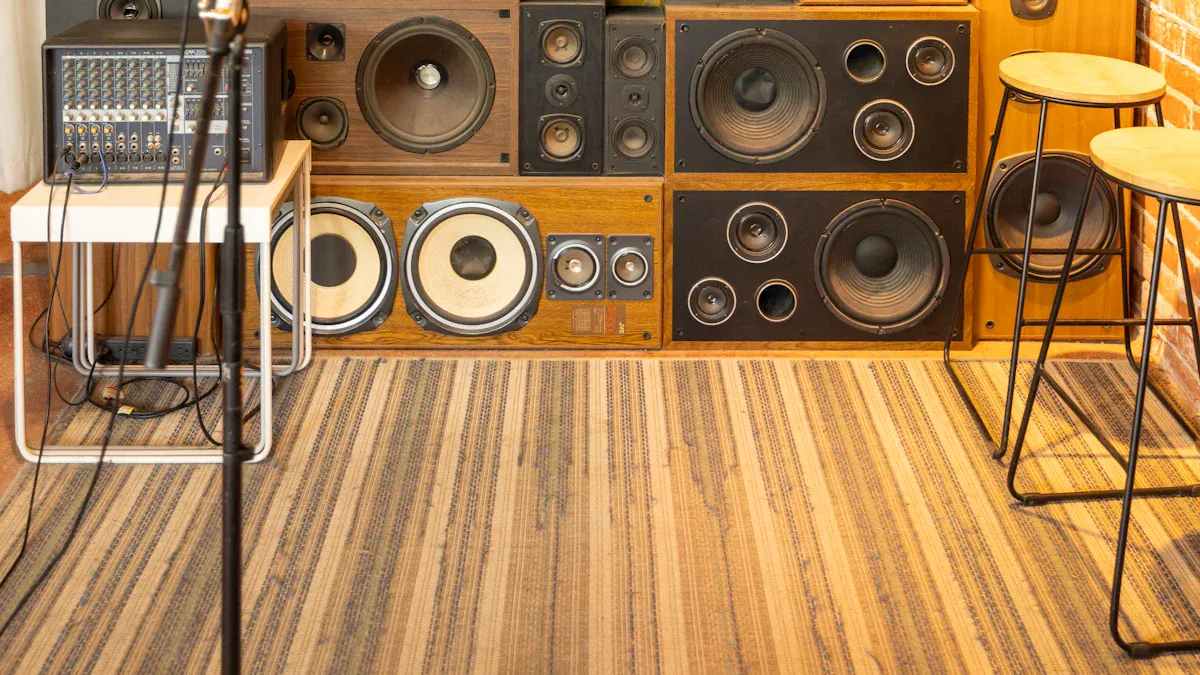
When you pick a speaker, you should know the main types. Each type works best in certain places and for different uses. Here is a table that shows the most common types and what they do:
Category | Description |
|---|---|
Loudspeakers | General speakers for many audio uses. |
Subwoofers | Special speakers for deep bass sounds. |
Home Theater | Made for movie sound in home theaters. |
In-Wall & In-Ceiling | Speakers put inside walls or ceilings for a hidden look. |
Marine | Built for boats and water, they resist water. |
Outdoor | Made to last outside in all weather. |
Wireless Speakers | Portable speakers that use Bluetooth or Wi-Fi. |
You can also find these types in stores:
Portable and wireless speakers
Sound bars and sound bases
Architectural speakers
Outdoor speakers
Each type has something it does well. Subwoofers give you deep bass and use a crossover for low sounds. Home theater speakers make movies sound real with surround sound. In-wall and in-ceiling speakers save space and keep rooms neat. Marine and outdoor speakers are tough and can handle water and weather, so they are good for boats or patios.
Common Sizes and Applications
Speaker size changes how loud and clear the sound is. It also decides where you can use the speaker. You need to pick a size that fits your product and the space. Here is a table that shows common sizes and what they are used for:
Speaker Size | Description |
|---|---|
5.25 inches | Used in small cars, cheap but may not sound great. |
6.5 inches | Good for mid-sized cars, clear sound but not as loud as bigger ones. |
6×9 inches | Biggest size, used in big cars, strong bass but sometimes less clear. |
You can also look at how sizes compare:
Speaker Size | Sound Levels | Low-Frequency Response | Application Suitability |
|---|---|---|---|
Larger | Louder | Better bass | Good for big spaces |
Smaller | Quieter | Better with DSP | Good for small products |
Bigger speakers make more sound and better bass. Use them in big rooms or outside.
Smaller speakers fit small products and can sound better with DSP.
The bass driver size matters for deep sound. If you want strong bass, pick a bigger driver.
For example, bookshelf speakers are good for rooms up to 150 square feet. They are easy to move and place. Floorstanding speakers need more room but give the best sound and full-range audio. Subwoofers are important for home theaters because they add deep bass that other speakers cannot make.
Matching Type and Size
You need to think about how you will use the speaker, the room size, and the sound you want. Here are some tips to help you match type and size:
Small rooms: Use small wireless or bookshelf speakers. They sound good and do not take up much space.
Large rooms: Floor-standing speakers are best. They fill the room with sound and play loud without problems.
Low ceilings: Small speakers fit better and avoid sound issues.
High ceilings: Big speakers can send sound farther and fill the space.
You should also match the speaker type to your product:
Full-range speakers play all sounds and are good for portable devices or simple home audio.
Woofers and subwoofers play bass. Use them in home theaters or car audio for deep sound.
Mid-range speakers play voices and instruments. They are good for pro audio or music systems.
Tweeters play high sounds. They make music and speech clearer.
If you pick the wrong type or size, the sound may be bad. For example, a big speaker with a heavy cone cannot play high notes well. A small tweeter cannot make deep bass. This can cause weak sound, missing notes, or distortion.
Tip: Always think about where you will use the speaker and what you need. Think about power, room size, and the sound you want.
When you pick the right speaker, you get better sound and happier customers. For B2B buyers, OEM/ODM clients, and engineers, matching the right type and size gives you good performance and a better experience.
Key Specifications to Compare
When you compare speakers, you need to look at the right specifications. These numbers and ratings help you see past marketing claims. They show you how a speaker will really perform in your product. Think of these specs like a voltmeter for batteries—they give you real data, not just promises. If you know what each number means, you can pick the best speaker for your needs and avoid costly mistakes.
Frequency Response & Sensitivity
Frequency response tells you the range of sounds a speaker can play. You want a wide range for clear music and speech. For example, a speaker with a range of 50 Hz to 20,000 Hz can play deep bass and sharp highs. But remember, the room and placement also affect what you hear.
Sensitivity shows how loud a speaker gets with a set amount of power. You measure it in decibels (dB) per watt per meter. A higher number means the speaker plays louder with less power. This matters if you use low-power amplifiers or want to save energy.
Specification | Description |
|---|---|
Sensitivity (dB/W/m) | How loud the speaker gets with 1 watt at 1 meter. Higher is better for low power. |
Frequency Response | The range of sounds the speaker can make. Wider is better for full sound. |
Tip: High-sensitivity speakers work well in small rooms or with battery-powered devices.
Power Handling & SPL
Power handling tells you how much power a speaker can take without damage. You see this as RMS (continuous) and Max (short bursts). More power does not always mean better sound, but you need enough for your space.
SPL (Sound Pressure Level) measures how loud the speaker can get. For a small office, 25 watts and 85 dB SPL is enough. For a concert, you need much more.
Application | Recommended Power (W) | SPL (dB) |
|---|---|---|
Nearfield monitoring | 25 | 85 |
Home stereo | 150 | 85 |
Rock music in a stadium | 4,000–15,000 | N/A |
Note: Always match the speaker’s power rating to your amplifier and room size.
Coverage Angle & Impedance
Coverage angle shows how wide the sound spreads. A wide angle covers more area, which is important for large rooms or outdoor spaces. Good coverage helps everyone hear clearly, even in the back.
Impedance is the speaker’s resistance to electric current. You measure it in ohms (Ω). Most home speakers use 8 ohms. You must match the speaker’s impedance to your amplifier. If you do not, you can get distortion or even damage your equipment.
Pair an 8-ohm speaker with an 8-ohm amplifier for best results.
Avoid using a 4-ohm speaker with an 8-ohm amp unless the amp supports it.
Tip: Always check the amplifier’s specs before connecting new speakers.
By understanding these key specs, you can compare speakers with confidence and choose the right one for your product.
Installation & Environment Factors
Ceiling Height & Room Acoustics
You need to look at your room’s shape and materials before you pick a speaker. Ceiling height, wall length, and room width change how sound moves and bounces. Hard surfaces like glass or tile can make sounds echo. Soft materials like carpet or curtains help absorb sound and make it clearer.
Here is a table that shows important acoustic factors:
Acoustic Factor | Description |
|---|---|
Room Dimensions | Height, length, and width affect how sound waves travel and reflect. |
Absorption Coefficient | Shows how well materials absorb sound, which changes clarity and speaker needs. |
Reverberation Time (RT60) | Measures how long sound lasts in a room, affecting speech and music quality. |
If your room has lots of echoes or is very large, you may need acoustic treatments. You can use ceiling tiles, hanging baffles, or foam panels to control sound. Moveable panels let you adjust the sound for different events. Without these treatments, meetings or music can sound unclear.
To keep sound clear, find the “mirror points” in your room and add absorption there. This stops early reflections and helps everyone hear better.
Space & Mounting
You must think about where you will put your speakers. In small or odd-shaped rooms, place the listening area facing the short wall. This gives better bass. Use the 38% rule to find the best spot for your seat—avoid sitting halfway between walls. Set up your speakers and seat in a triangle for the best stereo sound. Make sure tweeters are at ear level and point toward you.
If your project is complex, talk to a system designer. They can help you plan for special needs and avoid mistakes.
Additional Equipment
Some installations need extra tools and parts. You may need wiring harnesses, speaker brackets, electrical tape, wire strippers, screwdrivers, and drills. For tough jobs, use a soldering iron or crimp tool. Always check your list before you start.
You also need to think about the environment. Moisture, heat, and cold can damage speakers. Paper cones can soak up water and lose clarity. High heat can make electronics shut down. Cold can make speaker parts stiff. Humidity can cause rust and signal loss. Choose speakers with moisture-resistant materials like polypropylene cones and rubber surrounds for outdoor or wet places.
If you want a custom solution, ZEH Audio offers speaker size customization, acoustic tuning, and system integration. ZEH Audio can help you solve installation and environment problems. Their team works with you to design speakers that fit your space and sound needs. This service is great for B2B buyers, OEM/ODM clients, and engineers who need special solutions.
Tip: Always match your speaker choice to your room, mounting needs, and climate for the best results.
To pick the right speaker, first match the speaker type to your product and space. The table below can help you choose:
Speaker Type | Application | Key Considerations |
|---|---|---|
Subwoofer | Home Theater, 2-Channel | Room size, crossover match |
Center Channel | Home Theater | Match with main channels |
In-Wall/Architectural | Home Theater, Reinforcement | Placement, installation |
Check these things before you pick:
Make sure the speaker works in your space.
See if the system parts work together.
Look at where you will put the speaker and what it is made of.
If you think about your needs and where you will use the speaker, you will get better sound and be happy for a long time.
FAQ
What size speaker works best for small products?
You should choose speakers between 2 and 4 inches for compact products. These sizes fit well in small enclosures and deliver clear sound. For portable devices, smaller drivers save space and power.
How do I know if a speaker is suitable for outdoor use?
Check the speaker’s IP rating and material. Outdoor speakers need water-resistant or waterproof designs. Look for rubber surrounds and plastic or coated cones. These features protect against rain, dust, and sunlight.
Why does impedance matter when choosing speakers?
Impedance affects how your speaker matches with your amplifier. You must match the speaker’s ohm rating to your amp. If you mismatch, you risk poor sound or damage to your equipment.
Can I use the same speaker type for music and speech?
You can use full-range speakers for both music and speech. For better clarity in speech, choose speakers with strong midrange performance. For music, add a subwoofer if you want deeper bass.
What should I check before installing speakers in a new environment?
You should measure the room size, check ceiling height, and note wall materials. Review the mounting options and confirm the climate conditions. Always test the sound before final installation.