
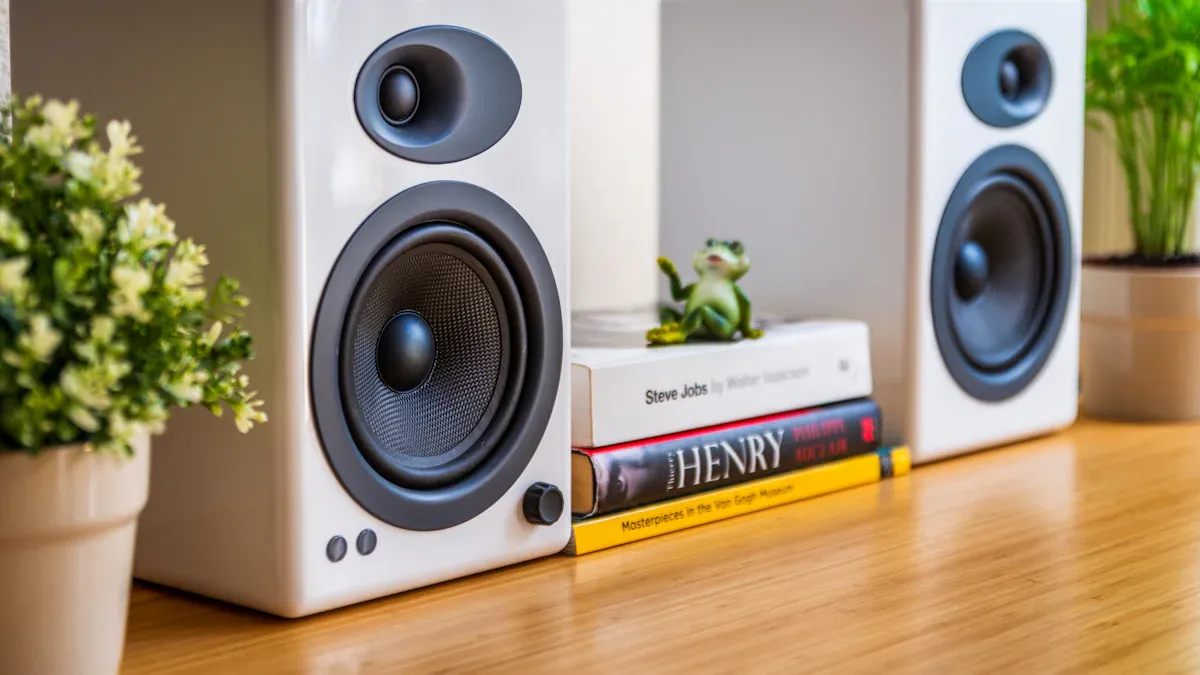
Imagine you play your favorite song on two speakers. One lets you hear every note and beat clearly. The sound feels real and alive. The other speaker sounds flat and boring. High-quality speakers show details you miss with cheaper ones. You hear deeper bass and clearer voices. You feel more connected to the music. Good engineering and strong cabinet materials help a lot. The right size also makes the sound better.
Key Takeaways
High-quality speakers are made with better materials and drivers. This gives you clearer sound and stronger bass.
High-quality speakers have advanced crossover networks. These networks send the right sounds to the right drivers. This makes the sound clearer.
High-quality speakers are built to last a long time. They keep their good sound for many years.
Think about where you will use your speakers and what you need. This helps you pick the best speakers for you.
Always look at the warranty and customer support. This way, you can get help if your speakers have problems.
What Makes High-Quality Speakers Stand Out
Superior Drivers and Components
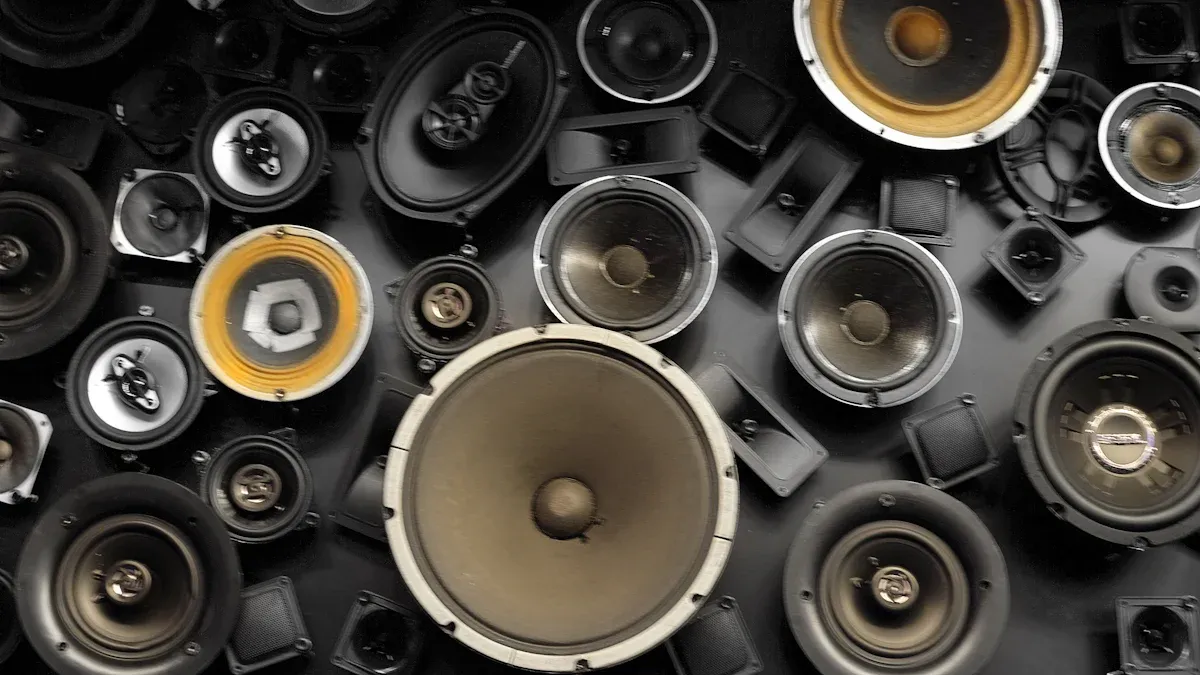
When you listen to music, high-quality speakers sound much better. These speakers use drivers that are made with care. Drivers are the parts that make the sound. Woofers give you strong bass. Tweeters play high notes. Sometimes there are mid-range drivers for voices and instruments. Each driver does its own job. The size and shape of drivers are important. Small tweeters make high sounds like cymbals. Big woofers push more air, so you feel deep bass.
The materials in drivers change how the speaker sounds. High-quality speakers use special materials that last longer and sound nicer. Here is a table that shows the differences:
Quality Level | Materials Used |
|---|---|
High-Quality | Polypropylene, woven Kevlar, aluminum, silk dome tweeters, carbon fiber, magnesium/titanium/alloy |
Low-Quality | Cheaper materials, heavier and less advanced materials |
You hear better bass and clearer highs because these materials move fast and do not make extra noise. Polypropylene gives strong bass. Silk dome tweeters make smooth highs. Metal makes bright, sharp sounds. If you pick high-quality speakers, you hear more details and less distortion.
Advanced Crossover Networks
You cannot see the crossover network inside your speaker, but it is very important. The crossover acts like a traffic cop. It sends low sounds to the woofer. It sends high sounds to the tweeter. It sends mid sounds to the midrange driver. High-quality speakers use advanced crossovers to keep the sound even.
Advanced crossovers help you hear all parts of music at the right level.
They cut down distortion by letting each driver play what it does best.
These crossovers help drivers work well, so voices and instruments sound clear.
Some high-quality speakers use active crossovers with digital signal processing. This lets you change the sound for your room and music.
Low-quality speakers use simple passive crossovers. These can make the speaker sound worse and may not handle power well.
Tip: For the best sound, pick speakers with advanced crossover networks. They help make music clearer and more balanced.
Build Quality and Materials
You notice the difference when you touch high-quality speakers. The cabinet, or box, is just as important as the drivers inside. Strong cabinets stop bad vibrations and keep the sound clean. High-quality speakers often use 11 ply Baltic birch. This wood is strong and light, so the speaker lasts longer and sounds better. Some use solid woods like pine for a warm sound. Cheaper speakers may use 3 or 5 ply birch or MDF. These materials can make the sound dull.
High-quality speaker makers pay attention to every detail. They use careful engineering and skilled work. This means your speaker sounds good and looks nice in your home. You also get better durability, so your speakers last a long time.
Note: Buying high-quality speakers gives you better sound, stronger materials, and a product that lasts for years.
Sound Performance Differences
Clarity and Detail
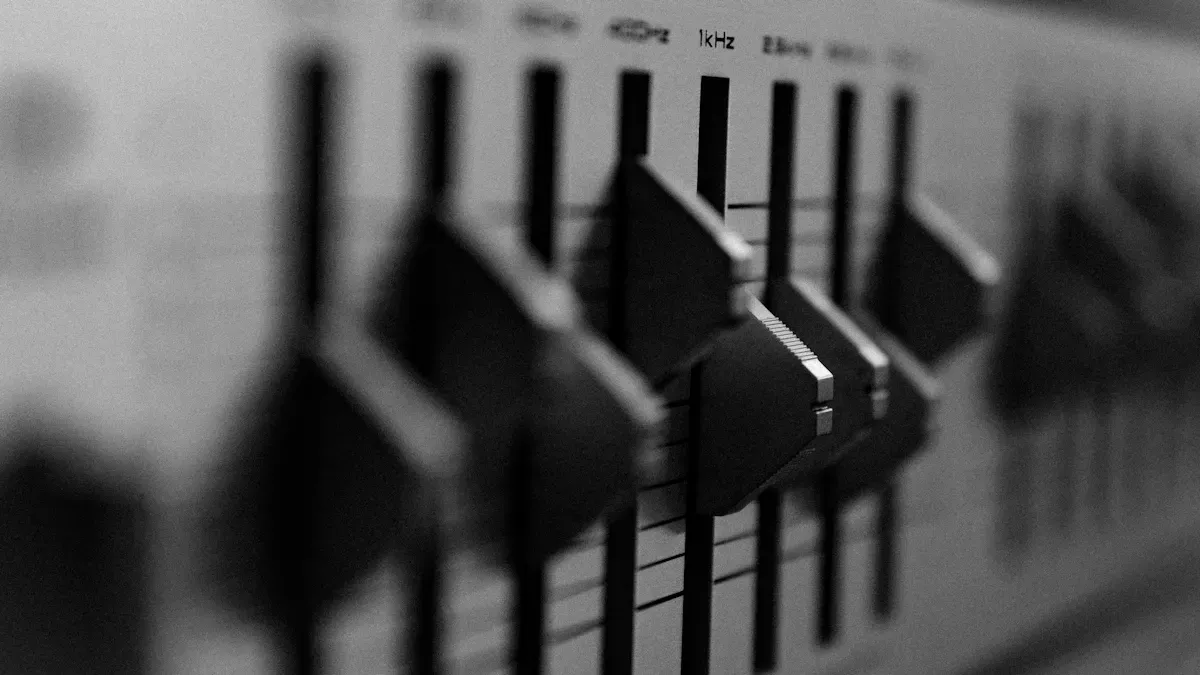
You can hear a big difference in clarity with high-quality speakers. These speakers let you hear each instrument and voice clearly. You notice soft treble highs and deep lows without any buzzing. Low-quality speakers often sound blurry or crowded. You miss small details and the music feels boring.
Speaker Quality | Clarity and Detail Description |
|---|---|
High-Quality Speakers | Give you clearer, more detailed sound with better accuracy. |
Low-Quality Speakers | Often sound blurry or crowded, missing clarity and detail. |
Audio experts test speakers by listening for tone, volume, pitch, and clear words. These things help you understand music or speech better. You hear sharp notes and clear voices with good speakers. Bad speakers have trouble with this, so you hear rough sounds and less detail.
Good speakers catch soft treble highs and deep lows with little buzzing.
Bad speakers have trouble with clarity, so you hear rough sounds.
Frequency Response and Distortion
You want a speaker that can play many sounds. High-quality speakers cover a bigger range, like 50 Hz to 20 kHz. This means you hear both deep bass and sharp highs. Low-quality speakers have a smaller range and change a lot in sound. You might hear missing parts or uneven sounds.
Speaker Quality | Frequency Response Range | Consistency in Output |
|---|---|---|
High-Quality Speakers | Bigger (like 50 Hz–20 kHz) | More steady |
Low-Quality Speakers | Smaller (changes a lot) | Big changes |
Tip: Pick speakers with a big frequency range for the best sound.
Bass and Enclosure Size
Bass depends on how big the speaker box is. High-quality speakers use bigger boxes that fit the driver well. This lets the speaker move easily and make clean bass. If the box is too small, the bass sounds tight and not deep. Low-quality speakers may use small boxes, which can make the bass weak or messy.
You can feel the difference when you play music with strong bass. Good speakers give you deep, strong bass that fills the room. Bad speakers often sound thin and do not have much power.
Note: Using the right box size for the speaker makes bass and sound better.
Physical and Practical Attributes
Size and Portability
You can see the size of speakers right away. High-quality speakers are usually bigger. Bigger speakers sound better, but they are harder to move. It can be tough to carry them from one room to another. Low-quality speakers are often smaller. You can pick them up and take them anywhere. This makes them good for trips or using outside.
Here is a table that shows the differences:
Speaker Type | Size | Portability | Sound Quality |
|---|---|---|---|
High-Quality | Larger | Less Portable | Superior |
Low-Quality | Smaller | Highly Portable | Inferior |
Bluetooth speakers are easy to move around. They connect to your phone or tablet without wires. You can use them outside or in any room. They are simple to use, but the sound is not as good. Wi-Fi speakers sound better and have a strong connection. You can use them in many rooms, but you need good Wi-Fi. Wi-Fi speakers are not as easy to move as Bluetooth speakers.
Bluetooth speakers are easy to carry and use.
Wi-Fi speakers sound better and stay connected well.
Tip: If you want something easy to move, pick portable speakers. If you care most about sound, bigger speakers are best.
Aesthetics and Design
High-quality speakers come in many cool designs. Companies care about how speakers look and sound. Simple, modern styles look nice in most homes. You can put these speakers in your living room and they will match. Some speakers use special audio technology like Dolby Atmos or DTS:X. These features make music and movies sound more real.
Special audio technology makes music and movies feel real.
Simple designs help speakers fit in with your home.
More people want portable speakers that sound good.
You can choose speakers that fit your style and needs. Some people like speakers that stand out. Others want speakers that blend in. There are many choices, so you can find what you like best.
Note: Good design helps speakers look nice and sound great. Pick speakers that match your room and how you live.
Durability and Value
Lifespan and Reliability
When you choose speakers, you want them to last. High-quality speakers give you more years of reliable sound. You notice that active speakers usually last 5 to 7 years. Passive speakers can last much longer. Some passive speakers work well for a lifetime. You see that as speakers age, they may show signs of wear and tear. After 10 to 15 years, you might need to replace them. If you use your speakers often, you should check them for damage or changes in sound.
Active speakers last about 5–7 years.
Passive speakers can last decades or even a lifetime.
Older speakers may need replacement after 10–15 years.
High-quality speakers use strong materials and careful engineering. You get cabinets that resist moisture and drivers that handle heat. These features help your speakers stay reliable. Low-quality speakers often break sooner. You may notice cracks, faded sound, or loose parts. If you want speakers that last, you should look for sturdy build and trusted brands.
Warranty and Support
You also need to think about warranty and support. High-quality speakers usually come with longer warranties. You get peace of mind because the company stands behind its product. Some brands offer support for repairs or replacements. You can contact customer service if you have problems. Low-quality speakers often have short warranties. You may not get much help if something goes wrong.
Here is a table that shows the differences:
Speaker Quality | Warranty Length | Customer Support |
|---|---|---|
High-Quality | 2–5 years or more | Helpful and reliable |
Low-Quality | 6–12 months | Limited or none |
Tip: Always check the warranty and support before you buy speakers. Good support helps you fix issues and keeps your speakers working longer.
Comparing High-Quality Speakers to Low-Quality Speakers
Real-World Listening Scenarios
You can notice the biggest differences between speakers in real-life situations. Here are some common places where you hear the change:
In an audiophile room, you hear every detail in your favorite vinyl record. The music sounds clear and full.
In a recording studio, you need accurate sound to mix and master songs. Good speakers help you catch mistakes and fix them.
At home, a movie feels more exciting with clear voices and deep bass. You feel like you are inside the story.
At a small concert, the music stays clean and powerful, even at low volume.
When you play video games, you hear footsteps and background sounds that make the game feel real.
On the go, some portable speakers keep the sound rich and clear, even outside.
Many people who switch from low-quality to better speakers say the sound improves a lot. They often feel surprised by how much clearer and more enjoyable music becomes.
Tip: Try listening to the same song on both types of speakers. You will notice more instruments and voices with better speakers.
When to Invest in High-Quality Speakers
You should think about your needs before buying new speakers. Here are some times when it makes sense to invest in high-quality speakers:
You have a room with good acoustics, so you can hear all the details.
You listen to high-quality music files, like FLAC or WAV, not just MP3s.
You love music and want to hear every part of a song.
You want a home theater that feels like a real movie.
You want speakers that last many years and keep sounding good.
Before you buy, think about these things:
Sound quality: Look for speakers with a wide frequency range and low distortion.
How you will use them: Decide if you want them for home, outside, or travel.
Your budget: Set a price range that works for you.
Power and size: Make sure they fit your space and needs.
Connectivity: Choose Bluetooth for easy use or Wi-Fi for better sound.
Note: High-quality speakers are a smart choice if you want great sound and long-lasting value.
You can see the big differences between high-quality and low-quality speakers in this table:
Feature | High-Quality Speakers | Low-Quality Speakers |
|---|---|---|
Frequency Response | Wide and accurate | Limited and distorted |
Build Quality | Durable materials | Cheap materials |
Design | Aesthetic and functional | Basic and unappealing |
When picking speakers, make sure your budget works for you. The most expensive speakers are not always the best choice. Find speakers that fit your style and give you good value. Try to listen to the sound before buying or check trusted reviews online, like the Audio Science Review Forum.
FAQ
What is the most important thing to check when buying speakers?
You should listen for clear sound. Good speakers let you hear every detail. Try to test them with your favorite music before you buy.
Do bigger speakers always sound better?
Not always. Bigger speakers can give you deeper bass. Small speakers can sound great in small rooms. Pick the size that fits your space and needs.
How do I know if a speaker is durable?
Check the materials. Look for strong cabinets and quality drivers. Read reviews from other users. Good brands often give longer warranties.
Can I use high-quality speakers with my phone or laptop?
Yes, you can. You may need an amplifier or receiver for passive speakers. Many active speakers connect with Bluetooth or cables. Check the speaker’s input options.