
The speaker cones are a key part of every speaker. They help shape how you hear music and voices. If you care about sound quality, you should look at the speaker cone’s material and design. Different materials can change how clear or natural the sound is. You may notice:
- Plastic speaker cones can handle weather and keep sound from getting fuzzy.
- Paper and cloth speaker cones make sound warm and detailed but can change with humidity.
- Foam in mixes helps music sound more real.
- Fiberglass, wool fiber, polypropylene, and ceramic each give their own sound and clarity.
The speaker cone you pick can change what you hear a lot.
Key Takeaways
- Speaker cones are very important for sound quality. You can pick paper cones for a warm sound. Plastic cones last longer and are tough. Pick what you need most.
- The shape of the speaker cone changes how sound spreads. Wide cones send sound all over the room. Narrow cones send sound in one direction.
- The material’s stiffness and damping change how clear the sound is. Try to find cones that have a good mix of both. This gives you the best sound.
- Think about where you will use your speakers. If you use them outside, pick cones that do not get damaged by water. If you use them inside, you can choose cones for the sound you like.
- Learn about different cone types for your music. Paper cones make music sound natural. Metal cones make music sound bright and clear.
Speaker Cones and Their Role
How Speaker Cones Produce Sound
You can think of the speaker cone as the heart of your speaker. It moves back and forth to create sound waves that you hear. The speaker cone is a thin, semi-rigid membrane. It vibrates when it receives signals from the voice coil. This vibration is what turns electrical signals into sound.
- The voice coil gets electrical signals from your music or audio source.
- The coil moves because of these signals. It pulls and pushes the speaker cone.
- When the speaker cone moves forward, it pushes air particles together. This creates sound waves.
- When the cone moves back, it pulls air particles apart. This makes a vacuum, which is called rarefaction.
- These quick movements shape the air into sound waves that travel to your ears.
The speaker cone must move accurately to reproduce the original sound. If it does not, you lose clarity and detail. This is why the design and material of speaker cones matter so much for acoustic performance.
Cone Shape and Sound Dispersion
The shape of the speaker cone changes how sound spreads in a room. Some shapes focus sound in one direction. Others spread sound out more evenly. Research shows that a cone with a cylindrical base and a long shape can give you better sound coverage. This means you hear music or voices clearly, even if you are not sitting right in front of the speaker.
- Conical and exponential shapes work well for a wide range of sounds. You often find these in full-range speakers.
- Parabolic and elliptical shapes do best with higher frequencies. These are common in tweeters and midrange drivers.
- Focused shapes send sound straight ahead. Wide shapes fill the whole room with sound.
When you choose a speaker, look at the cone shape. It affects how you experience music and speech. The right shape can make your listening space feel bigger and more natural.
Tip: If you want even sound in a large room, pick speaker cones with wide-dispersion shapes.
Key Material Properties That Impact Sound Quality
Speaker cones are made from different materials. Not all materials work the same way. The material’s properties change how your speakers sound. Three main things matter most: stiffness, density, and internal damping. These affect how the cone moves and handles sound waves. They can change sound quality. If you want clear audio, these properties are important.
Stiffness and Density
Stiffness is how well a material keeps its shape. If a speaker cone is stiff, it does not bend much. This helps the cone move air in a steady way. You get clearer sound because the cone does not make extra noise. Lightweight cones can move fast. This lets the speaker react quickly to music or speech. You hear more details and less blur.
- Stiff cones keep their shape and stop distortion.
- Lightweight cones move fast and give sharp details.
- The best cones balance stiffness and low density.
Here is a table that shows how materials compare:
| Material | Advantages | Disadvantages |
|---|---|---|
| Paper | Light, rigid, and good at damping | Not as strong as some synthetic materials |
| Polypropylene | Durable and resists moisture | May not sound as good as paper |
| Aluminum | Very rigid and good for low sounds | Heavy and can change speaker design |
| Composites | Can be made for special properties | Often cost more than regular materials |
Note: Stiffness and low density help the cone move right. This means you hear music and voices clearly.
Internal Damping and Resonance
Internal damping is how well a material stops unwanted vibrations. When a speaker cone vibrates, it can make echoes or extra sounds called resonances. If resonances are not controlled, they can change the sound and make it less clear. Materials with good internal damping stop these effects. You get cleaner and more natural audio.
- Internal damping cuts down echoes and distortion.
- Good cone design mixes stiffness, lightness, and damping.
- Resonances happen, but you want them outside what you can hear.
Here is a table that shows how common materials perform:
| Material | Stiffness | Low Density | Internal Damping |
|---|---|---|---|
| Paper | High | Low | Moderate |
| Polypropylene | Moderate | Low | High |
| Composites | High | Moderate | High |
Every material has its own resonant frequencies. These are points where the material vibrates more. Speaker makers try to control these vibrations. They want resonant frequencies outside the range people can hear. This way, they do not change sound quality or add extra color to music.
Tip: When picking speakers, look for cones with balanced stiffness, low density, and damping. This helps you get clear and accurate sound for music, movies, or podcasts.
Common Speaker Cone Materials
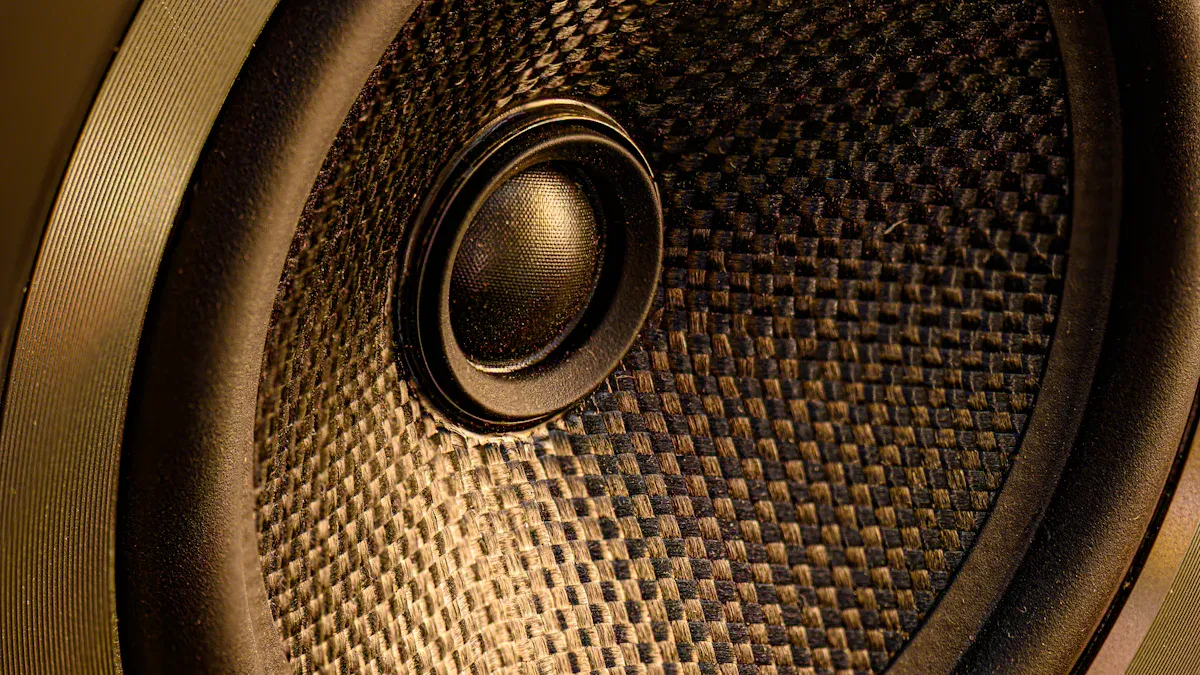
Speaker cones are made from different materials. Each material changes how music and movies sound. You can find these materials in many speakers:
- Paper cones
- Polypropylene (plastic) cones
- Aluminum cones
- Kevlar and carbon fiber cones
- Composite cones
Paper Cones: Classic Sound
Paper cones have been used for a long time. People say they sound warm and natural. Paper is light, so the cone moves fast. This gives smooth mid-range tones and soft high notes. Paper cones have good internal damping. This helps reduce harsh sounds and makes music easier to listen to.
Advantages:
- Warm, natural sound
- Light and quick to respond
- Easy to shape for different uses
Disadvantages:
- Sensitive to moisture and humidity
- Not as strong over time if not treated
Tip: Paper cones are common in home speakers and studio monitors where sound quality matters.
Plastic Cones: Versatility and Durability
Plastic cones, like polypropylene, are tough and last long. They resist water and can be used outside or in wet places. Plastic cones give steady sound, but may not sound as lively as paper. They work well for many kinds of music and are affordable.
| Feature | Polypropylene (Plastic) | Paper |
|---|---|---|
| Durability | High | Moderate |
| Moisture Resistance | Excellent | Poor |
| Sound Consistency | Good | Very Good |
| Rigidity | Moderate | High |
Note: Plastic cones are good for outdoor speakers and portable devices.
Metal Cones: Precision and Brightness
Metal cones, like aluminum, are strong and keep their shape. This gives clear, bright sound and sharp details. Metal cones can make music sound more exact, but sometimes add harshness. You often see them in high-end speakers where accuracy is important.
- High rigidity means less distortion.
- Bright, detailed sound is good for modern music.
- Some listeners think they sound sharp.
Synthetic Fiber Cones: Modern Performance
Synthetic fiber cones use materials like Kevlar or carbon fiber. These cones are strong, light, and resist damage. They give clear sound with low distortion. You get balanced tones that work for many kinds of music. Some high-end speakers use these cones for their advanced sound.
| Material | Key Properties | Best Use Cases |
|---|---|---|
| Kevlar | Strong, low distortion | Home and pro audio systems |
| Carbon Fiber | Rigid, detailed sound | High-end, precise speakers |
If you want clarity and durability, synthetic fiber cones are a great choice.
You can pick speaker materials to fit your needs. Each material shapes sound in its own way. Think about where you will use your speakers and what kind of sound you want.
Choosing the Right Cone for Your Sound Quality Needs
Matching Cone Types to Listening Preferences
You want speakers that fit how you like to listen. Some people like music that sounds warm and smooth. Others want sharp and clear sounds. Speaker cones help make these sounds. Paper cones give a classic and natural tone. Plastic cones are tough and good for outside or wet rooms. Metal cones make high notes crisp and details strong. These are good for modern music. Synthetic fiber cones, like Kevlar, are strong and balanced. You can use them in home theaters or pro audio setups.
Where you use your speakers matters too. If you use speakers outside or in places with changing weather, pick cones that resist water and heat. Strong materials keep sound steady even when weather changes. For inside use, you can choose the sound you like best.
Tip: Think about where you will use your speakers and what kind of music you enjoy. This helps you pick the right cone type.
Practical Tips for Buyers
When picking speaker cones, look at the material and design. Here are some things to remember:
- Choose materials that handle temperature and humidity if you want reliable sound.
- Find a balance between flexibility and stiffness. This helps the cone move right and stops unwanted vibrations.
- Make sure the cone design fits your product. Wide-dispersion cones are good for big rooms. Focused cones are better for small spaces.
| Application Scenario | Recommended Cone Type | Key Benefit |
|---|---|---|
| Outdoor/Portable Speaker | Plastic or Synthetic Fiber | Durability, moisture-proof |
| Home Theater | Paper or Kevlar | Warmth, balanced sound |
| Studio Monitor | Metal or Carbon Fiber | Precision, detail |
You can ask for custom solutions if you need something special. Many brands, like ZEH Audio, offer research and development services. They help you get the best speaker cones for your project. You can get unique cones for your brand or reliable ones for everyday use.
Knowing about cone materials and design helps you pick speakers that match your sound goals. You get better sound when you know what works for you.
You can change how your music sounds by picking the right speaker cone. The material and design you choose are important. Each type has its own good and bad points:
| Material Type | Advantages | Disadvantages |
|---|---|---|
| Synthetic Fiber | Very strong, makes sound clear | Costs more money |
| Paper | Makes sound warm and natural | Not as tough |
| Plastic (PP) | Does not get hurt by water, cheap | Sound is just okay |
| Metal (Aluminum) | Makes sound bright and sharp | Can be too harsh |
Think about where you will put your speakers and what music you like. Conical cones spread sound all over the room. Parabolic cones send sound in one direction. Pick the right cone size and box for your space. This helps you get the best sound.
FAQ
What does the speaker cone do in a speaker?
The speaker cone moves back and forth to push air. You hear sound because the cone turns electrical signals into sound waves. The cone’s movement shapes the sound quality you get from your speaker.
How does cone material affect sound quality?
Cone material changes how your music sounds. Paper cones give you warm, natural tones. Metal cones sound bright and clear. Plastic cones last longer and resist water. Each material shapes the sound in a different way.
Why should you care about cone design?
Cone design controls how sound spreads in your room. Wide cones fill the space with music. Focused cones send sound straight ahead. You get the best sound when you match cone design to your space and listening style.
Which speaker cone is best for outdoor use?
You should pick plastic or synthetic fiber cones for outdoor speakers. These materials resist water and heat. Your speakers will last longer and keep their sound quality in tough weather.