
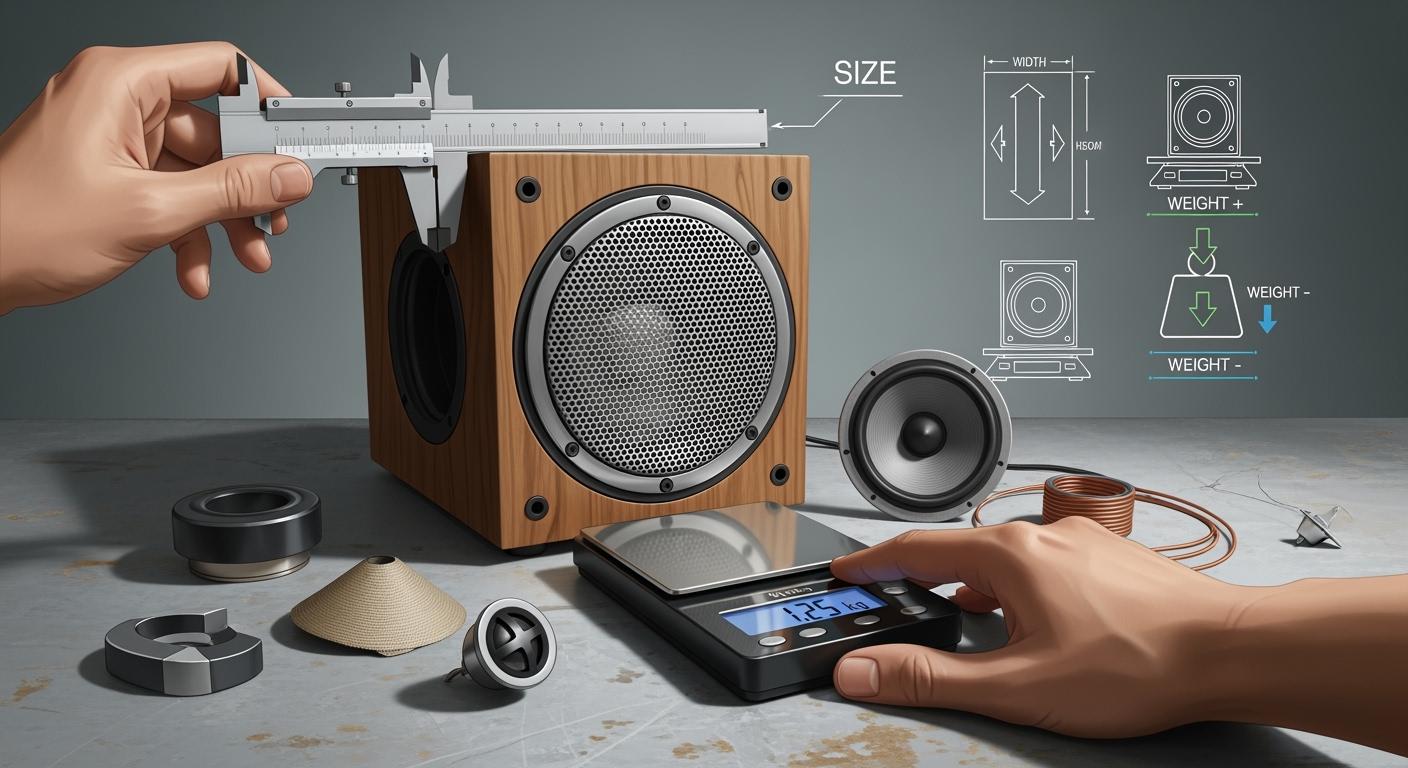
Controlling size and weight in custom speakers takes more than picking small parts. You need to focus on smart design, the right materials, and modern technology. When you aim for compact speakers, you also want great sound. That means you must balance these goals and rely on your technical know-how.
Tip: Try hands-on testing with your design. You will spot issues early and make better choices for your next model.
Key Takeaways
Use smart design and good materials to make small speakers. This helps keep the sound good.
Work with skilled designers and builders. This helps you avoid mistakes and get great results.
Pick light materials like aluminum and composites. These keep your speakers light but strong.
Use new technology like Digital Signal Processing (DSP). This makes small speakers sound better.
Test your first models a lot. This helps you find problems early and make your speakers the best size, weight, and sound.
Expert Collaboration
If you want to control the size and weight of custom speakers, you need help from others. You should work with experts who know about compact audio design. Their knowledge helps you skip common mistakes. They also help you find smart ways to reach your project goals.
Design Experience in Compact Speakers
You need a designer who can make small speakers sound strong. The right expert gives you more than ideas. They have real skills and technical know-how. Here are some important things your designer should have:
Good math skills for correct calculations
Woodworking skills for making exact enclosures
Soldering skills for putting together electronic parts
Knows how to use enclosure and crossover design software
A designer with these skills helps you get both small size and big sound. They know how to pick the right driver. They can shape the enclosure and tune the system for top performance. You end up with a speaker that is small but powerful.
Tip: Ask your designer if they have worked on compact projects before. Real experience often gives better results.
Choosing Skilled Manufacturers
You also need a manufacturer who checks every detail. Skilled manufacturers follow steps to make sure your custom speakers are just right:
They decide on system specifications before they start designing or making models.
Design engineers draw detailed plans and list all the parts.
They build working models to test how the audio sounds.
Every speaker is tested at the end to check quality.
They measure important things like resonant frequency and frequency response.
They use simulation software to check magnetic circuits and vibration systems.
CNC machining makes sure enclosures are exact.
Power tests make sure the speakers work well in real life.
When you pick the right team, you get speakers that are light, small, and work well. You save time, avoid mistakes, and give your clients great products.
Controlling Size with Design Choices
When you design custom speakers, controlling size means making smart choices at every step. You want your speakers to be small and light, but you also want them to sound great. Let’s break down the main factors that help you reach this goal.
Driver Size and Power Handling
The driver is the heart of your speaker. If you want big sound, you might think you need a big driver. That’s not always true. You can use smaller drivers with powerful magnets, like neodymium, to keep your speaker compact without losing sound quality. Smaller drivers work well for mid and high frequencies. For deep bass, larger drivers move more air and handle more power, but they also make the speaker bigger and heavier.
Larger drivers handle more power and produce deeper bass, but they increase the overall size.
Smaller drivers with advanced materials and strong magnets can deliver impressive sound in a compact package.
The size of the voice coil and magnet also affects how much power the driver can handle.
Tip: If you want to keep your speaker small, focus on efficient drivers and powerful magnets. This lets you get more sound from less space.
ZEH Audio uses advanced driver technology to balance power and size. Their engineers select the best materials and optimize the driver structure, so you get strong performance in a lightweight design.
Enclosure Design and Speaker Type
The enclosure shapes the sound and controls the size of your speaker. You have many options here. Closed boxes, or sealed enclosures, are simple and compact. They give you tight, accurate sound, but may not produce as much bass as larger designs. Ported enclosures, also called bass reflex, use a tuned port to boost low frequencies. This lets you use a smaller box without losing bass.
Here are some proven strategies for enclosure design:
Add a bit of volume to the enclosure for better efficiency, but don’t go too big.
If your box is small, increase the power to the driver to make up for lost volume.
Adjust the port area to tune the enclosure for deeper bass, but do this carefully to avoid noise.
Try different placements for the subwoofer and port. Small changes can make a big difference in output.
You can also choose different speaker types. For example, full-range drivers save space because you don’t need separate woofers and tweeters. Coaxial designs put two drivers in one spot, making the speaker even more compact.
ZEH Audio’s R&D team uses simulation software and real-world testing to find the best enclosure shapes and sizes. They combine technical analysis with hands-on experience, so you get a speaker that fits your needs and sounds great.
Tuned Port and Passive Radiator Methods
You can boost bass in a small speaker by using a tuned port or a passive radiator. Both methods help you get more low-end sound without making the box bigger.
Tuned ports use the air inside the box to extend bass. You need to size the port carefully to avoid unwanted noise or airflow problems.
Passive radiators act like a port but use a moving diaphragm instead of an open tube. They let you tune the bass in a small enclosure and control how much the driver moves at low frequencies.
Passive radiators work well in compact designs, but sometimes they are less efficient than ports for deep bass.
Note: Exposing the speaker driver, or using a front-facing design, can also help you get more sound from a small box. This makes the speaker feel bigger than it really is.
ZEH Audio specializes in these advanced methods. Their engineers use both tuned ports and passive radiators, depending on your project’s needs. They test each design with tools like the Klippel near field scanner to make sure the speaker performs well in real rooms.
If you want to succeed at controlling size, you need to look at every part of the design. Choose the right driver, pick the best enclosure, and use smart tuning methods. With the right team and technology, you can build custom speakers that are small, light, and powerful.
Material Selection
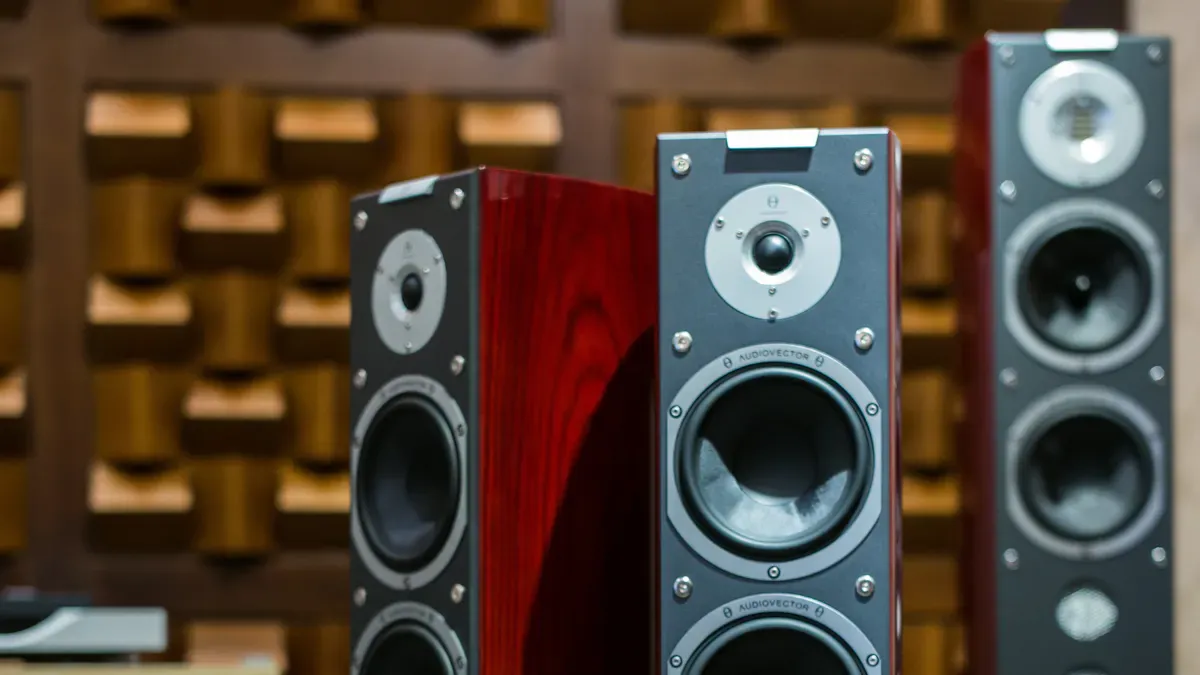
Choosing the right materials is a big step in controlling size and weight for your custom speakers. You want your speakers to sound clear, stay light, and last a long time. Let’s look at how you can make smart choices.
Acoustic Transparency Materials
You need materials that let sound pass through without blocking or changing it. This is called acoustic transparency. Some materials do this better than others. Here’s a quick look:
Material | Acoustic Characteristics | Pros | Cons |
|---|---|---|---|
Oak | Dense, limits resonance | Durable, solid bass | Heavier, more expensive |
Birch | Bright, minimizes resonance | Lighter, affordable | Can dent easily |
Aluminum | High transparency, lightweight | Resists corrosion, clear | Softer, may dent |
Aluminum stands out if you want a lightweight speaker. It lets sound flow clearly and resists rust. You can also anodize it for extra strength and style. Just remember, it can dent if you drop it.
Lightweight Metals and Composites
You want your speaker to be easy to move and install. Lightweight metals like aluminum help a lot. They resist vibrations and act as a heatsink, pulling heat away from the parts inside. This keeps your speaker working well for a long time.
Aluminum gives you a strong, light frame.
It handles bumps, moisture, and temperature changes.
It does not color the sound, so you get accurate music.
Composites can also help. They mix materials to get the best of both worlds—strength and low weight.
Durability vs. Weight
You need to balance how tough your speaker is with how light you want it. High-density materials like oak last longer but add weight. Low-density options like birch or aluminum keep things light but may dent or scratch.
Cost matters, too. Labor and finishing can raise the price more than the raw materials. Think about the whole product life, not just the first cost. Sometimes, paying more for a better material saves money later by reducing shipping weight and repairs.
Tip: Always match your material choice to your project’s needs. This helps you succeed in controlling size and weight while keeping quality high.
Technology Integration
Modern technology helps you make custom speakers smaller and lighter. You do not have to lose performance. Digital tools and advanced hardware help you improve every part of your design. Let’s see how these new ideas help you build small, high-quality speakers.
Digital Signal Processing (DSP)
Digital Signal Processing (DSP) changes how you design speakers. DSP helps fix the limits of small speakers. It boosts bass and makes the sound louder. DSP also keeps your drivers safe from damage. You get clear sound even from tiny boxes. DSP works with advanced amplifiers to make micro speakers sound great. You can adjust the sound for different rooms or uses. This lets you offer compact speakers with great audio fidelity.
Tip: Try changing DSP settings when you test your design. You will notice how much you can change the final sound.
Efficient Miniature Drivers
Miniature drivers help keep your speakers small and light. New designs use special technology to work better and need less space. You can pick drivers with a single 4-inch cone transducer for small speakers. These drivers can reach up to 113 dB SPL. They cover a wide frequency range from 120 Hz to 18 kHz. Self-powered drivers mean you do not need extra amplifiers. This makes your setup easier.
Feature | Description |
|---|---|
Driver Type | Single 4-inch cone transducer for compact speakers |
Maximum Peak SPL | 113 dB |
Frequency Range | 120 Hz to 18 kHz |
Technology | Self-powered, no external amplifier needed |
Efficiency | Patented passive single-driver tech reduces energy use and cabinet size |
Special magnet arrays stop unwanted forces.
Small designs can still make deep bass.
You can use this technology for earbuds or big speakers.
Miniature speakers with rear enclosures work better and play lower sounds. This lets you make thinner speakers that still sound good.
Wireless and Power Solutions
Wireless technology makes speakers easier to use and set up. You can add Bluetooth or Wi-Fi for more ways to place them. Built-in batteries or good power supplies make them lighter. You do not need heavy cables. You can use these speakers anywhere, like offices or outside. Smart power management helps the battery last longer and keeps your speakers working well.
Note: When you use wireless features, efficient drivers, and DSP together, you get custom speakers that are light, small, and ready for any place.
Testing and Validation
Testing and validation are very important for custom speakers. You want your speakers to be the right size and weight. You also want them to work well in real life. You need to check every sample to make sure it matches your design. This helps you see if your speakers will do well when people use them.
Acoustic Testing in Small Enclosures
Small speakers should still sound good. Start by testing them in a quiet room. Use special tools like the Klippel R&D system. These tools measure how loud your speaker is and how clear the sound is. They also check for any sound problems. Sometimes, outside labs do these tests for you. They use very good machines to see if your speakers meet your goals. This is very important if you need your speakers to always work well.
Always test your samples to see if they sound right.
Try different ways to measure your results.
Make sure your speakers work with other systems.
Tip: Good testing now means fewer problems later.
Weight and Durability Checks
You want your speakers to be light but strong. Weigh each speaker and see if it matches your goal. Test how tough it is by dropping it or bumping it. You can also change the temperature to see if it still works. This shows your speaker can handle shipping and daily use. If you want to impress buyers, show them your speakers pass these tests.
Strong testing makes sure your speakers are good enough.
This matters most for projects that need perfect sound and long life.
Iterative Prototyping
Making many prototypes helps you improve your design. You can try new shapes, materials, and layouts fast. Computer tests let you see what works before you build anything. When you build your first model, make sure it is like your computer plan. This saves time and money. It also helps you control size and weight.
Phase | Duration |
|---|---|
Design & Prototyping | 8-14 weeks |
Tooling Fabrication | 10-16 weeks |
Production Ramp-up | 4-6 weeks |
Total Timeline | 6-9 months |
Remember: Each new prototype helps you get closer to the best size, weight, and sound.
Speaker Positioning and Perceived Weight
Room Placement Strategies
You can make your custom speakers sound bigger and heavier just by placing them in the right spot. When you set up speakers, you want to match their direction with where you sit. This helps you hear the full sound and feel the audio weight. Room acoustics play a huge role. Hard walls, carpets, and furniture change how sound moves. You need to think about these things before you pick a spot.
Here are some strategies you can use:
Set your main listening position (MLP) first. This is where you want the best sound.
Place the center channel speaker in the middle of the wall at ear height.
Put the left and right speakers at angles between 22.5° and 30° from the center channel.
Use the speaker’s directional features to send sound straight to the listener and cut down on echoes.
Avoid placing speakers too close to walls or corners. This can make bass sound boomy or muddy.
Tip: Try moving your speakers a few inches at a time. Small changes can make a big difference in how the sound feels.
Impact on Frequency Response
Speaker placement changes how you hear bass and other frequencies. In small rooms, you get peaks and dips in sound below 250Hz. These are called room modes. If you sit in a spot where the sound cancels out, you lose volume at certain frequencies. You can fix this by moving your speakers or your seat.
Room modes affect bass response. You might hear too much or too little bass depending on where you sit.
Placing speakers at a modal null stops them from boosting certain frequencies. This helps you get a balanced sound.
As frequencies go up, room modes get closer together. This can make bass sound uneven in small rooms.
SBIR (Speaker Boundary Interference Response) happens when sound bounces off walls. It creates peaks and dips in what you hear.
Note: You can use measurement tools or apps to check your room’s frequency response. This helps you find the best spot for your speakers.
If you fine-tune your speaker placement, you boost perceived audio weight and get a richer sound. You make your custom speakers perform better without changing their size or design.
You can manage the size and weight of custom speakers by making smart design choices, choosing the right materials, and using new technology. Try different shapes, like oval cones, and use DSP to improve sound in small areas. Always test your speakers and avoid common mistakes, such as air leaks or using the wrong gaskets. If you want to learn more, look at guides from Instructables or talk to experts like Custom Integrators. Keep trying new ideas and improving your designs for the best results.
FAQ
What is the best way to reduce speaker weight without losing sound quality?
You should use light materials like aluminum or composites. Pick drivers that work well and do not need much space. Use small enclosures to keep the speaker light. Digital signal processing, or DSP, helps you keep good sound in small speakers.
How do I choose the right driver size for my custom speaker?
First, think about what kind of sound you want. Small drivers are good for mid and high sounds. Big drivers give you more bass. Try using computer tools to test different sizes before you build your speaker.
Can DSP really improve small speaker performance?
Yes, DSP can help a lot. It lets you change how your speaker sounds. You can make the bass louder and fix sound problems. This makes small speakers sound bigger and clearer.
What materials should I avoid for lightweight speakers?
Do not use heavy woods like oak or metals like steel. These make your speaker heavy and do not always help the sound. Choose lighter things like birch, aluminum, or special composites.
How important is prototype testing in speaker design?
Testing your first models is very important. You can find problems early and fix them fast. This saves time and money. Always check the sound, weight, and strength before making lots of speakers.