
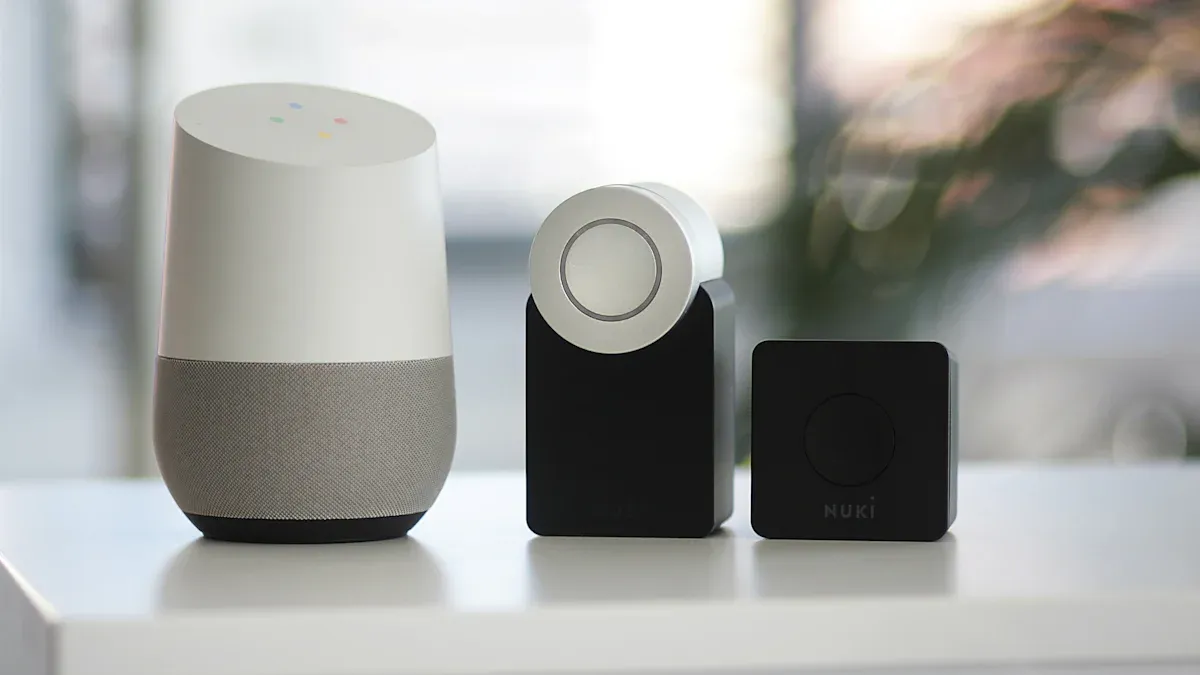
Speaker design now affects how you use artificial intelligence voice devices everywhere. Speaker design is growing fast. You can see this in adoption rates:
Region | Adoption Rate Statistics |
|---|---|
United States | By 2023, about 51% of Gen Z users will use voice assistants at least once a month. This number should grow to 64% by 2027. |
China | In July 2024, 58% of Chinese users liked instant voice translation from third-party AI input methods. |
Japan | By 2020, around 5.8 million homes had smart speakers. This number should go over 15 million by 2026. |
Germany | 85% of German people own devices with voice assistants already on them. But only 26% use them often. |
United Kingdom | In 2022, 46% of people in the U.K. used Amazon Alexa. |
India | In 2023, over 70% of Indian users used assistants to play music and search for videos. There are over 130 million assistant users. |
South Korea | AI-driven assistants are often used in healthcare and elderly care for checking and helping people. |
Speaker design changes as technology and user needs change. Natural language processing, multi-modal interaction, and interoperability are important for speaker design. People want privacy, easy access, and a smooth experience. Speaker design must meet these needs.
Key Takeaways
Speaker design for AI voice devices is changing. It now tries to meet what users want. People want to talk to devices in a natural way. They also want devices to feel more personal. Privacy and data protection are very important. Users should know how their data is used. They should have control over their own information. Multi-modal interaction makes things easier to use. Users can use voice, touch, and visuals together. This gives a smoother experience. Interoperability standards help devices from different brands work together. This makes technology easier to use and more friendly. Getting feedback from users helps make AI voice devices better. This makes the devices smarter and more useful for people.
Speaker Design Trends in Artificial Intelligence
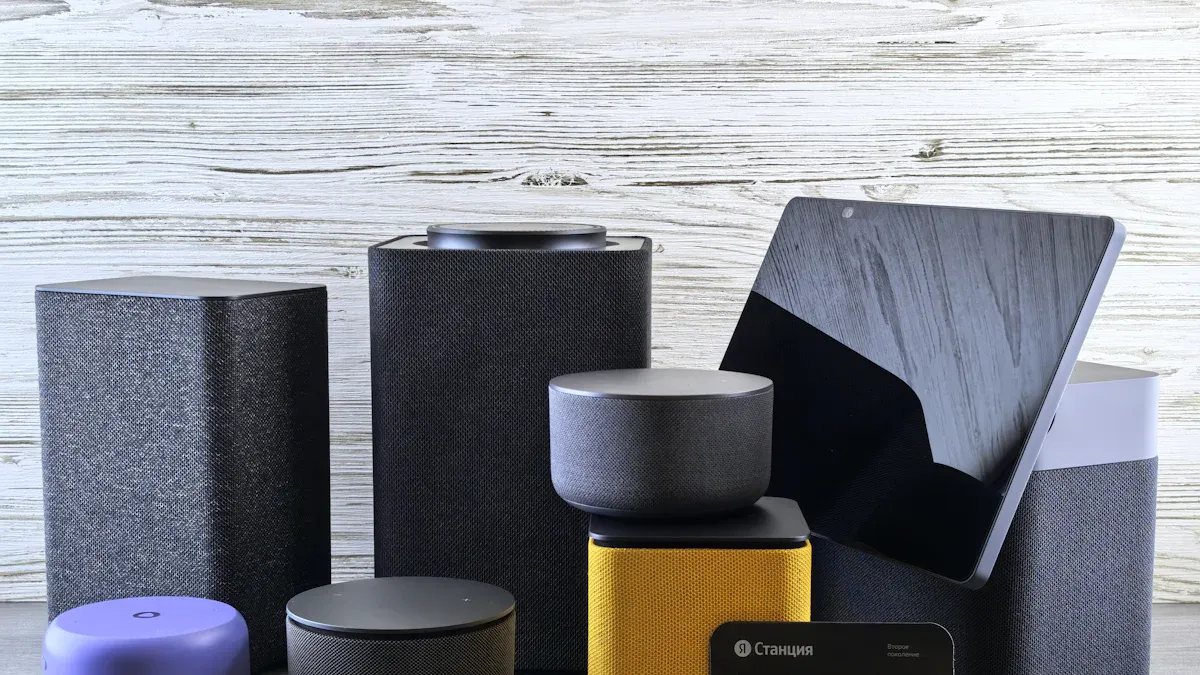
Evolving User Expectations
People want more from AI voice devices now. They do not just want answers to questions. They want the device to talk like a real person. Companies see this change. They try to make AI voice systems that can guess what you need. These systems answer you like a friend would. Many devices now use conversational interfaces. You can talk to your device and ask more questions. The device remembers what you said before.
Manufacturers use tools like Midjourney and DALL-E. These tools help make designs that fit you. Your AI voice device can look and sound special for you. Machine learning helps guess what you want next. This makes talking to your device faster and easier.
You care about how your device works every day. The table below shows what is important to users:
Dimension | Description |
|---|---|
Usability | You want your voice assistant to understand your commands and do what you ask. Clear interaction is important for you. |
Affective | You feel satisfied when your device meets your expectations. Frustration can happen if it does not work as you hoped. |
Recognizability & Visibility | You need to recognize what your device can do. Without a screen, it can be hard to find all the options, so clear voice guidance helps. |
There are new trends in AI voice device design:
AI speakers now connect with smart home security. You can use your voice to control cameras and alarms. This helps keep your home safe.
Multilingual AI speakers let families use many languages. More people around the world can use these devices.
Eco-friendly materials and energy-saving parts are used more. You can pick devices that are better for the planet.
AI voice devices help in healthcare. You can use them to check on patients or talk to doctors from home.
Devices now work together. Your AI speaker, phone, and wearable share information. This makes things easier for you.
Voice commerce is growing. You can buy things or use services just by talking to your device.
These trends show that people want AI voice devices to be smart, helpful, and simple to use in daily life.
Natural Language Processing
Natural language processing has changed how you use AI voice devices. Now you can talk in a normal way. The device understands you. This makes talking to your device faster and easier. You do not need to use special words. The device remembers your conversation, so you do not have to repeat yourself.
AI voice technology has gotten much better:
Audio processing and noise reduction cut background noise by more than half. You can use your device in busy places and still hear well.
Real-time communication is faster. Your device answers quickly because it sends short and clear messages to the AI.
Adaptive speaker recognition lets your device learn new voices by itself. Friends and family can use your device, and it knows who they are.
Dynamic clustering helps your device know who is talking, even if many people speak at once.
Privacy-aware interfaces only listen to the voices you want. This keeps your talks safe.
Devices can switch between deep neural networks and simple pipelines. This means your device works well, even if it is not very powerful.
You see these changes in many places. In telehealth, you can tell your symptoms, and the device records them for your doctor. In banking, you can check your balance or confirm a payment with your voice. In customer support, you can explain your problem, and the device helps you.
The table below shows how AI voice models help you:
Improvement Aspect | Description |
|---|---|
Natural communication | You can speak naturally, making your interaction quick and easy. |
Context-aware responses | The device remembers your conversation, so you do not have to repeat yourself. |
Accurate speech recognition | Your device works well even in noisy places, which is important for things like healthcare and finance. |
Understanding context and intent | You can have longer conversations, and the device can ask for more details if needed. |
Seamless support across devices | You can start a conversation on one device and continue on another without losing context. |
Tailored responses through personalization | Your device uses your history to give you better answers and advice. |
Natural language processing makes your AI voice device smarter and more useful. You get a better experience because the device understands you and answers fast. It also keeps your information safe. As AI voice technology gets better, you will see more ways to use it every day.
Voice Usability and Accessibility
Designing for Diverse Users
You use voice devices often, but people use them differently. Everyone has their own needs and backgrounds. Some people have trouble speaking or have strong accents. Others may not know much about technology. Some people need extra help to use voice user interfaces.
Here are some problems you might see:
Challenge | Description |
|---|---|
Privacy Issues | Devices that always listen might record talks by mistake. |
Reliability and Accuracy | Devices can have trouble with accents or speech problems. Loud places make it harder for them to work well. |
Learning Curve | You must learn certain commands, which can make using the device harder. |
Limited Understanding of Context | Some devices do not get hard or special commands, so they do not work as well. |
Many people only use easy features on their voice devices. They skip hard tasks because the device might not understand. Sometimes, you need to learn special words, and this can be annoying. Good design helps everyone use technology better. Universal design means anyone can use voice technology, no matter who they are.
Tip: When you make a user interface, think about everyone. This means using many languages, alphabets, and ways of talking.
Accessibility Standards
You should follow clear rules to make voice user interfaces easy for all. The Web Content Accessibility Guidelines (WCAG) give important rules for digital access. These rules help you make devices that everyone can use, even people with disabilities. The Digital Accessibility Office also wants AI to help more people join in.
AI can teach you good ways to make things easier for everyone. When you use these rules, your device works for all people. Accessibility is not just about rules. It is about making sure your voice device helps everyone feel welcome and able to use it.
Multi-Modal and Interoperable Voice Technology
Integrating Multi-Modal Interaction
You use voice technology a lot. But you also use other ways to control devices. Multi-modal interaction lets you use voice, pictures, and touch together. This makes things smoother and faster. You can talk to your device and see answers on a screen. This helps you finish tasks more quickly.
Feature | Description |
|---|---|
Native Voice AI Processing | Voice, text, and pictures work together for fast conversations. There are no long waits. |
On-Device Speech Recognition | Your device understands speech without the internet. This keeps your information private and safe. |
Real-Time Speech Capabilities | You can talk with your device and get answers right away. This makes talking feel natural. |
“The hardest part in multimodal design is switching between ways to use it. This can mean changing how you give commands, moving to another device, or sharing a device with others.” – Cheryl Platz, Design Beyond Devices
You see multi-modal interaction in many products. In a fitness app, you can start a workout by talking. You watch your progress on the screen. In cars, voice and pictures help you drive safely. Games use voice and pictures to keep you interested. You can switch between talking and touching the screen when you want.
People say using voice and pictures together makes things easier.
Picking a continent by voice is easier than clicking.
Switching between ways to use the device helps more people use it.
Multi-modal interaction lets you do more than one thing at once. It makes voice technology work better for you. You get a better experience because you can use voice, touch, or pictures.
Interoperability Standards
You want your devices to work well together. Interoperability standards help voice technology connect across brands. These rules let you use your voice on different devices without trouble.
Thread lets smart devices talk to each other and saves energy.
Wi-Fi gives fast connections for voice technology.
Matter lets devices from different brands work together.
Bluetooth helps you connect devices quickly.
Interoperability standards help devices work in many places. They stop problems like devices not working in some countries. When you use voice technology, you want everything to work together. Standards like Matter and Thread help your devices stay connected and useful.
You get more from these standards. Your devices can share information and follow your commands. This makes your home smarter and your life easier.
Privacy and Security in Speaker Design

Data Protection Strategies
You use voice assistants and share personal information every day. Keeping your data private is very important, especially at home or in healthcare. Many companies follow strict rules like GDPR. They must ask you before collecting biometric data. You decide what information to share.
Modern speaker design uses different ways to keep your voice data safe:
Strategy | Description |
|---|---|
Local inference | Your device handles speech on its own and only sends tokens, not the full audio. |
Permission sandbox | Skills need your real-time permission and only get the smallest amount of information needed. |
Data-retention caps | Devices erase raw audio after updates, which helps stop privacy problems and legal trouble. |
Some devices use VoiceSecure. This microphone module changes your voice data right away. It makes it harder for others to steal your information. You find these features in many voice assistants. They help you control your data and keep your talks safe.
You also get strong encryption and access controls. These tools stop people who should not see your information. Data loss prevention systems catch leaks before they happen. Continuous monitoring finds threats fast. Regular updates and patches fix security holes.
Cybersecurity in Sensitive Environments
You might use voice assistants in hospitals or at home for healthcare. Security is even more important in these places. You want to know your information stays private and safe.
Best Practice | Description |
|---|---|
Employee Training | Staff learn about risks and how to spot fake requests. |
Verification Protocols | Devices ask for extra checks before doing sensitive things. |
Technical Safeguards | Systems look for deepfake audio to stop fraud. |
You see these best practices in hospitals and offices. Workers learn to check strange requests. Devices use real-time tools to spot fake voices. These steps help protect your privacy and keep your voice data safe.
Tip: Always check your device settings and update your voice assistants often. This helps you stay safe from new threats.
Optimizing Performance in Voice Technology
Managing Noise and Audio Quality
You want your voice device to work well everywhere. Managing noise and making audio better helps you hear clearly. It also makes your device more reliable. Designers use different ways to cut unwanted sounds and make speech clearer.
Traditional algorithms like spectral subtraction lower background noise by 15-20dB. You hear speech better without losing quality.
Wiener filtering cuts errors and changes with noise. Your device works well in busy places.
Statistical methods use models to separate speech from noise. This works in many environments.
AI-powered solutions make your device smarter:
Recurrent neural networks learn speech patterns and reduce noise over time.
Convolutional neural networks find patterns in spectrograms. They cut noise with little distortion.
Transformer models use attention-based systems. These do better than older methods in tough noise situations.
You get help from directional microphones that focus on your voice. Customizable sound profiles let you change settings for your needs. Noise-canceling headphones use AI to block background sounds. The device learns your voice and makes it clearer, especially in meetings or crowded places. Hearing aids with AI make speech louder and change in real time. This makes talking easier and cuts distractions.
Method | Benefit |
|---|---|
Spectral Subtraction | Cuts noise, keeps speech clear |
AI Algorithms | Change for places, boost clarity |
Directional Microphones | Focus on your voice, ignore background |
Robust Feedback Systems
You want your voice device to answer and get better with your feedback. Robust feedback systems collect and study your ideas. This helps designers make better products. When you share your experience, you help shape future updates.
Feedback systems make users happier by listening to your needs.
Devices with reviews are bought more often. This shows feedback is important.
Better customer experience keeps you coming back and builds trust in the device.
You see feedback systems in apps and devices that ask for your opinion after you use them. These systems help companies fix problems and add features you want. Your input makes the voice device more reliable and fun for everyone.
Tip: Always share your thoughts with your device. Your feedback helps make technology better for you and others.
Future Directions for Artificial Intelligence Voice Devices
Emerging Audio AI Models
You will see big changes in how artificial intelligence uses sound. New audio AI models help make devices more personal and fun. These models work with AI content systems like generative pretrained transformers. Your device can talk to you in a way that feels natural and easy. You might notice this in places like audio tour guides, where the voice sounds friendly and real.
Many new features are coming to voice devices:
You get faster and more natural conversations because of real-time speech abilities.
Devices now use advanced voice activity detection, so they respond quickly and accurately.
Noise reduction makes it easier for you to hear and be heard, even in busy places.
Multimodal AI models let your device use voice, text, and pictures together.
On-device speech recognition keeps your information private and lets your device work without the internet.
New speech-to-text models help your device understand many languages better.
Note: By 2028, experts expect that 75% of new contact centers will use generative AI for better customer service.
Anticipating User Needs
Designers want your experience to feel smooth and helpful. They use personalization to learn what you like and talk with you in ways that fit your style. Context awareness lets your device remember past talks, so it gives you better answers each time you use it.
Here are some ways designers make devices smarter for you:
They collect and study your feedback to keep improving the device.
AI helps designers understand how you use the device and what you need next.
Machine learning finds patterns in your actions, so the device can guess what you want.
Predictive analytics look at past data to help designers make better choices for future updates.
Tip: When you share your thoughts or use your device in new ways, you help shape the next generation of voice technology.
You notice new rules changing how speakers are made for AI voice devices.
Natural language processing and voice recognition make your device smarter.
Voice AI lets you talk without using your hands and finish tasks quickly.
Usability, privacy, and interoperability help you trust your device and use it every day.
Ethical Consideration | Description |
|---|---|
Consent | You decide how your voice data is used and know when your device records you. |
Accuracy and IP Protection | Your device keeps your words safe and protects company secrets. |
Customer Privacy | Only the right people can hear your private conversations. |
Data Storage | Your information follows rules and can be erased if you want. |
You will see more new ideas as companies work to keep users safe and act responsibly.
FAQ
What makes a good AI voice device speaker?
A good speaker gives you clear sound. It understands your voice well. It works even when it is loud around you. It keeps your information private and safe. You can connect it with other devices easily.
How do AI voice devices protect my privacy?
Most devices use local processing and strong encryption. You choose what data to share. Devices usually erase your voice recordings after you use them. Always look at your privacy settings.
Can I use voice devices if I have an accent or speech difficulty?
Yes! Many AI voice devices support different accents. They also work with many speech patterns. You can change settings or use extra features for better understanding.
Why is multi-modal interaction important?
Multi-modal interaction lets you use voice, touch, and images together. You finish tasks faster and have more choices. This helps you use the device in the way that fits you best.
Will my AI voice device work with products from other brands?
Most new devices follow standards like Matter and Thread. These standards help your devices connect and share information. You can use your voice device with many brands.