
Scrap rate control helps you protect your profits in speaker manufacturing. High scrap rates waste materials and push up costs. You see lower quality and unhappy customers when scrap piles up. Think about your current scrap rate. Ask yourself if you can improve it.
Every small improvement in scrap rate can boost your bottom line and raise product quality.
Key Takeaways
Keep your scrap rate low to save money and make better products. Even small changes can help you save a lot.
Use strict rules and digital tools to watch your process in real time. This lets you spot problems early and cut down on waste.
Give your team clear goals for scrap rate. Checking how close you are to these goals can help you work better and spend less.
Use digital instructions to make sure everyone does the same steps. This lowers mistakes and helps everyone follow the right process.
Look for the main cause of defects often. Write down and share fixes so you can stop problems from happening again.
Scrap rate control strategies
Process discipline and visibility
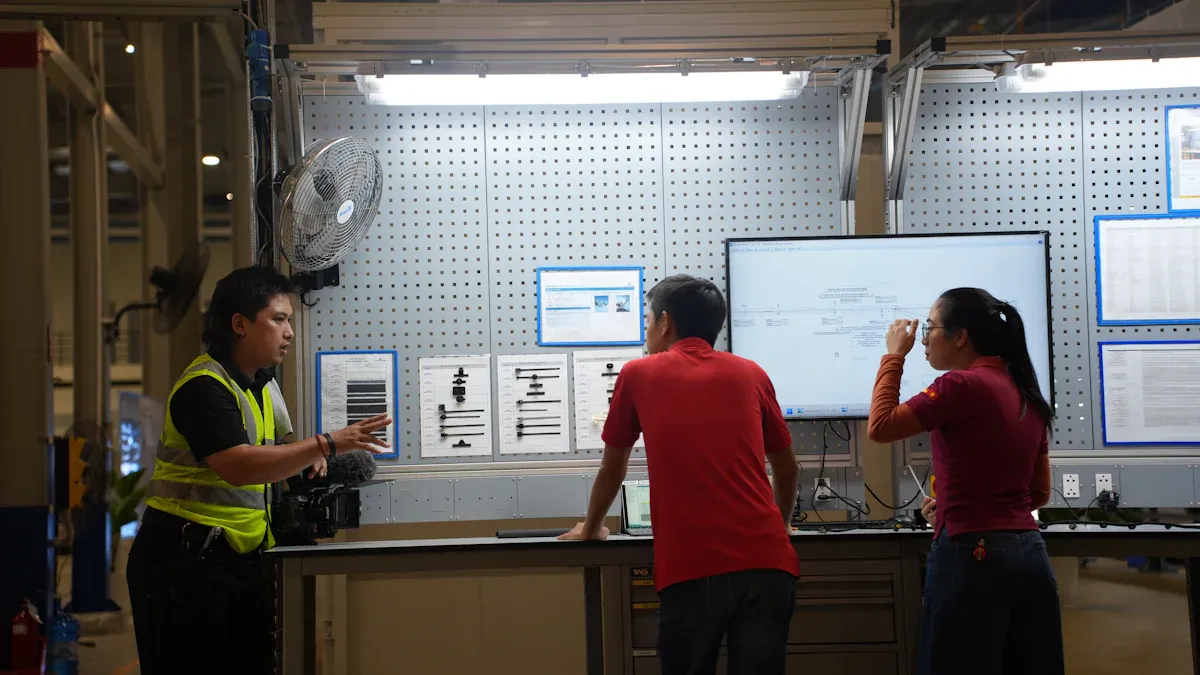
Scrap rate control begins with strong process discipline. You must see what happens at each step. If you spot problems early, you can fix them fast. Many speaker factories use Andon systems. These systems collect data from sensors and people. They show real-time feedback on screens. You can find issues quickly and act right away. Andon systems also track key performance indicators. This helps you know where to get better.
You should let your workers help. Give them tools and power to stop production if needed. This lets you catch defects before they turn into scrap. Digital platforms let you update instructions right away. Operators always see the newest information. This lowers mistakes from old documents.
A disciplined process means you use good workholding and tool-life management. Careful programming is important too. You should write down every fix and share what you learn. This stops the same mistakes from happening again. The table below shows ways to make your process stronger:
Strategy | Description |
|---|---|
Strengthening the process | Invest in workholding, tool-life discipline, and careful programming to minimize errors. |
Closing the loop | Capture causes of issues, document fixes, and share learnings to prevent recurrence. |
Empowering people | Give operators and engineers clear playbooks and authority to act on deviations. |
Leveraging data and technology | Use probing, in-process checks, and standardization to reduce variability and improve yield. |
You can talk better by using a paperless platform. This makes sure updates reach everyone right away. Keeping all documents in one system stops errors from old info. When you ask for electronic acknowledgment, everyone follows the latest rules.
ZEH Audio is great at process optimization and quality control. The company uses advanced monitoring systems and digital tools. These help lower scrap rates. ZEH Audio’s teams work together across engineering, sales, and quality. This teamwork helps solve problems faster and keeps scrap rates low.
Setting scrap rate targets
You need clear goals for scrap rate control. A specific target gives your team something to reach for. Many factories use industry benchmarks, like keeping scrap rates under 5%. Some companies set even tougher goals, like 10,000 parts per million (ppm). When you set a target, you can track progress and celebrate wins.
Here are some results from real cases:
A medical device factory set a scrap rate goal of 10,000 ppm. They made labor more efficient in three months and cut scrap in five months.
The company saved over $170,000 in scrap and more than $200,000 in labor. They also cut overtime pay by $34,560.
Standardizing steps and training inspectors made the process safer and faster.
You can get similar results in speaker manufacturing. Start by making your production steps the same each time. Train your team well. Use digital tools to watch progress. When you reach your goals, you save money and make better products.
ZEH Audio helps factories set and reach tough scrap rate goals. The company uses data analytics and quality management systems to track how things are going. ZEH Audio’s experience shows that clear goals and teamwork lower scrap rates and raise profits.
Tip: Check your scrap rate every month. If you see it go up, look into it right away. Acting early stops bigger losses.
Scrap rate control also depends on design, materials, and process improvement. You should pick the right materials and design products for easy assembly. When you improve your process, you waste less and get more good products.
Digital work instructions

Standardizing production steps
Digital work instructions help make speaker assembly lines more reliable. These tools use interactive and visual guides instead of paper manuals. When operators use digital instructions, everyone follows the same process. This stops confusion and mistakes from old or missing information. It also helps prevent errors from “tribal knowledge,” where only a few people know the right way.
Many speaker factories use digital work instruction tools like:
Azumuta: Makes instructions fit your needs and improves quality.
Tulip: Gives step-by-step guides and checks team performance.
Dozuki: Offers training in many languages for workers everywhere.
Poka: Uses pictures to keep every step clear and the same.
SwipeGuide: Creates simple documents, but you might need tech help.
Digital work instructions help make each step the same. This makes it easier to train new workers and keep quality high. The table below shows some benefits:
Aspect | Description |
|---|---|
Error Elimination | All operators follow the same steps, so work is always the same. |
Real-Time Validation | Fast feedback stops mistakes before they happen and lowers scrap. |
Reducing errors and rework
Digital work instructions help lower mistakes and rework. These tools make hard assembly jobs more accurate and steady. Video instructions help workers remember steps better—studies show up to 80% better memory than just reading. When everyone knows what to do, there are fewer mistakes and less wasted material.
Digital instructions also help more speakers pass inspection the first time. You spend less time fixing problems and more time making good products. If you want to control scrap rates, digital work instructions are a strong start. They fix cost and quality problems caused by confusion or not doing things the same way. You can find problems early and fix them before they cause scrap.
Tip: Try AI-powered instructions to compare good and bad results. This helps you find setup problems before you start making lots of speakers.
When your process is clear and repeatable, you help design, materials, and process improvement. These are all important ways to lower scrap rates in speaker manufacturing.
Documentation management
Updating product data
You must keep product data current to control scrap rates. When you update documents, your team uses the right materials. They also follow the correct steps. Using old or wrong information can cause mistakes. These mistakes lead to defects and wasted parts.
Good documentation management gives you these benefits:
You stop incorrect material use, which causes defects and more scrap.
You make sure changes reach everyone, so no one uses old instructions.
You lower the chance of missing steps, which reduces quality escapes.
You should check and update documents when you change a design, material, or process. This keeps your team working together. It also helps new workers learn the right way from the start. When you document your process well, you help design optimization and process improvement. You waste less and make more good speakers.
Note: Always check that your digital instructions match your latest product data. This simple habit can save you from costly errors.
Version control
Version control helps you track every change in your documents. You make sure everyone uses the newest approved version. This stops confusion and keeps your process safe and steady.
Here is how version control helps you reduce errors:
You avoid mistakes from old information.
You improve traceability and meet regulatory standards.
You stop teams from using different versions, which can cause delays and extra costs.
If you use the wrong document, you can face these problems:
You may create production errors.
You might see product defects or safety hazards.
You could fail to meet regulations, which hurts your business.
You should use digital tools for version control. These tools let you update, share, and track documents easily. Everyone knows which version to use. This keeps your speaker manufacturing process smooth and your scrap rates low.
Tip: Set up alerts for document updates. This helps your team stay informed and follow the latest instructions every time.
Predictive analytics and AI
Identifying scrap trends
You can use predictive analytics and AI to find patterns in speaker production. These tools help you see where scrap happens and what causes it. AI makes it easier to collect data and see problems. AI-powered vision systems spot defects that people might not notice. This means you find problems sooner and waste less. Using AI can cut scrap by 10–25%. It also helps you get more good speakers and fewer bad ones.
AI helps you see your production line better.
Vision systems find defects people might miss.
You can lower scrap and make better products with AI.
Scrap rate control is easier when you see trends early. You can change your process before problems get bigger. This also helps your team know what to fix.
Proactive process adjustments
Predictive analytics lets you act before scrap rates go up. You can use automated scheduling to save time and make fewer mistakes. These tools show you what is happening on your lines, so you find slow spots early. You can use your materials better and waste less.
Automated scheduling helps you work faster and make fewer errors.
Finding slow spots early makes your line run better.
Lean manufacturing helps you use materials the right way.
Making changes early with predictive analytics can make you much more productive. Some companies get 40% better quality with AI. You can also sell more by making your process smoother. When you find slow spots early, you use your resources better and keep things moving.
For example, production scheduling software uses predictive analytics to change schedules right away. This helps you make more products and meet customer needs. In speaker manufacturing, this keeps quality high and costs low.
Tip: Use predictive analytics to watch your process and make changes before scrap rates rise. This keeps your line running well and your products good.
Real-time monitoring
Digital tracking tools
You can use digital tracking tools to watch your speaker factory as it works. These tools let you see each step and find problems fast. The IDA8 Solution and Boutique PA system from ATEIS are used in many speaker factories. They check speaker lines, microphones, and amplifiers with DSP processing technology. The Boutique system works for both small and big factories. It can handle setups from 4 zones to over 8,000 zones. LVT’s PA systems also give you real-time monitoring and control. You can use your phone or computer to run them from far away. These systems help you talk to your team and connect to security cameras. You can fix problems quickly and keep your factory safe.
Digital tracking tools help you lower scrap rates by making First Pass Yield (FPY) better. FPY shows how many products pass inspection the first time. When you check FPY, you find weak spots and fix them quickly. Watching quality in real time helps you catch defects before they become scrap. This saves materials and helps you make better speakers.
Digital tracking tools make FPY better, so scrap rates go down.
You find places to improve and change your process.
Real-time monitoring finds defects early and cuts waste.
Tip: Use digital tracking tools to keep your production steady and your quality high. You will have fewer mistakes and less scrap.
Early detection of inefficiencies
Finding problems early helps you stop them before they get bigger. AI-driven root cause analysis finds weak signals and hidden problems that old ways miss. You can change your process right away and lower scrap. Smart video analytics lets you watch your line in real time. You see defects before they cause a lot of waste. When you use video analytics with SMED, you can switch jobs faster and make quality better.
AI models can notice small changes in scrap rates, like going from 1.2% to 1.6%. You can fix your process before things get worse. Finding problems early means you waste less and make more good speakers.
AI finds hidden problems and helps you fix them fast.
Video analytics finds defects early and lowers waste.
You can spot small changes in scrap rates and act before they grow.
Real-time monitoring helps with design, materials, and process improvement. You keep your factory running well and your products high quality. When you find problems early, you protect your profits and keep customers happy.
Note: Set up alerts for any changes in scrap rates. Quick action keeps your line working well and your scrap rates low.
Quality assurance practices
In-process inspections
You can lower scrap rates by checking speakers as you make them. In-process inspections help you find defects early. You look at things like size and how the speaker looks. This lets you fix problems before they get worse. When you use these inspections, you spend less time fixing mistakes. You also waste fewer materials.
The table below shows how in-process inspections and process control are different:
Aspect | In-Process Inspections | Process Control |
|---|---|---|
Nature | Reactive, finds defects after they happen | Proactive, tries to stop defects before they start |
Focus | Product attributes like size and appearance | Process parameters like temperature and pressure |
Cost Implications | Higher because you may need to fix or throw away parts | Lower because you waste less and work more efficiently |
You should use both inspections and process control together. This helps you stop defects and keep scrap rates low. ZEH Audio uses both ways to make quality better and waste less. The company does regular maintenance and trains workers to spot problems early. This keeps production steady and quality high.
Tip: Try digital inspection tools to record results and share feedback fast. This helps your team fix problems right away.
Root cause analysis
Root cause analysis helps you find out why defects happen. You look at complaints and check errors. You write down each problem and fix it. This stops the same issue from happening again. When you focus on doing things the same way and strict quality control, you make better speakers and waste less.
Here are some best ways to do root cause analysis:
Set up a quality management system to spot problems early.
Use lean manufacturing to remove steps that do not help.
Train workers on best practices and standard operating procedures.
Cut setup time to avoid mistakes when changing jobs.
ZEH Audio uses root cause analysis to make scrap rates better. The company checks every defect and shares what they learn with all teams. For example, ZEH Audio found that using better materials and updating assembly steps lowered scrap by 15%. This effect analysis shows that quality management and process optimization work well.
Note: Always write down errors and fixes. Sharing this information helps everyone learn and keeps your process strong.
You can lower scrap rates in speaker manufacturing by using process discipline, digital tools, and strong teamwork. Scrap often comes from poor design, weak material control, or unclear steps. When you use digital tools, you gain real-time tracking, better tool control, and less waste:
Workshop Topics | Description |
|---|---|
WIP tracking | See work in progress and reduce scrap fast. |
Tool control | Use tools the right way to avoid defects. |
SMED | Change setups quickly and cut waste. |
Good material management and labor control boost your profits.
Clear processes and digital dashboards help you spot problems early.
You should measure your progress and keep improving every day.
Keep checking your scrap rate and act fast when you see changes. Small steps lead to big results.
FAQ
What causes high scrap rates in speaker manufacturing?
High scrap rates happen when you use bad materials. If instructions are not clear, mistakes can happen. Skipping process checks also leads to waste. Design flaws cause errors too. Weak training makes workers mess up more. Fixing these problems lowers waste and makes quality better.
How does scrap rate impact your profits?
Scrap rate makes your costs go up. You waste materials and spend more time fixing mistakes. High scrap rates can hurt your reputation. Customers may get upset. Keeping scrap rates low saves money and builds trust.
What strategies help control scrap rates?
You can use digital work instructions to help your team. Real-time monitoring finds problems fast. Strong process discipline keeps things steady. Design optimization and materials management help too. Training your team and updating documents stops mistakes and lowers waste.
Why is design optimization important for scrap rate?
Design optimization makes assembly easier for everyone. It helps you use fewer materials and avoid defects. Good design lets your team follow steps the right way. This keeps your scrap rate low.
How can you improve materials management?
You track materials closely with digital tools. You update inventory often. Check quality before using parts. Good materials management stops defects and lowers scrap rates. It also saves money and helps you make better speakers.