
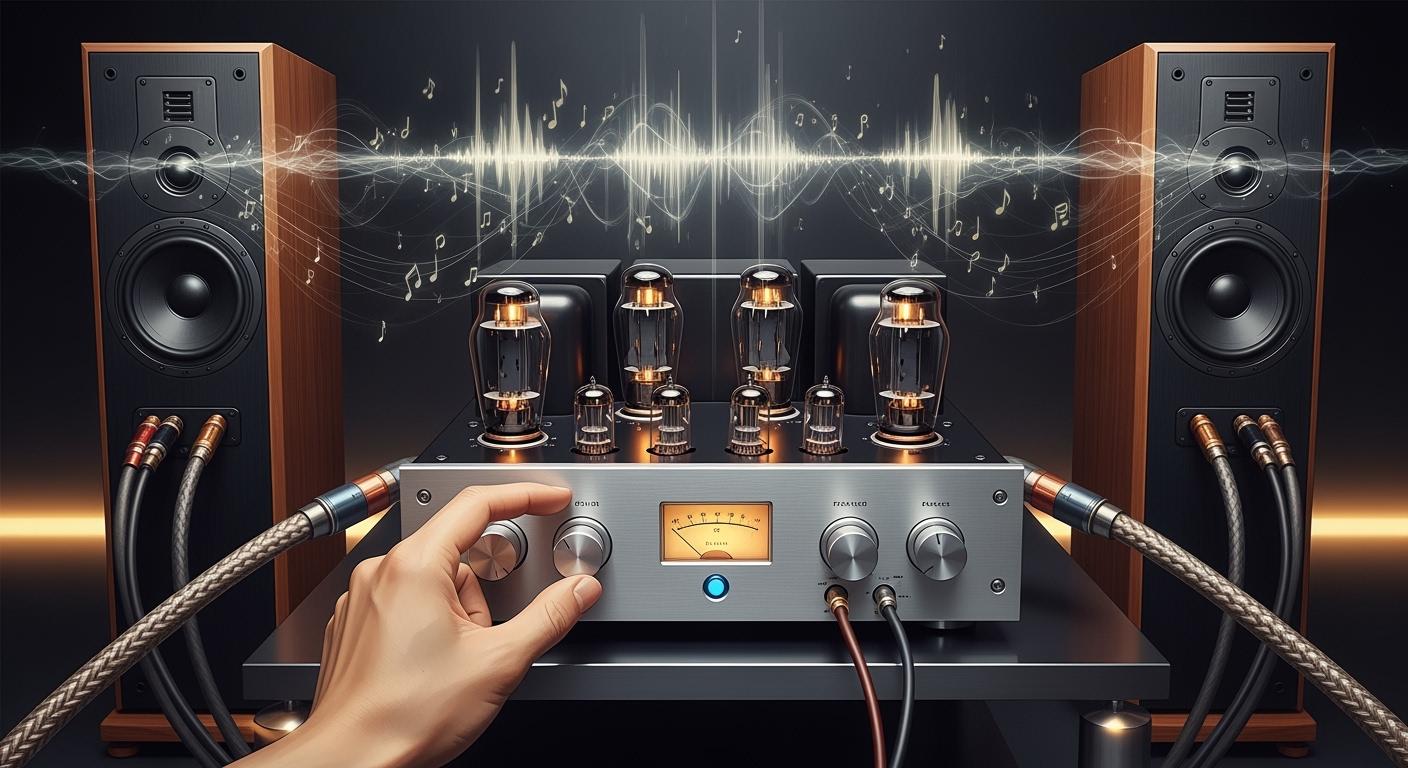
High-end audio equipment needs better speakers. You need speakers that can show every small detail in the music. These systems use better materials and special parts. They make it easy to see what regular speakers cannot do.
If you pick the right speakers, you get better sound. You will hear clearer tones and richer music. This makes your listening better and lets you hear music as it should sound.
Key Takeaways
High-end audio equipment needs better speakers to show every detail in music. This makes your listening experience better. – Pick speakers with high sensitivity ratings for your audio system. This helps you get clear sound and rich music with no distortion. – Find speakers with advanced drivers and strong enclosures. These give you accurate sound and last a long time. – Use good cables and put your speakers in the right place. This keeps the signal clean and gives you the best sound quality. – Buying high-end speakers makes music more fun. You can hear music the way the artist wanted you to hear it.
High-End Audio Equipment Features
Superior Materials and Components
High-end audio equipment uses special materials and advanced parts. These devices have audiophile-grade transducers and premium DACs. Makers pick high-quality metals and strong plastics. These choices help the sound get better and make the equipment last longer. Regular audio equipment does not last as long or sound as good. You hear clearer music and feel more inside the sound because of these materials.
Audiophile-grade transducers
Premium DACs
High-quality metals
Precision plastics
Precision and Low Distortion
You want your music to sound clean and real. High-end audio equipment makes this happen by lowering distortion. Engineers use tools like audio signal generators and distortion analyzers. They check Total Harmonic Distortion (THD) and THD+N. Lower THD+N means less noise and more true sound. High-end gear has better channel matching and steady tolerances. You can hear the difference, especially when you turn up the volume. Mid-range equipment cannot be this exact.
Audio signal generator produces a 1 kHz signal
Distortion analyzer monitors output
Notch filter isolates harmonic distortion
THD and THD+N measurements
Tip: Lower distortion values keep your music close to the original recording.
Power and Sensitivity Balance
You need to match your speakers with your high-end audio equipment. Speaker sensitivity tells you how loud the sound is for each watt of power. Speakers with higher sensitivity need less power. Speakers with lower sensitivity need more power but work well with strong amplifiers. Continuous Power (RMS) and Peak Power ratings help you choose the right pair. Check the table below to see how sensitivity changes power needs:
Speaker Sensitivity (dB/W/m) | Required Power (W) | Example Power Amplifier (W) |
|---|---|---|
90 | 50 | 50 |
87 | 100 | 50 |
83 | 160 | 10 |
95 | 10 | 10 |
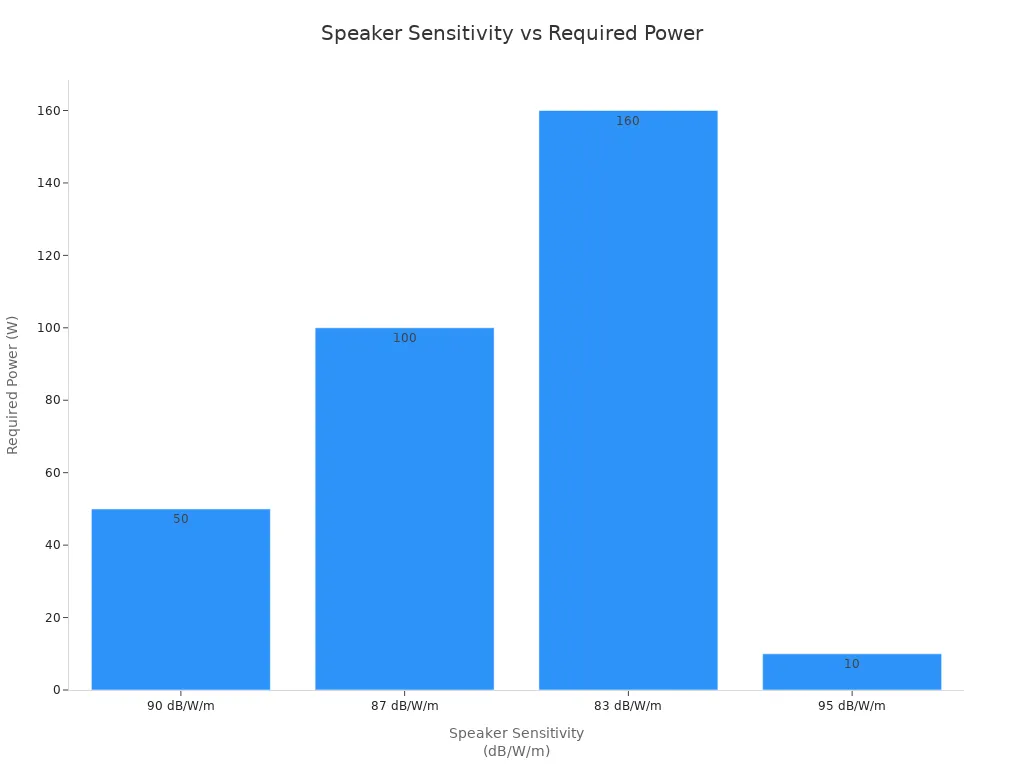
You can see that high-end audio equipment works best with speakers above 86dB/W sensitivity. This balance lets you enjoy strong, clear sound without distortion.
Speaker Requirements for High-End Audio Equipment
Accurate Sound Reproduction
You want your speakers to sound as real as possible. High-end audio equipment gives a clean signal. Only good speakers can turn that into lifelike music. If your speakers are not good enough, you miss details and feeling in the music.
The main goal is to make music sound like a live show. Numbers and tests help, but great audio should remind us of real music in a real place.
If your speakers do not match your system, music may sound wrong. Sometimes, voices and instruments can sound odd or fake. This makes it harder to enjoy the music.
When speakers are not accurate, music can sound different from what the artist wanted. For example, if headphones lower the middle sounds by 10dB, voices and instruments will not sound natural. This adds extra sounds and makes the music less real.
You need speakers with these features for high-end audio equipment:
Speaker Quality | Description |
|---|---|
Tonal accuracy + neutrality | Makes sure instruments and voices sound right and balanced. |
Low distortion / high resolution | Lets you hear small details clearly, without harsh sounds. |
Strong dynamics and headroom | Plays both quiet and loud sounds well, even at high volume. |
Excellent imaging and soundstage | Makes the music feel three-dimensional, like you are in the room. |
Controlled, articulate bass | Gives you clear, tight bass that fits with other sounds. |
Consistent off-axis performance | Sounds good even if you are not sitting right in front of the speaker. |
Build quality and enclosure integrity | Stops shaking and buzzing, so the music stays clear. |
When you pick speakers with these features, you hear music as it was meant to be heard. You get clear voices, real instruments, and a feeling like you are at a concert.
Advanced Drivers and Enclosures
The driver is the most important part of a speaker. High-end audio equipment needs special drivers to handle all the power and detail. There are many types of drivers in high-end speakers:
Horn Drivers: These are loud and work well in big rooms.
Air Motion Transformer (AMT): Moves air fast for clear, high sounds.
Dome Tweeters: Give smooth, detailed high notes in a small size.
Planar Magnetic Drivers: Make sharp, clear sounds so you hear every detail.
Electrostatic Drivers: Give the clearest sound but need special care.
Cone Drivers: Are common and balance cost with good sound.
ZEH Audio uses advanced drivers so you hear every detail. Their engineers choose the best driver for each speaker. This way, you get the right sound for your room and music.
Speaker enclosures are also very important for good sound. A strong box keeps the sound pure and stops extra shaking. For example, an aluminum box is strong and stops buzzing. This means you only hear the music, not noise from the box.
Acoustic Isolation: The box keeps front and back sound waves apart so they do not mix.
Bass Response Enhancement: Some boxes, like bass-reflex, make the bass deeper.
Protection and Durability: The box keeps the speaker safe and helps it last longer.
ZEH Audio uses strong materials like aluminum for their boxes. This makes the speaker last longer and sound better, even when you play music loud.
Crossover and Build Quality
A crossover is a part inside the speaker that sends the right sounds to the right drivers. Good crossovers split music into low, middle, and high sounds. Each driver only plays the sounds it is best at. This gives you smoother, clearer music with less noise.
High-end audio equipment needs speakers that are built well. A strong speaker does not shake or rattle. It uses thick walls and strong joints to keep the sound clean. ZEH Audio checks every detail, from the crossover to the box. Their speakers use advanced crossovers and strong builds for the best sound.
Tip: When you use high-end audio equipment with speakers that have good drivers, strong boxes, and good crossovers, you get the best sound.
If you want to hear music the way it should sound, pick speakers that meet these high standards. Look for brands like ZEH Audio that use new ideas and careful design. This way, you get the most from your high-end audio equipment.
Effects of Mismatched Speakers

Performance Limitations
If your speakers do not match your high-end audio equipment, you lose music details. High sensitivity speakers react fast to small sound changes. This lets you hear soft notes and tiny shifts. Low sensitivity drivers need more power to work well. You miss small details and the music feels less lively. These drivers can get hot and lose power. Loud parts of songs become weaker and less exciting. Turning up the amplifier does not fix this. The speaker cannot handle what high-end gear needs.
High sensitivity speakers help you hear soft sounds and details.
Low sensitivity drivers hide small sounds and make music dull.
Heat in drivers makes loud parts less strong and less fun.
To hear every detail, use speakers that fit your audio equipment.
Distortion and Signal Loss
Speakers that do not match can cause bad sound and lost signals. If the signal to your amplifier is weak or messy, the sound will be bad too. The signal’s quality changes what you hear. Cheap speaker wires pick up noise and make the signal worse. This makes music sound fuzzy or hard to hear. Good cables keep the signal safe and the sound clear.
Bad signals going into the amplifier make the sound worse.
Speakers need a clean signal to play clear music.
Cheap cables bring noise and make the signal weak.
Good cables keep the signal strong and music clear.
You get the best sound with good cables and speakers that match your system.
Real-World Comparisons
Think about using a high-end amplifier with simple bookshelf speakers. You turn up the volume, but the speakers cannot handle it. The music sounds flat and boring. You do not hear deep bass or clear high notes. Voices are hard to hear and instruments lose their shine. With good speakers, you hear deep bass, sharp highs, and clear voices. The music feels real and full of life.
Setup Type | Listening Experience |
|---|---|
High-end amp + basic speakers | Flat, boring, missing important sounds |
High-end amp + high-end speakers | Rich, lively, full of details |
Picking the right speakers lets you enjoy music as the artist wanted. You hear every note, beat, and feeling.
You should use good speakers with your high-end audio equipment. This helps you hear all the small details in music. If you buy better speakers, you get deeper bass and clearer high sounds. The music will also feel richer and fuller.
High-end speakers need strong amplifiers to work well. You also need to put them in the right place for the best sound.
Picking brands that help their customers is smart. This stops problems and keeps your system working well.
People who buy top speakers say they are happier and like music more.
Try out different setups and keep your equipment clean. You can make your music sound better by making smart choices and using new technology.
FAQ
Why do high-end audio systems need special speakers?
You need special speakers because high-end systems reveal every detail in music. Regular speakers cannot show all the sounds. High-end speakers use better materials and designs. This helps you hear music as the artist intended.
What makes a speaker “high-end”?
A high-end speaker uses advanced drivers, strong enclosures, and precise crossovers. You get clear sound, deep bass, and real voices. These speakers use new technology and careful design to meet high standards.
Can I use regular speakers with high-end audio equipment?
You can use regular speakers, but you will not hear all the details. The music may sound flat or unclear. High-end equipment works best with speakers made for it.
How do engineers improve speaker performance?
Engineers use new materials, better drivers, and smart crossovers. They test each part for accuracy. You get better sound because of these technical innovations and precise designs.
Do cables and placement matter for high-end speakers?
Yes, they matter. Good cables keep the signal clean. Placing speakers in the right spot helps you hear the best sound. Try different setups to find what works for your room.