
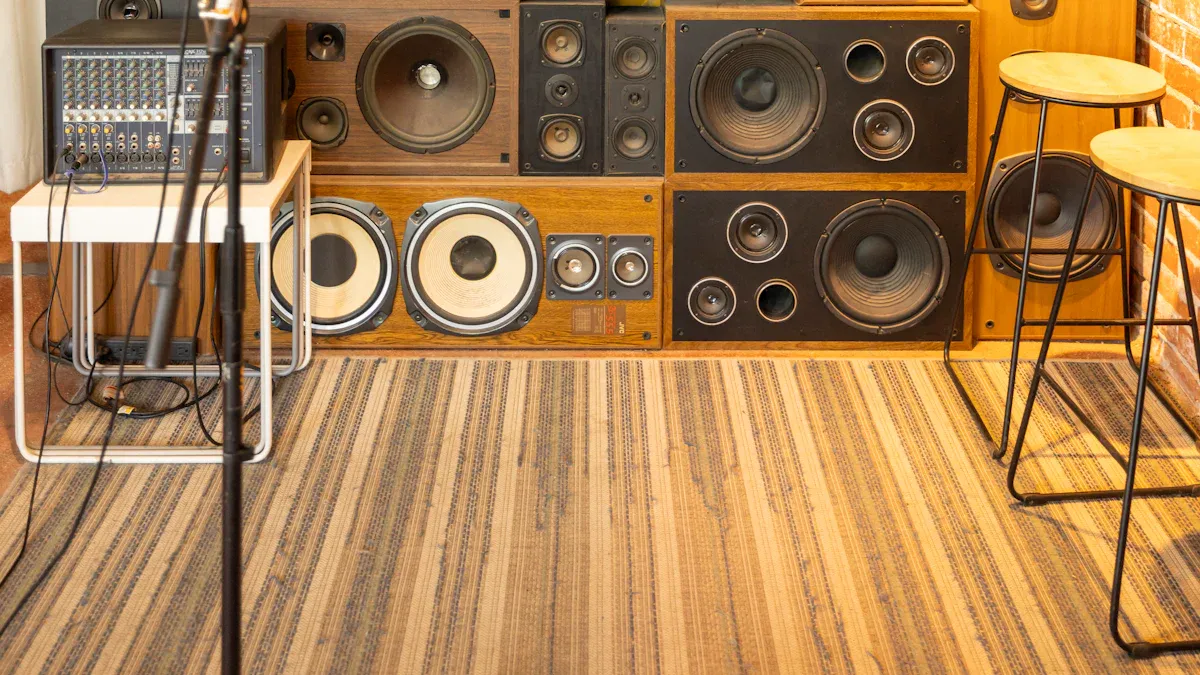
The main difference between 2-way VS. 4-way speakers lies in their design and sound performance. Understanding these differences is crucial for selecting the best audio setup for your room. Choosing between 2-way VS. 4-way speakers affects sound clarity, speaker size, and overall cost.
2-way speakers are straightforward and more affordable, making them suitable for smaller spaces. However, you may notice less clarity in mid-range sounds. In contrast, 4-way speakers feature additional drivers, providing superior sound separation and detail, particularly when playing intricate music.
Key Takeaways
- 2-way speakers have two drivers. They give simple sound. They are affordable for small rooms. They are easy to set up.
- 4-way speakers use four drivers. They make sound clearer. They give more detail. Music parts are easier to hear.
- Choose 2-way speakers if you want to save money. They are good for small spaces. They are quick to install in homes or cars.
- Pick 4-way speakers for better sound. They work well in big rooms. Studios or special projects need fine detail.
- Think about your space and budget. Decide what sound you need. This helps you pick the best speaker for your project.
What Is a 2-way Speaker
Components and Design
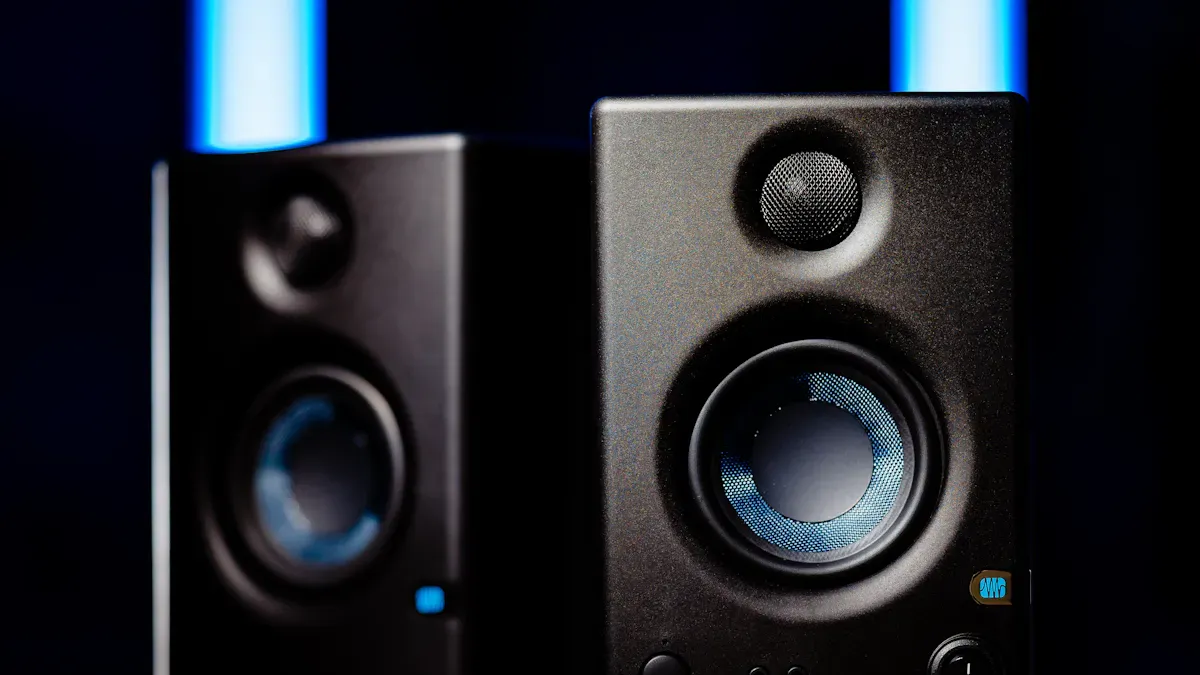
A 2-way speaker has a simple design for clear sound. It has two main drivers inside. One is called a midwoofer, and the other is a tweeter. The midwoofer plays low and middle sounds. The tweeter plays high sounds. These drivers use a crossover network. The crossover splits the sound so each driver gets the right part. This helps the sound stay even and stops it from getting messy.
There are other important parts in a 2-way speaker:
- Grilles keep dust and damage away from the drivers.
- Wires link the drivers and crossover to your music player.
- Mounting hardware lets you put the speaker up safely.
How the speaker is made changes how it sounds. For example, a 14° chamfer on the baffle edge looks nice and helps with sound waves. This makes the music clearer. If the drivers are flat with the speaker’s front, you hear less distortion. The cabinet’s shape and what it is made of also change the sound you hear.
| Design Factor | Impact on Sound Output |
|---|---|
| Baffle Edge Diffraction | Makes sound waves smoother, so music is clearer and less messy. |
| Driver Alignment | Keeps sound together, so music and voices sound real. |
| Cabinet Construction | Changes how the speaker shakes, which changes the sound you hear. |
Sound Qualities
2-way speakers are a good mix of size, price, and how they work. Their simple style means you can use them in lots of places. You might see them in home theaters, cars, or small studios. They fit in small spots because they are not big like other speakers.
But, 2-way speakers might not catch every sound in the middle as well as 3-way or 4-way speakers. They can have trouble playing all the sounds, like deep bass or sharp mids. Still, they are good for most music and movies. You can set them up fast and easily.
| Characteristic | 2-Way Speakers | 3-Way Speakers |
|---|---|---|
| Design | Has a woofer and a tweeter | Adds a mid-range driver |
| Frequency Handling | Might miss some middle sounds | Plays middle sounds more clearly |
| Integration | Easy to use in many places | Needs more careful setup |
| Size | Small and fits in tight spots | Bigger and needs more space |
| Full-Range Reproduction Challenges | Not great at playing all sounds | Can play more types of sounds |
Tip: If you want a speaker that is easy to put in and works in most rooms, a 2-way speaker is a good pick. You get good sound without a hard setup.
What Is a 4-way Speaker
Components and Design
A 4-way speaker has four drivers that each play a different part of the sound. There is a woofer for bass, a midrange driver for middle sounds, a tweeter for high notes, and a super tweeter for the very highest sounds. Each driver only plays a small part of the music, so it can do its job better.
A 4-way speaker uses a more advanced crossover network. This network splits the music into four parts. Each part goes to the right driver. This setup keeps each driver working in its best range. That means there is less mixing and fewer problems with the sound.
- 4-way speakers use drivers in their piston range, so each one covers a smaller part of the music.
- The sound stays clear even if you move around the room.
- The change between drivers is smooth, so you do not hear sudden changes in the music.
Note: 4-way speakers are bigger and can be harder to put in because of the extra drivers and crossover. Make sure you have enough space and the right setup before you pick this kind.
Sound Qualities
When you listen to a 4-way speaker, you hear more details in the music. Each driver plays a certain part, so you get clear highs, strong mids, and deep bass. The super tweeter makes the highest notes bright and clear. The midrange driver keeps voices and instruments from mixing together.
- 4-way speakers let you hear small sounds that 2-way speakers might miss.
- The super tweeter makes high sounds sharp and bright.
- The midrange driver helps you tell voices and instruments apart.
- The woofer gives you strong bass that does not cover up the rest of the music.
- You can hear different instruments and sounds even when the music is quiet.
4-way speakers are good for home theaters, fancy car audio, and pro studios. If you want very clear sound for important listening or work, this type gives you the best detail and separation.
| Feature | 4-Way Speaker Advantage |
|---|---|
| Frequency Coverage | Each driver plays a small part for accuracy |
| Sound Separation | Voices and instruments stay clear |
| High-Frequency Detail | Super tweeter makes high notes clearer |
| Bass Performance | Woofer gives strong, controlled bass |
Tip: Pick a 4-way speaker if you want the best sound and have enough room to set it up. This kind is great for people who want top sound for music, movies, or special projects.
2-way VS. 4-way Speakers: Key Differences
Frequency Range & Sound Separation
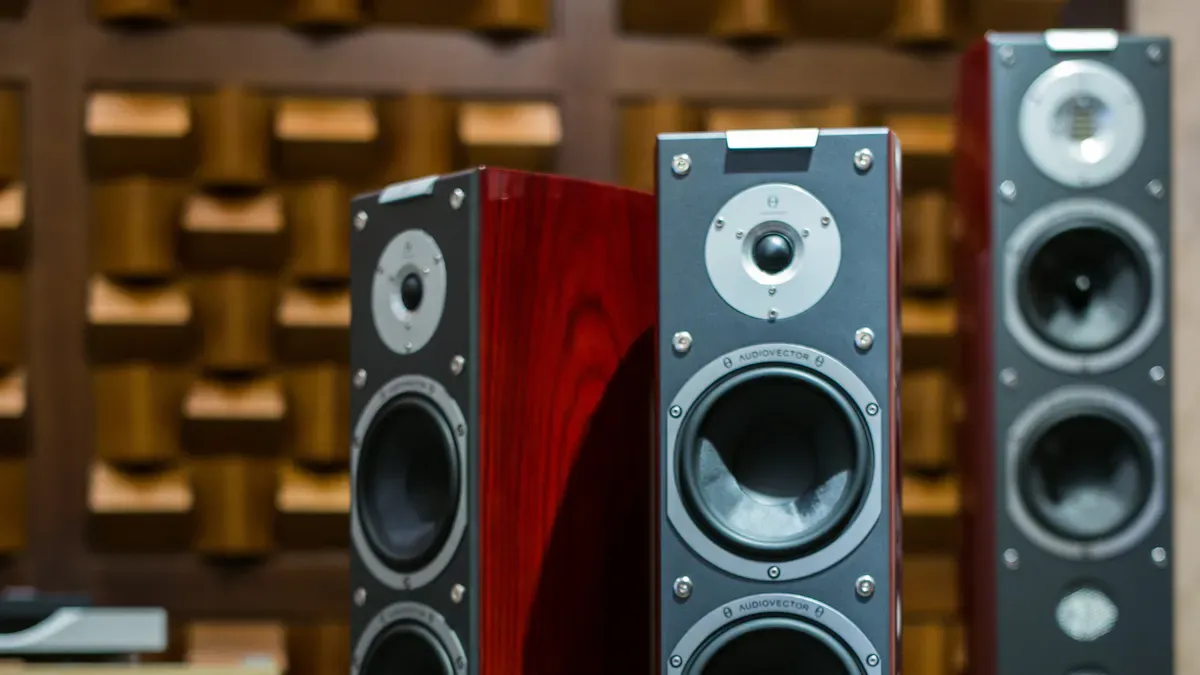
When you compare 2-way VS. 4-way speakers, you notice big differences in how they handle sound. A 2-way speaker splits the sound into two parts. The woofer covers bass and midrange. The tweeter handles high notes. This setup works well for most music and movies. You hear clear highs and strong lows, but sometimes the middle sounds blend together.
A 4-way speaker divides the sound into four parts. The woofer plays bass. The midrange driver handles middle sounds. The tweeter covers high notes. The super tweeter brings out the very highest sounds. This greater division helps each driver focus on its own range. You hear more detail and separation. Instruments and voices stay clear, even in complex songs.
- 2-way speakers divide the frequency range into two sections.
- 4-way speakers split the range into four sections for better detail.
- 2-way speakers cover 60 Hz to 20 kHz.
- 4-way speakers extend from 40 Hz to 22 kHz, so you hear deeper bass and brighter highs.
| Speaker Type | Frequency Range |
|---|---|
| 2-way | 60 Hz to 20 kHz |
| 4-way | 40 Hz to 22 kHz |
If you want simple sound for everyday use, a 2-way speaker fits your needs. If you need sharp detail for music or movies, a 4-way speaker gives you more clarity.
Tip: Choose a 4-way speaker if you want to hear every instrument and voice clearly. Pick a 2-way speaker for basic listening in smaller rooms.
Crossover & Installation
The crossover is a key part of every speaker. It sends the right sounds to each driver. In 2-way VS. 4-way speakers, the crossover design changes a lot. A 2-way speaker uses a simple crossover. It splits the sound into two paths. You can install these speakers quickly. You do not need special tools or skills.
A 4-way speaker uses a complex crossover. It divides the sound into four paths. Each driver gets a small part of the music. This setup needs careful installation. You must place each driver in the right spot. The cabinet must fit all four drivers. If you install a 4-way speaker wrong, you lose sound quality.
- 2-way speakers have easy crossovers and simple installation.
- 4-way speakers need advanced crossovers and careful setup.
- Good installation makes both types sound better.
If you work on a project for a car, home, or studio, think about your skills and space. You can use 2-way speakers for fast jobs and tight spots. You need more time and planning for 4-way speakers.
Note: Always follow the instructions for installation. Proper setup helps you get the best sound from your speakers.
Price & Size
Price and size matter when you choose between 2-way VS. 4-way speakers. A 2-way speaker costs less. You find models like MB Quart Formula 4 inch 2-way coaxial car speakers for $29.99. Pioneer TS-A709 A-Series 2-3/4″ 2-way car speakers cost $59.99. These speakers fit in small spaces. You can use them in cars, bedrooms, or offices.
A 4-way speaker costs more. It uses extra drivers and a bigger cabinet. You need more room for installation. The price goes up because of the advanced design. You see 4-way speakers in home theaters, luxury cars, and studios.
| Speaker Model | Price |
|---|---|
| MB Quart Formula 4 inch 2-way coaxial car speakers | $29.99 |
| Pioneer TS-A709 A-Series 2-3/4″ 2-way car speakers | $59.99 |
- 2-way speakers are affordable and fit in tight spaces.
- 4-way speakers are larger and cost more, but offer better sound detail.
If you want value for money, a 2-way speaker gives you good sound at a low price. If you need top performance and do not mind paying more, a 4-way speaker is the best choice.
Tip: Think about your budget and space before you buy. Choose the speaker that fits your project and listening needs.
Pros and Cons of Each Type
2-way Speaker Pros & Cons
2-way speakers are common in many sound systems. They have a simple design and are easy to set up. These speakers use a woofer and a tweeter. There are fewer parts, so they are not complicated. This makes them good for small rooms, cars, and home theaters. You can put them in place fast. They also fit well in small spaces.
Pros:
- You can install them easily in many places.
- The price is low, so most people can buy them.
- Their small size works in cars, offices, and bedrooms.
- They play music and movies well for most uses.
Cons:
- The mid-range sounds are not as clear because there is no special mid-range driver.
- They might not play every sound, so you miss some details.
- Sometimes the crossover between woofer and tweeter makes the sound uneven or distorted.
Tip: If you want a speaker for daily use and need something quick to set up, a 2-way speaker is a good choice. You do not get every sound detail, but you save money and time.
4-way Speaker Pros & Cons
4-way speakers are used in high-end sound systems, fancy cars, and studios. These speakers have four drivers: woofer, mid-range, tweeter, and super tweeter. Each driver plays a certain part of the sound. This gives you clear sound and lots of detail.
Pros:
- The extra mid-range driver and two tweeters make the sound better.
- High sounds are crisp, so music and voices are clear.
- More parts help the speaker sound even better.
- They are best when you need clear and detailed sound.
Cons:
- You have to use the amplifiers that come with the speaker, so you cannot change them.
- Built-in amplifiers make the speaker heavier and can cause shaking that hurts the sound.
- You cannot upgrade the power amplifiers inside the speaker.
- Some brands use cheap Class D amplifiers, which can make the sound worse.
- The way the speaker is made and set up is very important; if it is done wrong, the sound will not be good.
Note: Pick a 4-way speaker if you want the best sound and have space to set it up. Always check how the speaker is made and what kind of amplifier it uses before you buy.
| Speaker Type | Pros | Cons |
|---|---|---|
| 2-way | Easy setup, affordable, compact | Limited mid-range, crossover issues |
| 4-way | Superior detail, robust highs, clear bass | Less customization, vibration, amplifier limits |
You can look at 2-way VS. 4-way Speakers and pick what fits your needs. If you want something simple and cheap, choose 2-way. If you want better sound and can handle a harder setup, go with 4-way.
Choosing the Right Speaker
Usage Scenarios
You should pick a speaker based on where you will use it. Different places need different speaker designs. Here are some examples:
- 2-way speakers are good for:
- Home theaters and casual listening. They are easy to set up and small.
- Live events and mobile DJs. Active 2-way speakers set up fast and have built-in safety.
- Small venues, churches, and permanent setups. Passive 2-way speakers let you control everything from one spot and add more speakers easily.
- 4-way speakers are best for:
- Outdoor exhibitions and museums. They make sound feel real for visitors.
- Outdoor advertising. You can aim sound at certain spots without making extra noise.
- Parks and zoos. These speakers give clear messages and learning audio while keeping things quiet.
- Concerts and outdoor events. 4-way speakers send clear sound to the crowd and stop noise from spreading.
- Urban planning and smart city projects. They help share info and send alerts in public areas.
Tip: Think about what your project needs. For simple setups or small rooms, 2-way speakers usually work well. For big or special spaces, 4-way speakers give better sound and cover more area.
Budget & Preferences
Your money and what you like matter when picking speakers. The number of drivers changes how good the sound is and how much you pay. More drivers make sound clearer, but cost more.
- 2-way speakers are cheaper. They work well for most things.
- 3-way and 4-way speakers sound clearer and sharper, but cost more for better quality.
- If you do not have much money, 2-way speakers are a good deal.
- If you want the best sound and can spend more, 4-way speakers are a smart choice.
| Speaker Type | Sound Quality | Price Range | Best For |
|---|---|---|---|
| 2-way | Good | Lower | Everyday use, small rooms |
| 4-way | Excellent | Higher | Large spaces, pro audio |
Note: Always match your sound needs with your budget. Pick the speaker that fits your space, your project, and what you want.
You now understand the main ways 2-way and 4-way Speakers are different. The table below helps you see how they match up:
| Aspect | 2-Way Speakers | 4-Way Speakers |
|---|---|---|
| Audio Units | Woofer, Tweeter | Woofer, Midrange, Tweeter, Supertweeter |
| Sound Performance | Balanced, less detail | More detailed, layered sound |
| Price | More economical | More expensive |
| Usage | Everyday, budget | High-quality, immersive |
- Pick 2-way speakers if you want a simple setup and do not want to spend much money.
- Choose 4-way speakers if you want better sound, more details, and need them for bigger projects.
- If you need a special speaker system or a custom project, look at OEM/ODM services to get the best match.
FAQ
What is the main difference between 2-way and 4-way speakers?
You get two drivers in a 2-way speaker and four drivers in a 4-way speaker. The extra drivers in a 4-way speaker help separate sounds and make music clearer.
How does the crossover work in each speaker type?
A 2-way speaker uses a simple crossover to split sound between woofer and tweeter. A 4-way speaker uses a complex crossover to send sound to four drivers for better detail.
Which speaker should you choose for a small room?
You should pick a 2-way speaker for small rooms. It fits easily and gives you balanced sound without needing much space or a complicated setup.
Are 4-way speakers better for professional projects?
You get more sound detail and separation with 4-way speakers. They work best for studios, theaters, or large venues where clear audio matters.
Can you use 2-way speakers in OEM or custom projects?
You can use 2-way speakers in OEM or custom projects. They offer simple design, easy installation, and cost-effective solutions for many applications.