
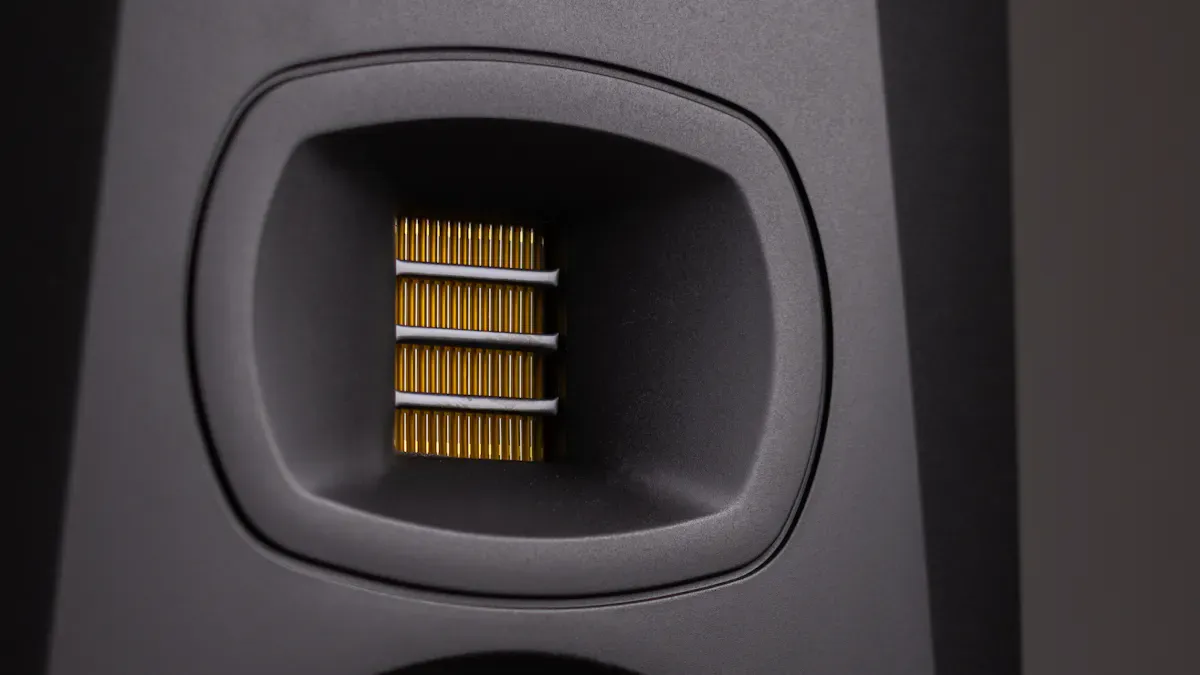
You hear clear sounds when the design of speakers is optimized for high frequencies. The materials, diaphragm size, and how the speaker reacts to sounds all influence how bright and detailed music or speech is. Good clarity in high notes, thanks to the thoughtful design of speakers, lets you enjoy every word, instrument, and small sound in your favorite songs or talks.
Key Takeaways
Tweeters are important for clear high sounds. They help you hear details in music and speech. This makes every note and word sound better.
Pick speakers with good tweeter materials like silk, aluminum, or titanium. These materials make the sound clearer and cut down on distortion.
A balanced frequency response helps you enjoy music the way it was made. Find speakers that play all sounds evenly so you do not miss anything.
Think about your room’s acoustics when you set up speakers. Soft things like couches can soak up sound and make it clearer. Putting speakers in the right spot also makes the sound better.
Buy tweeters that are strong and last a long time. This helps your speakers stay clear and work well for years.
High-Frequency Speakers And Audio Clarity
Tweeters’ Role In Sound Detail
Tweeters help you hear small details in music and speech. They work with high frequencies, which make sounds bright and clear. When you play a song, you can hear the shine of cymbals and the clear sound of a singer’s voice. These sounds are possible because tweeters can make sharp and crisp details.
Tweeters make high sounds clearer and brighter.
They help you notice soft parts, like high singing and light percussion.
Many tweeters use titanium, silk, or aluminum to sound more accurate and lower distortion.
When tweeters work with other drivers, you get a balanced sound. This lets you hear each instrument and effect in its own spot.
Some people think bigger speakers always sound better. But the tweeter’s design, like its diaphragm, voice coil, and magnet, is more important for clear high sounds. Companies such as ZEH Audio work to make these parts better. This helps lower distortion and gives you more sound detail.
Why Clarity Matters In High Frequencies
Clear high sounds are important for music and speech. You need clear treble to hear words and all the instruments. The table below shows how different frequency ranges help you understand speech:
Frequency Range | Importance for Speech Intelligibility |
|---|---|
1 kHz – 4 kHz | Very important for understanding words |
2 kHz | Most consonants are in this range |
Below 500 Hz | Only a small drop in understanding |
Above 1 kHz | Easier to understand when recorded in front of the speaker |
When you listen to music or podcasts, clear high sounds help you hear every consonant and quiet sound. This makes listening more fun and correct. New speaker technology has made frequency response better and lowered distortion. Still, good design is most important for real clarity. For the best sound, pick speakers with smooth frequency response and well-made tweeters.
Tip: Pick speakers with strong tweeter materials and careful design. This helps you hear more details and clear sounds, whether at home or in a studio.
Design Of Speakers: Key Elements For Clarity

Tweeter Materials And Construction
You can make high-frequency speakers clearer by picking the right materials and how they are built. The design often starts with the tweeter, which plays the highest notes. Silk, aluminum, and titanium all sound different. Silk tweeters give a soft and smooth sound. They are good for listening at home for a long time. Aluminum and titanium tweeters sound bright and let you hear small details. Ribbon film tweeters sound quick and light, which is great for fancy systems.
Material | Typical Sound Behavior | Common Applications |
|---|---|---|
Silk or fabric | Produces smooth, less aggressive highs | Ideal for home audio, suitable for long listening |
Aluminum or titanium | Delivers bright, detailed high frequencies | Studio monitors, car audio |
Ribbon film | Offers fast transient response and airy detail | High-end and specialty systems |
How the tweeter is made also matters. Good building lets the tweeter move fast and stop without extra noise. This helps you hear high notes that are clear and true. ZEH Audio uses special materials and careful building to make their tweeters sound the best. When you pick a speaker, look at the tweeter’s material and how it is built. This helps you get better sound and more details in your music.
Diaphragm Size And Speed
The diaphragm’s size in a tweeter changes how fast it moves and how it handles quick sounds. Small diaphragms move faster and stop quickly. This means you hear sharp and clear sounds with no extra ringing. If the diaphragm is too big, it moves slower and the sound is not as clear.
The weight at the end of the spring stands for the diaphragm’s mass and the air that moves with it. When the diaphragm moves, its mass pushes against the suspension. Bigger drivers have lower resonance because their diaphragms are heavier.
A tweeter with a small, light diaphragm works best for high notes. This design cuts out unwanted sounds and keeps the music crisp. The damping must be just right. Not enough damping causes ripples and slow response. Too much damping makes the sound dull. ZEH Audio checks each diaphragm to find the best balance for clear sound. When you pick a speaker, choose one with a well-made diaphragm for your needs.
Magnet And Motor Impact
The magnet and motor in a tweeter help it play high notes well. A strong magnet lets the tweeter move fast and right. This gives you clear and strong high sounds. Some magnets, like AlNiCo, make the speaker more sensitive and even. You get more sound with less power and less distortion, even when it is loud.
Benefit | Description |
|---|---|
Improved Sensitivity | AlNiCo magnets allow loudspeakers to achieve higher sensitivity levels, producing more sound output with less electrical input. |
Linear Response | They provide a more linear response across the frequency spectrum, contributing to balanced sound reproduction. |
Reduced Distortion | The stability of AlNiCo magnets minimizes distortion, especially at high volumes, leading to cleaner sound reproduction. |
Modern speakers use new motor designs to make sound clearer. A phase-matching double suspension lowers distortion. Balanced airflow venting keeps the tweeter cool and steady. These things help you hear every part, even in busy music. ZEH Audio uses these new designs for the best sound. When you shop for speakers, check the magnet and motor design. This helps you get the clearest and most fun sound.
Tip: For the best sound, pick speakers with good tweeter materials, small and fast diaphragms, and strong magnet systems. This gives you clear and detailed sound in any room.
Main parts in high-frequency speaker design:
Good amplifier for clear sound
Exact crossovers for smooth sound changes
Light and stiff driver materials for better sound
Well-made enclosures to stop bad vibrations
Efficient systems for strong and clear sound
ZEH Audio is a leader in high-frequency speaker design and tuning. You can trust them to help you find the right speaker.
Frequency Response And Balanced Sound
Consistent High-Frequency Response
You want your speakers to sound clear and true. To get this, you need a balanced frequency response. This means your speakers play all notes in the audio frequency range at the right level. If your speaker boosts or cuts some frequencies, you hear changes in the music that should not be there. You might notice harsh sounds or miss soft details. A smooth frequency response helps you hear music as the artist made it.
A speaker’s frequency response shows how well it plays low, mid, and high notes.
A balanced speaker avoids adding extra tones or losing important sounds.
Peaks in the response can make music sound sharp. Dips can hide details.
When you listen to high-quality speakers, you hear every part of the audio frequency range. This gives you better clarity and more enjoyment. The table below shows how different high-frequency ranges affect what you hear:
Frequency Range | Hz Range | Audio Characteristics |
|---|---|---|
Presence | 4,000-6,000 Hz | Clarity, definition, attack |
Brilliance | 6,000-20,000 Hz | Air, sparkle, spatial detail |
A smooth frequency response also helps your speakers handle a wide dynamic range. This means you hear both quiet and loud sounds without losing detail. High-frequency speaker design can improve this by using better materials and careful tuning. You get more detail and a richer sound.
Impact On Tonal Balance And EQ
You can shape your sound with EQ, but you need a good starting point. High-quality speakers with a flat frequency response let you adjust EQ without making the sound worse. If your speaker has a rough response, EQ changes can add distortion or make the sound muddy.
A balanced frequency response gives you clear bass, mids, and highs.
You avoid muddiness and keep vocals easy to understand.
Boosting the right frequencies can make voices stand out.
When you use high-quality speakers, you get better sound quality and more control. You can trust what you hear. This helps you enjoy music, movies, and games more. You also get the most out of your audio system.
Tip: Look for speakers with a smooth frequency response. This gives you the best clarity and makes EQ changes easy and safe.
Trade-Offs And Choosing The Right Tweeter
Clarity Versus Durability And Cost
When you choose a tweeter, you need to balance clarity, durability, and cost. Each material and design brings its own strengths and weaknesses. You want your high-performance loudspeaker to last, but you also want the best sound quality.
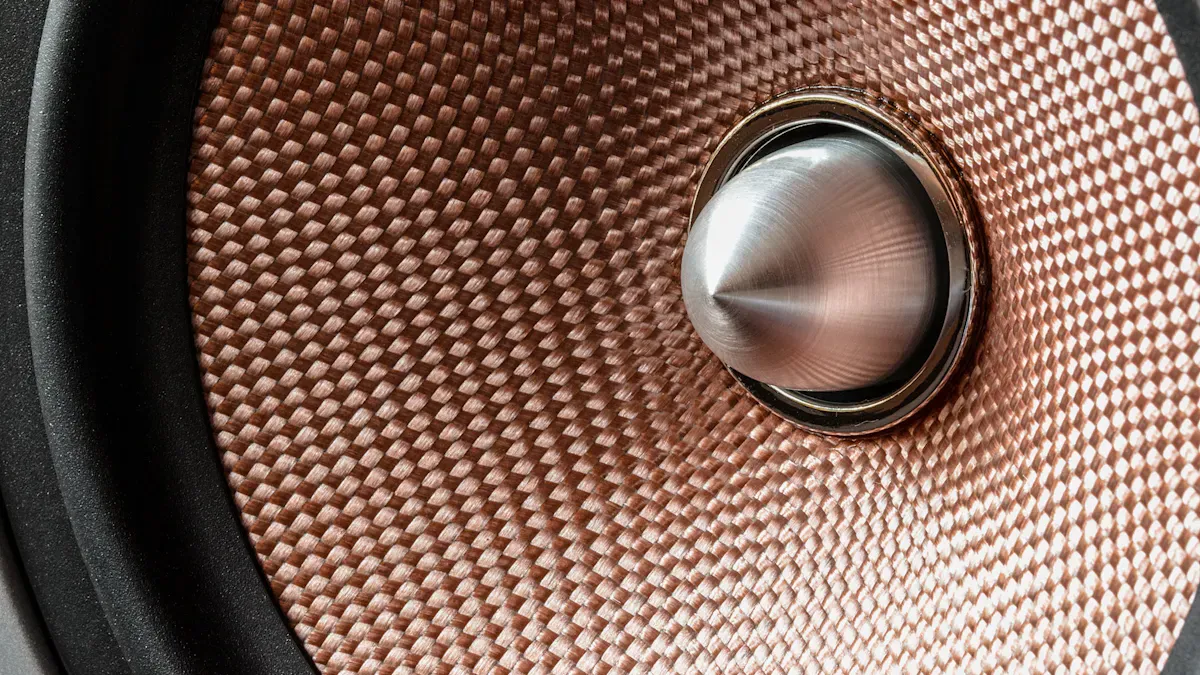
Ribbon and planar magnetic tweeters give you very precise control over high frequencies. These designs help you hear every detail, but they can be delicate and may not last as long in tough environments.
Dome tweeters made from aluminum or titanium offer strong durability. You can use them in places with lots of moisture or temperature changes. These materials also give you clear and bright sound, making them popular in high fidelity speaker systems.
Horn tweeters work well outdoors or in large rooms. They are tough and can handle loud volumes without breaking down.
Some lower-cost tweeters use materials like Mylar. These can save you money, but they may not last as long or give you the same level of clarity.
Specialized materials like Kapton and PEI appear in some high-performance loudspeaker designs. These materials help reduce distortion and improve speech clarity.
You should always match the tweeter’s material and shape to your listening space. This helps you get the right mix of performance, cost, and lifespan. ZEH Audio can help you choose the best tweeter for your needs, using their skills in design considerations and custom tuning.
Tip: If you want the best clarity and speech clarity, invest in durable materials and advanced designs. This will help your speakers last longer and sound better.
Matching Speakers To Your Room
Your room changes how you hear high frequencies. You can improve speech clarity and detail by making smart choices about your space.
Add soft items like carpets and curtains to absorb sound. This reduces echoes and makes voices clearer.
Use diffusers to scatter sound waves. This helps you avoid harsh reflections and keeps the sound even.
Place your speakers the right distance from walls. Try to keep them at the same height and angle for both sides.
Large rooms or rooms with odd shapes can change how sound moves. You may need to add more absorption or diffusion to keep clarity high.
Furniture and decor can act as natural sound absorbers and diffusers. Try different setups to find what sounds best.
The materials in your room matter a lot. Hard surfaces reflect sound and can make high notes too sharp. Soft surfaces absorb sound and help you hear details better. The size and shape of your room also affect how you hear music and speech. A good balance of absorption and diffusion gives you the best sound.
ZEH Audio offers custom solutions for high-frequency speaker design and room tuning. You can trust their team to help you get the most out of your speakers, no matter your space.
Note: For the clearest sound, always think about both your speaker design and your room setup. This will help you enjoy every detail in your music and speech.
You can make sound clearer if you know how high-frequency speakers are built. The table shows how each part changes what you hear:
Component | Influence on Audio Clarity |
|---|---|
Diaphragm Material | Makes sound soft or sharp, depending on the material |
Diaphragm Size | Decides which notes your speaker plays well |
Frequency Response | Affects how smooth and clear music and voices sound |
Here are some things to remember when you choose speakers:
High frequencies help you hear small details in music and talking.
Smaller tweeters are better for high sounds.
A good speaker box keeps away extra noise and buzzing.
Try these ideas for the best sound:
Put your speakers and chair in a triangle shape for clear sound.
Use soft things or bass traps in your room to stop echoes.
Choose speakers with even frequency response and strong tweeter parts.
Tip: ZEH Audio can help you design and tune high-frequency speakers. This gives you clearer sound and more detail in any room.
FAQ
What makes a high-frequency loudspeaker sound clear?
You get clear sound when the loudspeaker uses light, stiff materials for the diaphragm and a strong magnet. These parts help the loudspeaker move fast and stop quickly. This keeps the audio sharp and reduces distortion at high frequency.
How does the design of a loudspeaker affect frequency response?
The shape and material of the diaphragm, voice coil, and magnet change how the loudspeaker handles frequency. A good design gives you a smooth frequency response. This means you hear all parts of the audio, from soft details to bright highs.
Why does frequency response matter for audio quality?
A smooth frequency response lets you hear music and speech as they should sound. You do not miss important details. The loudspeaker plays every frequency at the right level. This helps you enjoy clear and balanced audio.
How can you improve high-frequency audio in your room?
You can add soft items like curtains or carpets to absorb sound. Place your loudspeakers at ear level and keep them away from walls. These steps help you hear better frequency detail and make your audio clearer.
What makes ZEH Audio special in loudspeaker design?
ZEH Audio uses advanced materials and custom tuning for each loudspeaker. Their team checks every part, from the diaphragm to the magnet. You get better frequency response, less distortion, and clear audio for any room.