
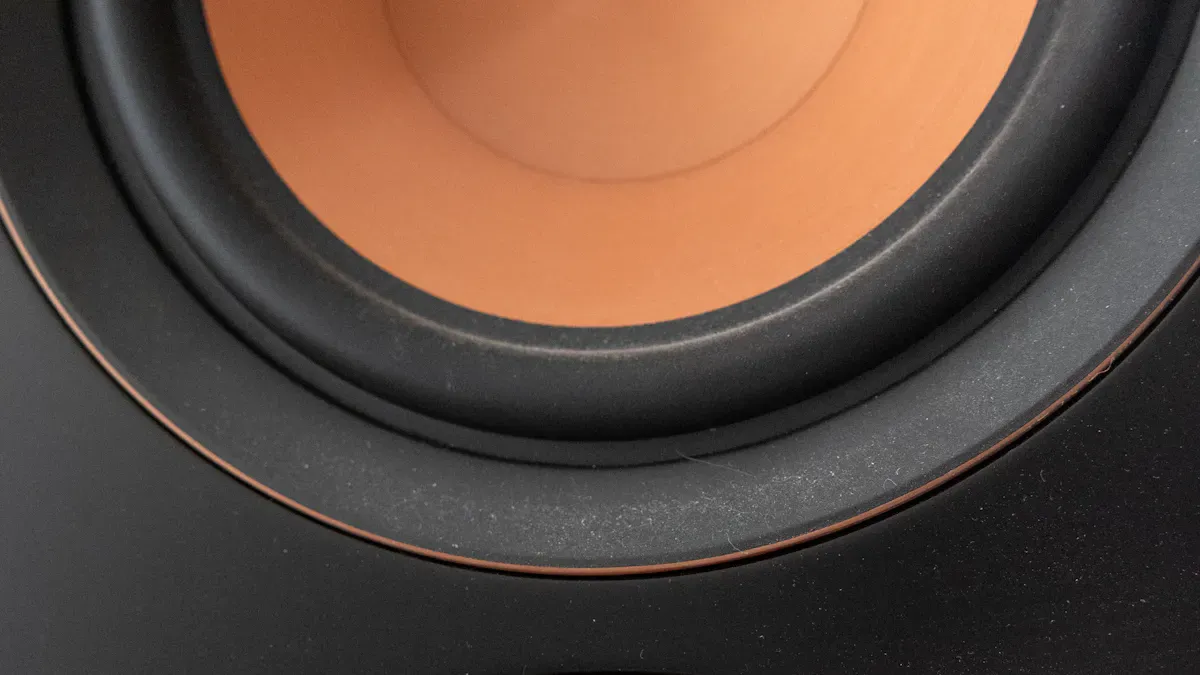
You depend on speaker driver units to form the main part of every speaker system. These parts control how clear your music is, how much power your speakers use, and how many sounds they can play. You pick each part—voice coil, magnet, diaphragm, and cooling—to make the sound better. The design process lets you make custom drivers that match your needs and give you the best sound.
Key Takeaways
Custom speaker drivers let you pick materials and designs. You can match them to your sound likes. This makes the audio sound better.
A strong basket and frame are very important. They keep the speaker steady. They cut down on bad vibrations. This helps the sound stay clear.
Picking the right voice coil and magnet matters a lot. It affects how much power your speaker can handle. It also changes how good the sound is.
You should test your design by listening in real life. This makes sure your speaker works well everywhere.
ZEH Audio gives expert help during design and testing. They help you get the best sound for what you need.
Speaker Driver Components Overview
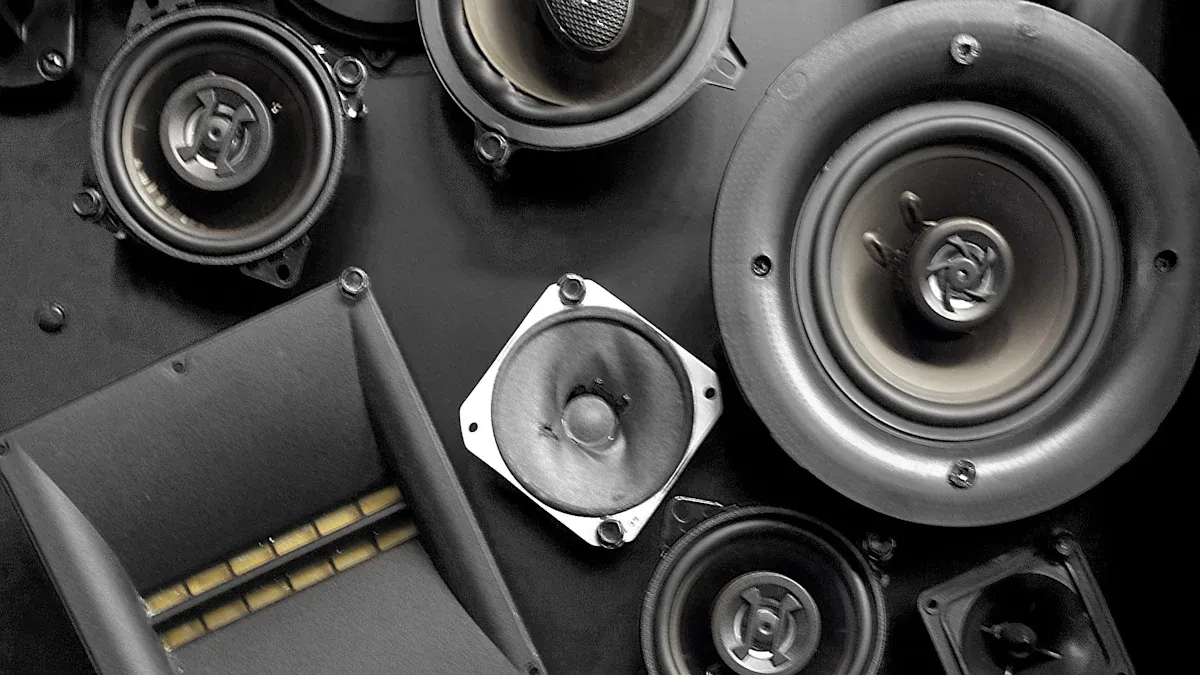
A speaker driver unit has many important parts. Each part helps make the sound you hear. The materials you pick for these parts change how your speaker works and how long it lasts.
Basket and Frame
The basket, also called the frame, holds all the parts together. You need a strong basket to keep everything lined up. Stamped steel and cast aluminum are used a lot. Cast aluminum is good for big speakers because it holds heavy magnets and helps with heat. A strong basket stops extra shaking and keeps your sound clear.
Tip: A tough basket makes your speaker last longer and sound better by stopping extra shaking.
Magnet Assembly
The magnet makes a magnetic field that moves the voice coil. Ferrite magnets are steady and cost less. Neodymium magnets are smaller and stronger, so they are good for small or portable speakers. The magnet’s strength changes how much power your speaker can use.
Voice Coil
The voice coil turns electric signals into movement. Bigger coils can handle more power but may not work as well. The way the coil is made and its size change how loud and clear your speaker sounds.
Spider and Suspension
The spider and suspension keep the cone in the middle and control how it moves. Stiffer suspensions give you more control but stop the cone from moving far. This changes the bass and how fast the speaker reacts to sound.
Cone and Dome
The cone or dome pushes air to make sound. You can pick paper, polypropylene, metal, or special materials like carbon fiber and Kevlar. Each material changes the sound:
Material | Properties Affecting Sound Quality |
|---|---|
Paper | Light, stiff, natural damping, accurate sound |
Polypropylene | Strong, flexible, good for outdoor/car use |
Metal | Stiff, works well for mid/high sounds, detailed |
Carbon Fiber/Kevlar | Very stiff, light, top performance |
Wiring and Terminals
Wiring connects the voice coil to your amplifier. Good terminals make sure the connection is strong and stop signal loss.
Dust Cap
The dust cap keeps dirt away from the voice coil. It also changes how the cone moves and can change the sound a little.
Every part is important. What you pick changes how your custom speaker driver sounds and how long it lasts.
Design Process Steps
The design process uses careful steps. You mix engineering and creative ideas. This helps you build a driver that fits your sound goals. Every step is important for how the speaker works and lasts. It also affects how you hear the music.
Material and Component Selection
You begin by picking materials and parts. Think about what you want your speaker to do. Do you want strong bass, clear midrange, or sharp treble? Your choices for cone, magnet, and voice coil change the sound. Paper cones make natural sound. Metal cones give more detail. You also pick the driver type—woofer, midrange, or tweeter—based on the sounds you want.
Picking good materials helps your speaker last longer and sound better. ZEH Audio helps you choose the best parts using science and creativity.
Basket and Frame Construction
Next, you build the basket and frame. This part holds everything together. You need a strong frame to keep all parts in place. Use cast aluminum for big drivers. Use stamped steel for smaller ones. Make sure the basket is stiff to stop shaking. Careful manufacturing gives you a good fit and finish.
Aspect | Impact on Sound Quality |
|---|---|
Sealing Quality | Airtight joints stop air leaks and keep bass strong. |
Bracing | Stiff frames stop shaking and keep sound clear. |
A strong basket is the base of your speaker. It supports the rest of the design.
Magnet Structure Assembly
Now, you put together the magnet structure. Glue the magnet to the frame with strong glue. Use a tool to center the magnet and T-yoke. This keeps the magnetic field even. The voice coil moves smoothly. The magnet’s strength changes how much power your speaker can handle and how sensitive it is.
ZEH Audio uses special tools to make sure every magnet is lined up for the best performance.
Voice Coil Design and Installation
Designing and putting in the voice coil is very important. Pick copper for high sensitivity. Pick aluminum if you want it lighter. Flat wire coils help with high sounds. Add cooling parts like heat sinks if you want more power. Place the voice coil in the magnetic gap with a centering tool. This step controls how well your speaker turns electricity into sound.
The right voice coil gives you the sound and power you want.
Cone and Suspension Assembly
Glue the spider (suspension) to the basket with flexible glue. This keeps the cone centered and lets it move easily. Next, glue the cone to the voice coil and basket. Make sure everything lines up. The cone and suspension work together to control sound and strength. Test the speaker with different sounds to check for problems and make sure the cone moves well.
Pick the best materials for the cone and suspension.
Balance the cone for smooth sound.
Test for clear, undistorted audio.
Careful work here means your speaker will sound good and last longer.
Wiring and Soldering
Connect the tinsel wires from the voice coil to the terminals. Use high-quality copper wire for the best signal. Solder all connections to stop signal loss and rust. Good wiring and soldering keep your music clear and strong.
Always solder connections for reliability.
Do not use cheap wires that can hurt sound quality.
Adhesives and Sealing
Put glue on all parts to hold them together. Use flexible glue over the voice coil wires for extra support. Make sure all joints are airtight to stop air leaks. Good sealing keeps bass strong and stops noise. Bracing the frame also helps stop shaking.
Aspect | Impact on Sound Quality |
|---|---|
Sealing Quality | Stops air leaks, keeps bass tight and powerful. |
Bracing | Reduces shaking, improves clarity. |
ZEH Audio pays close attention to sealing and bracing for the best sound.
Dust Cap Installation
Finish by gluing the dust cap over the voice coil. This keeps dust and dirt out. It also helps control how the cone moves. Let all glue dry before testing the speaker.
The dust cap is small, but it protects your speaker and can change the sound a little.
The design process for custom speaker drivers uses both technical and creative steps. You need to plan each step, test your work, and make changes. ZEH Audio uses hands-on experience and special tools to make custom solutions for every need.
Techniques & Considerations
Measuring Thiele/Small Parameters
You must measure Thiele/Small parameters to know how your speaker driver works in a box. These numbers show how the driver and box affect each other. Engineers made these measurements in the seventies to help predict sound. You can use the Added-Mass Method. Add a known weight to the diaphragm and see how the resonant frequency changes. Tools like CLIO 10 measure impedance and movement quickly in one sweep. These measurements help you pick the right box for your driver and get the best sound.
Correct Thiele/Small parameters help you design and pick between sealed or vented boxes.
Acoustic Damping Methods
You can use different ways to control unwanted vibrations in your speaker. The table below shows common treatments and what they do:
Treatment | Acoustic Effect | Best Use Case |
|---|---|---|
Anodizing | Hardens surface, minimal damping | Sharp, precise high-frequency response |
Powder Coating | Soft layer, provides damping | Absorbs micro-vibrations, mellows high frequencies |
Brushed Finish | Negligible acoustic impact | Looks good, not for sound |
You should shape the box so it does not have flat, parallel walls. This stops standing waves. Adding bracing and using walls with different thicknesses can cut down vibrations and keep your sound clear.
Resonance and Damping Control
Resonance can change your sound. The Q factor tells how much energy stays in the system. High Q means the speaker vibrates longer, which can make some notes ring out too much. You can use a stiffer suspension for tight, accurate bass. A softer suspension lets the cone move more, giving you deeper bass. The efficiency bandwidth product shows how well your speaker plays low notes.
Stiffer suspension = tighter bass
Softer suspension = more bass movement
Crossover and Driver Integration
You need a good crossover to blend your drivers. Follow these steps:
Pick the right crossover frequency for your drivers.
Set the tweeter level.
Flatten the impedance.
Add the crossover parts.
Tweak the system for balance.
Think about the wiring. Sometimes you need to reverse the tweeter’s polarity or wire woofers in series or parallel. The quality of your crossover matters, but smart design is more important than expensive parts. ZEH Audio can help you design and tune crossovers for your custom needs.
Subjective Listening and Tuning
After measuring, you should listen and adjust by ear. Start with a flat response from 200 Hz to 4 kHz. If you need more bass, add a small boost. Make small changes, like 1 or 2 dB, and listen to different songs. Use a reference curve to guide your tuning. Move your speakers and adjust delays if needed. Your goal is a natural soundstage, not just perfect numbers.
Step | Description |
|---|---|
1 | Measure and find peaks over ±3 dB |
2 | Adjust and re-measure |
3 | Aim for a natural sound, not just a flat curve |
4 | Use a reference curve for tuning |
5 | Make small EQ changes and listen |
6 | Adjust for speaker placement |
Careful listening and tuning make your custom speaker sound its best.
Testing and Final Adjustments

Bench Testing and Quality Control
You need to check your custom speaker driver with careful bench testing. This step helps you find problems before you use the speaker. You follow industry standards to make sure your results are fair and repeatable.
Place the microphone at a set distance based on the driver size, plus a fixed offset. This keeps your measurements consistent.
Measure frequency response up to 1 kHz. This helps you spot cone breakup and inductive effects.
Test total harmonic distortion (THD) up to 500 Hz. This shows how well your subwoofer handles bass.
Use a low-level voltage sweep (1.00 V) for a baseline, then a high-level sweep just below the excursion limit (70% of the BL parameter). This protects your driver from damage.
Break in the driver with high-volume, band-limited pink noise. This step makes sure the parts settle before testing.
Control the room temperature and humidity. These factors change how the speaker moves and sounds.
Repeat each test several times. Good drivers show almost no change between tests.
During final quality control, you connect each speaker to a test system in a QC booth. The system plays frequency sweeps and checks the output against a reference curve. The computer flags any problems, such as distortion or rattles. If a speaker fails, you send it for repair. If it passes, you run a burn-in test to catch early failures.
Careful testing and quality control help ZEH Audio deliver reliable, high-performance custom drivers.
Real-World Listening Tests
You should test your speaker in a real room, not just a lab. Use a quiet, controlled space to avoid outside noise. For in-wall speakers, mount them in a wall made of special materials to control vibrations. Try different microphone angles and distances to check how the sound changes. This method gives you a true picture of how your speaker will sound in your home.
Iterative Optimization
You improve your speaker with each test. Start with a design that matches your sound goals. Use electro-acoustic simulations to predict how the driver will behave. Test the speaker for durability with thermal imaging and long-term use. Check that each batch matches your standards with statistical process control.
Set your sound goals and design the driver.
Test and measure the speaker in the lab.
Listen and adjust in real rooms.
Repeat the process until you reach the best sound and reliability.
ZEH Audio uses this step-by-step approach to give you a speaker that meets your needs and lasts a long time.
You can make custom speaker drivers that sound great if you follow easy steps and use good techniques.
Make your speaker fit your room and needs.
Pick the best materials for each part.
Test your speaker and change things for better sound.
Aspect | How It Helps You |
|---|---|
Design and Prototyping | Save money and get better sound with smart changes. |
Testing and Iteration | Make sure your speaker works well every time. |
You can learn more by looking at harder topics:
Use heavy materials for the box.
Add bracing and damping to stop shaking.
Try design software and check your results.
ZEH Audio gives you expert help and custom ideas for your next project.
FAQ
What makes custom speaker drivers better than standard ones?
You get a driver made for your needs. Custom drivers let you pick materials and designs that match your sound goals. ZEH Audio helps you choose the best parts for clear, powerful sound.
How does the voice coil affect sound quality?
The voice coil controls how your speaker turns electricity into sound. A bigger coil handles more power. The material changes how clear and loud your music sounds. ZEH Audio uses special coils for top performance.
Why is magnet choice important?
The magnet gives your speaker its power. Strong magnets make your speaker more sensitive and efficient. Neodymium magnets save space and weight. You can trust ZEH Audio to pick the right magnet for your project.
Can I improve my speaker’s bass with better materials?
Yes! You can use stiff cones and airtight seals to boost bass. Good bracing and damping also help. ZEH Audio guides you in picking the best materials for deep, strong bass.
How does ZEH Audio support custom projects?
ZEH Audio works with you from design to testing. You get expert advice, custom parts, and careful quality checks. Your speaker will fit your needs and sound great.