Fit the Speaker Into the Available Space
We review your housing dimensions and mounting structure before selecting the frame and magnetic circuit.
Engineered for powerful output, deeper bass and reliable long-term performance.ZEH AUDIO designs and manufactures large full-range speakers, midbass drivers, woofers, subwoofers and coaxial speakers for professional audio, automotive, home entertainment, outdoor and industrial applications. Customize the size, impedance, rated power, magnet system, diaphragm, mounting structure and wire connections to match your product and acoustic requirements.
When selecting large-size speakers, do not merely compare speaker cone diameters. It is necessary to comprehensively evaluate installation space, acoustic cavity volume, power amplifier output, impedance, rated power, sensitivity, frequency response, diaphragm excursion, target sound pressure level and operating environment. A larger speaker does not automatically deliver better sound quality, louder volume or higher power. The final acoustic performance also relies on the coordinated design among magnetic circuit, voice coil, diaphragm, surround, power amplifier, crossover, DSP, acoustic cavity and complete-product structure. Ideal volume output, low-frequency performance, sound clarity, as well as long-term reliability and stability can only be achieved through proper matching of the entire audio system.
For compact electronic devices, speakers ranging from 4 inch to 6.5 inch are already considered large-size. In home audio, car audio, professional audio and public address systems, common large-size speaker specifications include 8inch, 10inch, 12inch, 15inch, 18inch and other larger sizes.
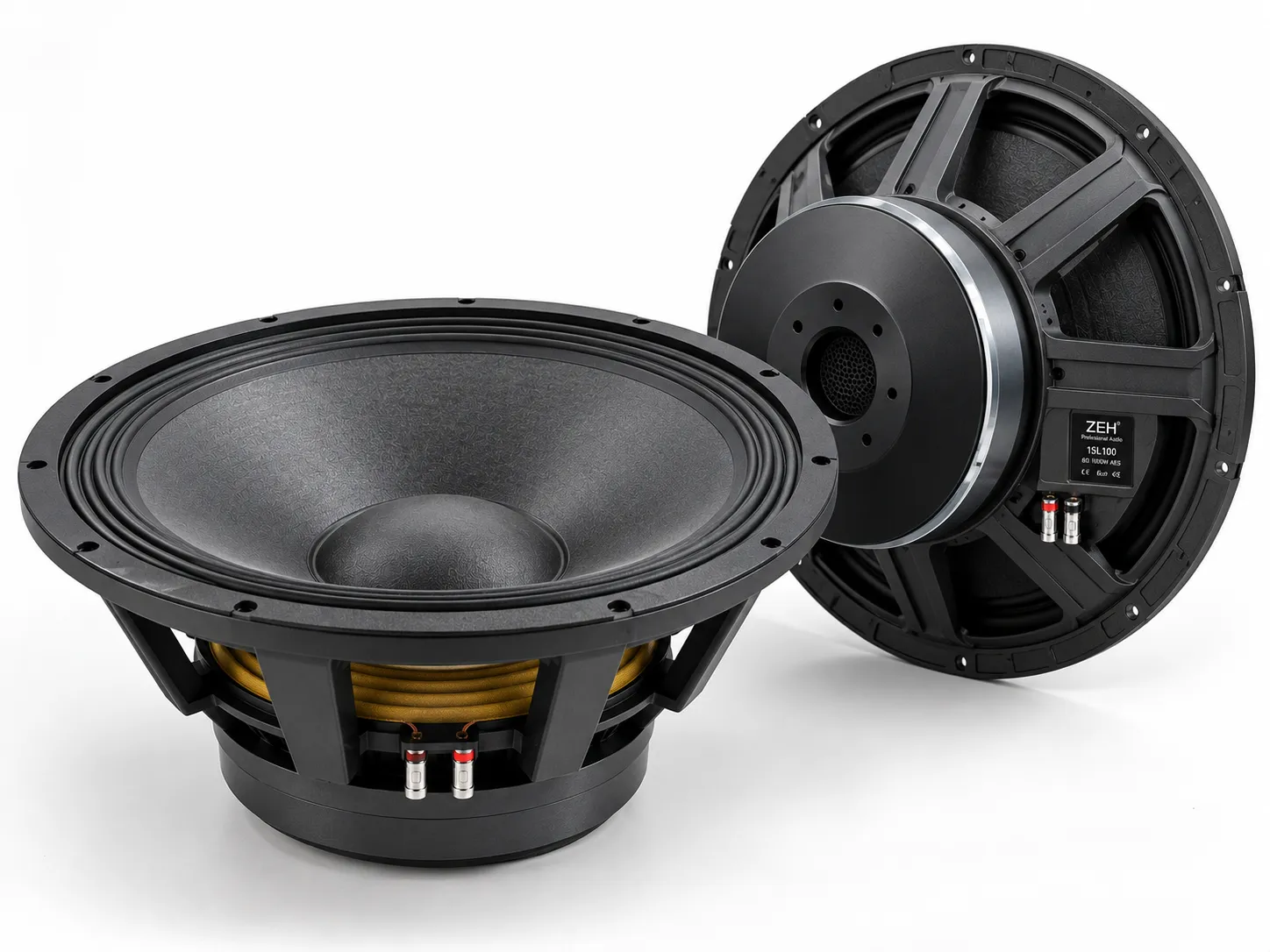
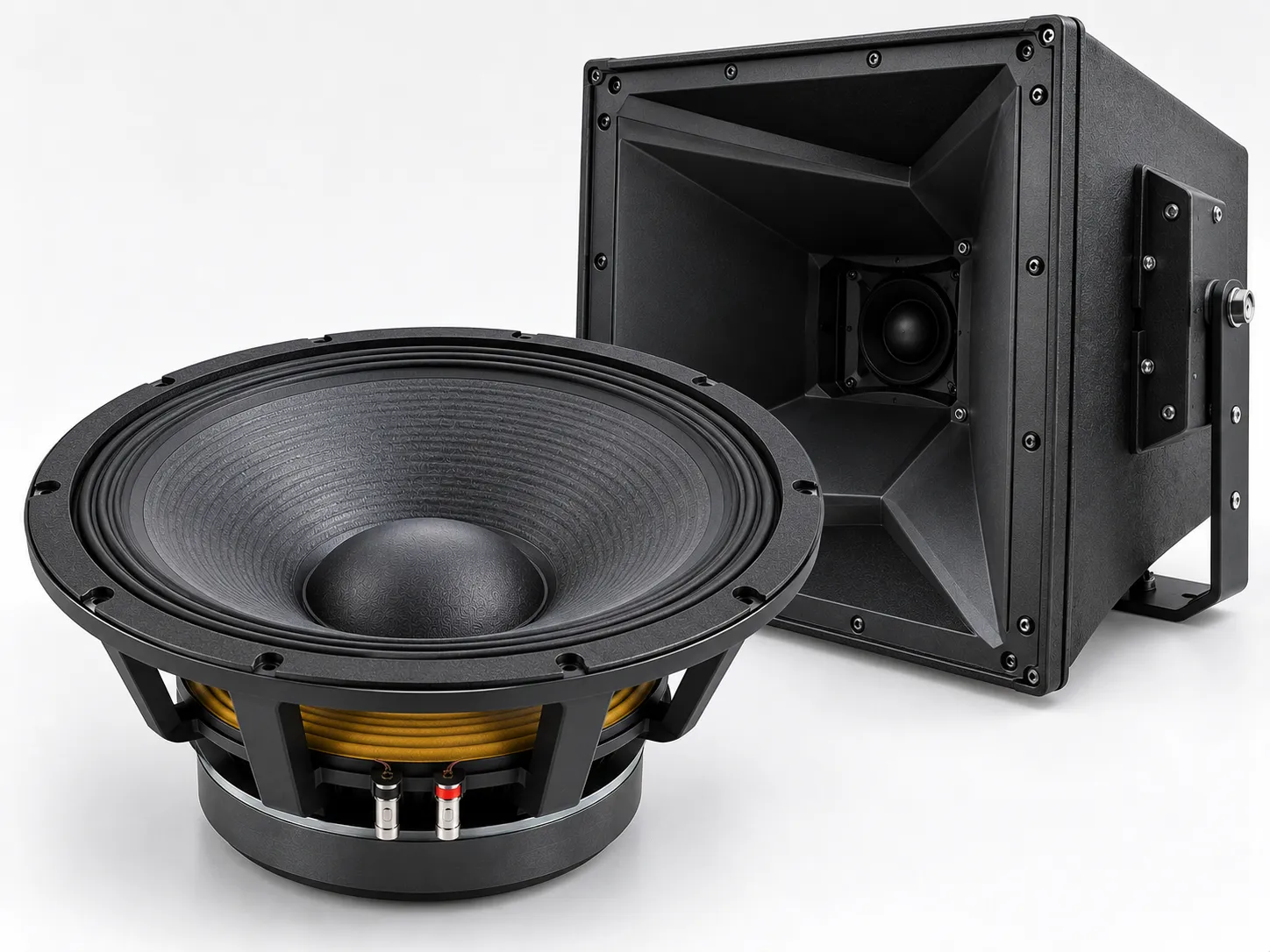
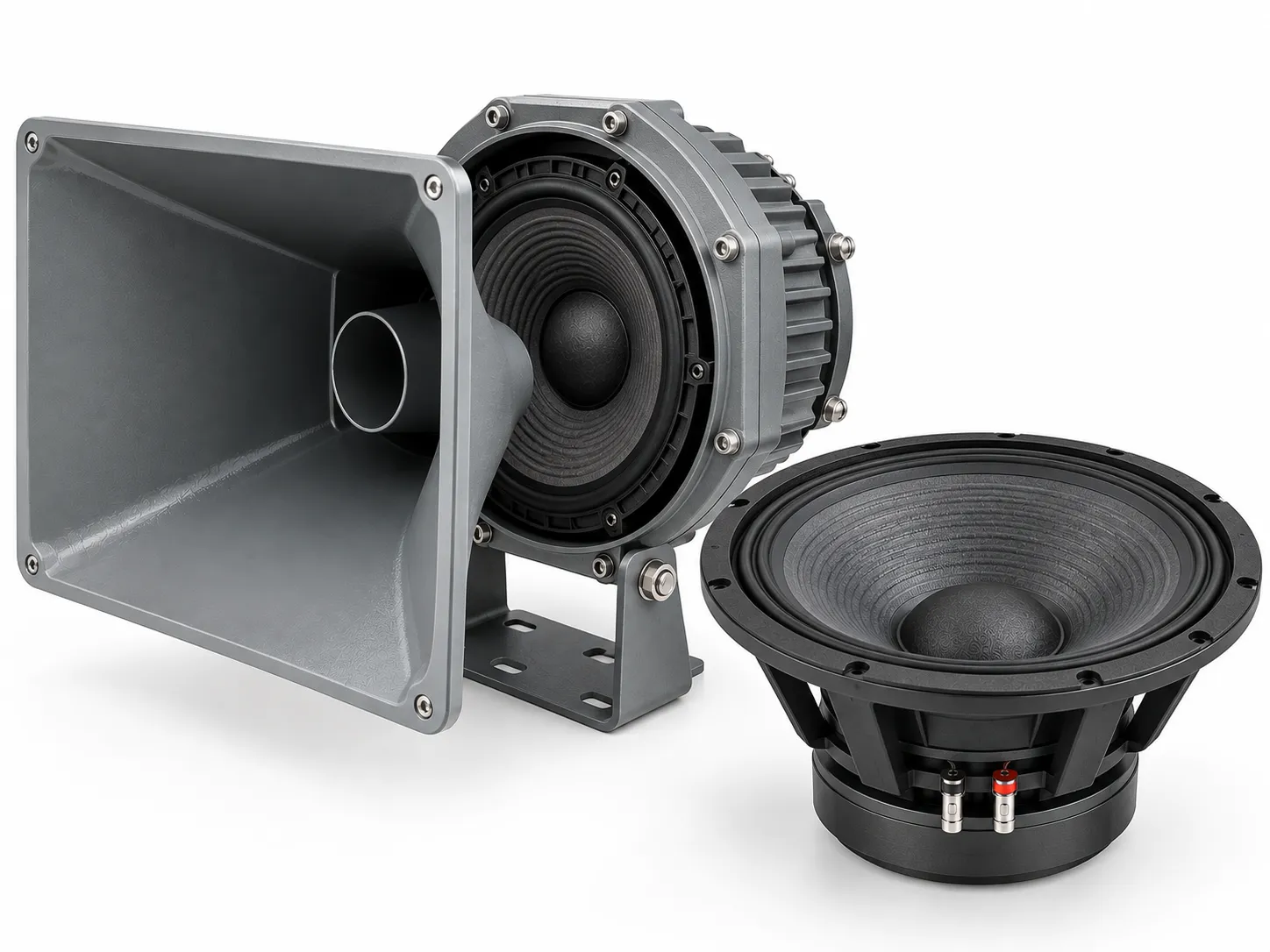
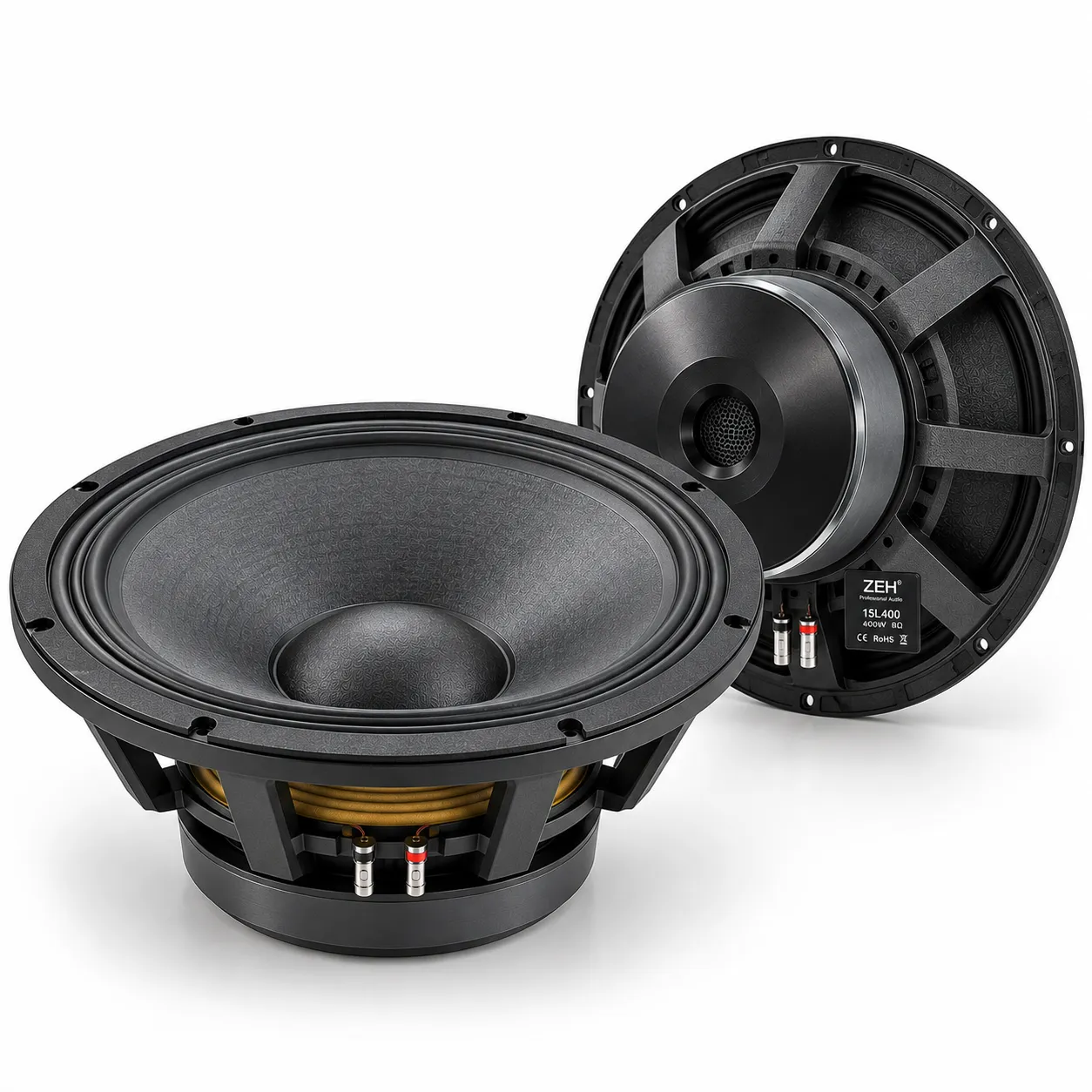
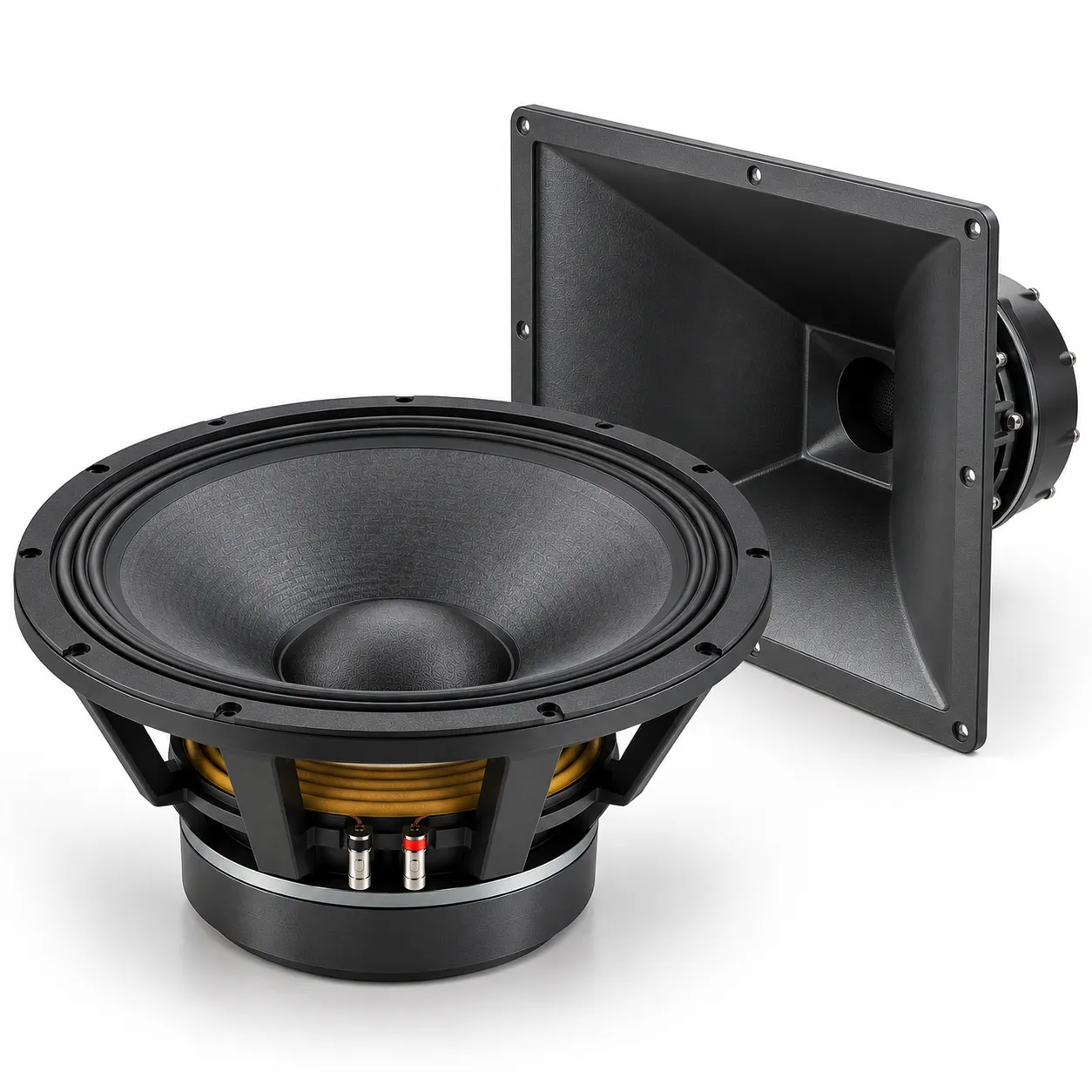
Large-size speakers are driver units featuring large-diameter diaphragms and frame structures, with large effective radiating area and air displacement capability. They are mainly applied to audio equipment requiring higher sound pressure level, stronger low-frequency output, higher power handling capacity or wider sound coverage.ZEH manufactures a comprehensive range of speakers: full range speakers, mid-woofer speakers, woofers, subwoofers, coaxial speakers, automotive speakers, waterproof and outdoor speakers, professional audio speakers, horn speakers and Other custom speaker solutions.
Stronger Bass Performance: A larger diaphragm can move more air, helping produce fuller and more powerful mid-bass and low-frequency output.
Higher Sound Pressure Output: When properly matched with the amplifier, magnetic circuit, and acoustic enclosure, a large speaker can deliver higher volume levels and cover a larger listening area.
Greater Power-Handling Capability: Larger voice coils, magnetic circuits, and heat-dissipation structures can support higher rated power, making these speakers suitable for continuous operation or high-volume playback.
Wider Sound Coverage: Ideal for products that require sound distribution across larger spaces, including conference rooms, outdoor equipment, automotive systems, home theaters, professional loudspeakers, and large smart terminals.
Fuller and More Powerful Sound: Large speakers can overcome the limited bass response often associated with smaller drivers, giving music, speech, and multimedia audio greater impact, depth, and detail.
Support for Multi-Driver Audio Systems: They can be combined with tweeters, midrange drivers, or additional woofers to create two-way, three-way, coaxial, or multi-speaker audio systems.
Greater Installation Space and Enclosure Volume Required: Large speakers generally require more internal space, an appropriately sized acoustic enclosure, and a stronger mounting structure.
More Demanding Amplifier Matching: The amplifier should be selected according to the speaker’s impedance, rated power, sensitivity, and target sound pressure level to prevent insufficient output, distortion, overheating, or speaker damage.

All of speakers below allow flexible size selection and customization according to your product structure, acoustic cavity design, power amplifier specifications, target sound quality and mass-production requirements. Adjustable parameters include speaker size, shape, height, mounting holes, impedance, rated power, appearance, color, mounting method and wire connections. Speaker grilles can also be added to meet project-specific needs.
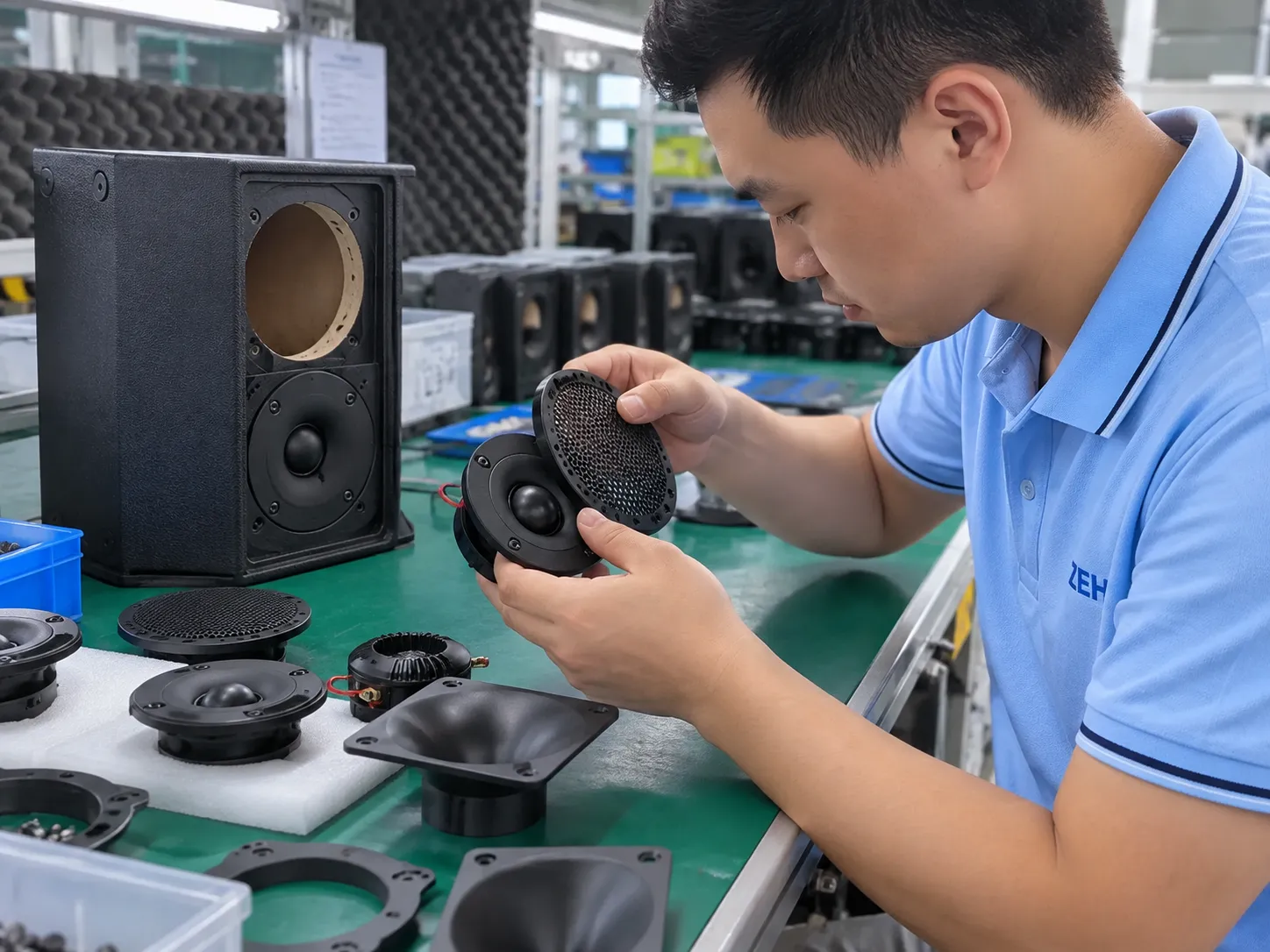
The ZEH engineering team provides full-range technical support, including speaker selection, acoustic cavity matching, sample development, acoustic tuning and reliability validation. Our support helps customers shorten product development cycles and ensures full-range speakers achieve stable and consistent acoustic performance, excellent assembly compatibility, and consistent performance across production batches within end-products.
ZEHSMAUDIO can adapt an existing speaker platform or develop a modified structure based on your installation space, sound target, electronics, enclosure and production requirements.
We review your housing dimensions and mounting structure before selecting the frame and magnetic circuit.
Round, oval, rectangular and low-profile frames can be adapted to internal ribs, PCB positions and assembly methods.
Speaker parameters are evaluated together with the amplifier, enclosure, listening distance and required sound performance.
Diaphragm, surround and magnet materials are selected according to the target sound, environment and cost requirements.
The project can include the enclosure, grille, wiring, connector, sealing components and amplifier matching.
Large speakers are typically required to deliver higher acoustic output, stronger low-frequency performance and reliable operation under demanding power conditions. ZEH Audio combines loudspeaker engineering, system integration and controlled manufacturing to help OEM/ODM customers develop large-format speaker drivers for professional, commercial and high-output audio applications.
Large speaker performance depends on the interaction between cone area, excursion, motor strength, suspension compliance and enclosure loading. Our engineers optimize the magnetic circuit, voice coil, diaphragm and suspension system to achieve the required balance of SPL, low-frequency extension, transient response and distortion control.
High-power applications place greater thermal and mechanical stress on the driver. ZEH can optimize voice coil structure, winding specification, former material, ventilation, adhesive system and magnetic components to improve thermal stability and maintain reliable performance during continuous and high-output operation.
Large drivers are engineered as part of the complete loudspeaker system. We evaluate the speaker together with enclosure volume, cabinet tuning, crossover network, amplifier power, impedance requirements and target frequency range to help achieve stable system response and efficient acoustic output.
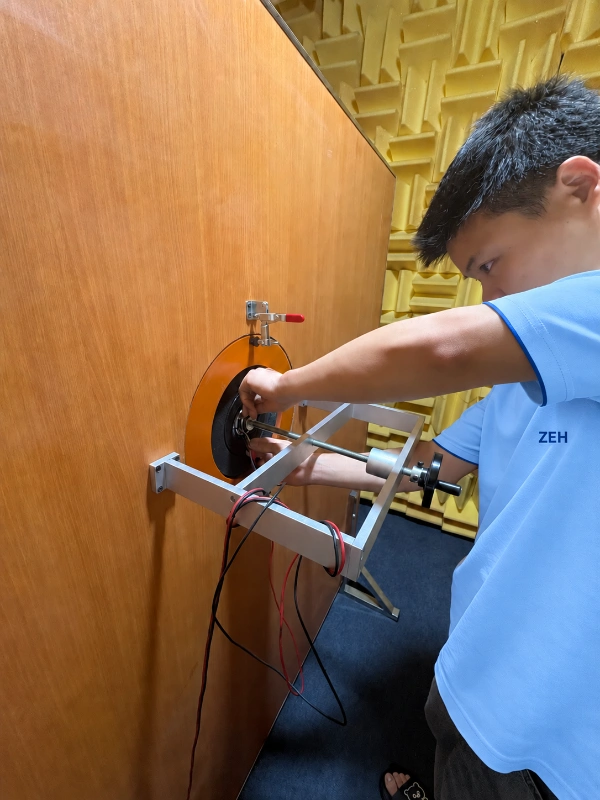
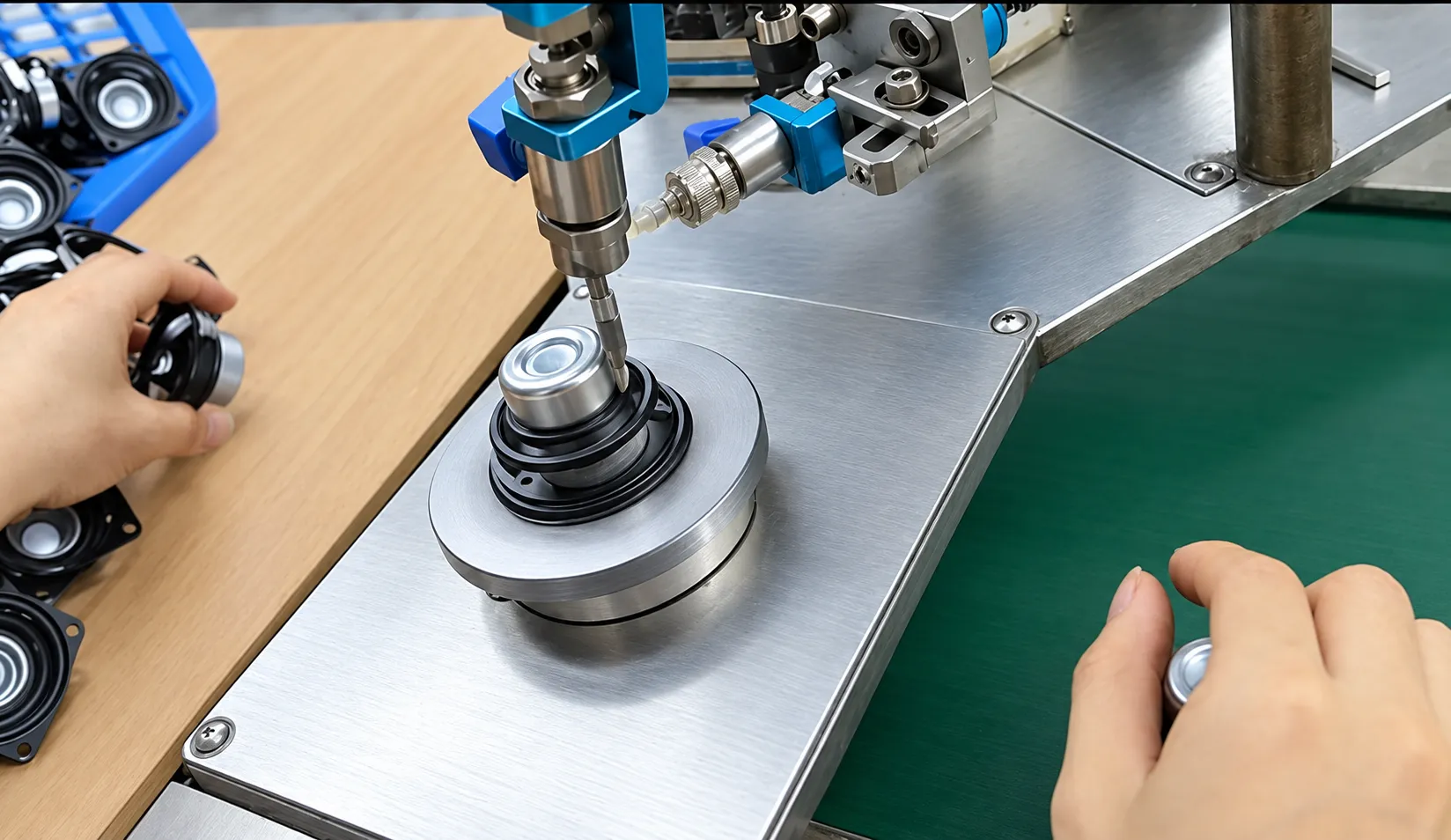
Large-format speakers require tight control of cone, suspension, voice coil, magnetic gap and assembly processes to maintain consistent acoustic performance. ZEH supports prototype validation, frequency-response testing, impedance verification, distortion evaluation and power testing to help maintain consistency from approved samples through volume production.
At ZEH Audio, large speaker drivers generally refer to models from approximately 4 inches to 18 inches, depending on the product and application.
Common sizes include 6.5-inch, 8-inch, 10-inch, 12-inch, 15-inch, and 18-inch speakers. Larger drivers are often selected for applications that require higher acoustic output, greater air displacement, stronger low-frequency capability, or higher power handling.
However, speaker diameter alone does not determine performance. Sensitivity, excursion, resonant frequency, voice coil design, magnet structure, enclosure, and amplifier matching should also be considered.
“Large speaker” describes a speaker primarily by its physical size, while “woofer” describes the frequency range and acoustic function of the driver.
A large speaker may be designed as a full-range driver, midbass driver, woofer, subwoofer, coaxial speaker, or another configuration. For example, a 12-inch driver may be developed as a full-range PA speaker or as a dedicated woofer depending on its cone, suspension, motor, voice coil, and target frequency response.
If low-frequency reproduction is the main requirement, the driver should be selected according to its acoustic parameters rather than diameter alone.
The correct size depends on the required frequency range, SPL, enclosure volume, amplifier power, installation space, and intended application.
An 8-inch or 10-inch driver can be suitable where installation space is limited or where controlled midbass and general audio reproduction are required. A 12-inch or 15-inch speaker is commonly selected for higher-output systems, while an 18-inch driver is often used when greater air displacement and stronger low-frequency output are priorities.
The final selection should also consider sensitivity, Fs, Xmax, impedance, power handling, and enclosure requirements.
No. A larger cone can move more air, but diameter alone does not determine bass extension.
Low-frequency performance is also influenced by resonant frequency, excursion capability, suspension compliance, moving mass, motor strength, enclosure volume, port tuning, and amplifier control.
A properly designed 12-inch driver can therefore deliver better low-frequency performance in a particular enclosure than a poorly matched 15-inch or 18-inch driver.
Rated power describes the power a speaker is designed to handle under defined operating conditions, while maximum or peak power generally refers to a higher short-duration power level.
For OEM speaker selection, rated or continuous power is usually more useful than a peak-power figure because it better represents sustained operation.
ZEH recommends matching the speaker with the amplifier according to rated power, impedance, sensitivity, intended duty cycle, and required SPL rather than selecting a driver based only on the largest wattage number.
Amplifier selection should consider the speaker’s impedance, rated power, sensitivity, target SPL, operating duration, and intended application.
An amplifier that is too small may be driven into clipping when higher output is required, while excessive power can place unnecessary thermal and mechanical stress on the speaker.
For OEM projects, we can evaluate the driver together with your amplifier specifications, crossover or DSP settings, enclosure, and required output level to establish a more appropriate system match.
Both 4Ω and 8Ω large speaker drivers are commonly used, but the correct choice depends on the amplifier and system configuration.
4Ω speakers are common in automotive and some high-output applications where the amplifier is designed for lower-impedance loads. 8Ω speakers are widely used in professional audio, commercial systems, and multi-driver loudspeaker designs.
In systems using multiple speakers in series or parallel, the total impedance presented to the amplifier should also be calculated before the final driver configuration is selected.
Fs is the driver’s free-air resonant frequency and is one parameter used when evaluating its low-frequency behavior.
Xmax describes the usable linear excursion of the diaphragm and is particularly important in applications requiring substantial air movement at low frequencies.
Sensitivity indicates how much acoustic output a driver can produce from a given electrical input under specified measurement conditions.
These parameters should not be evaluated independently. ZEH considers them together with cone area, motor strength, power handling, enclosure design, frequency response, and the target application.