
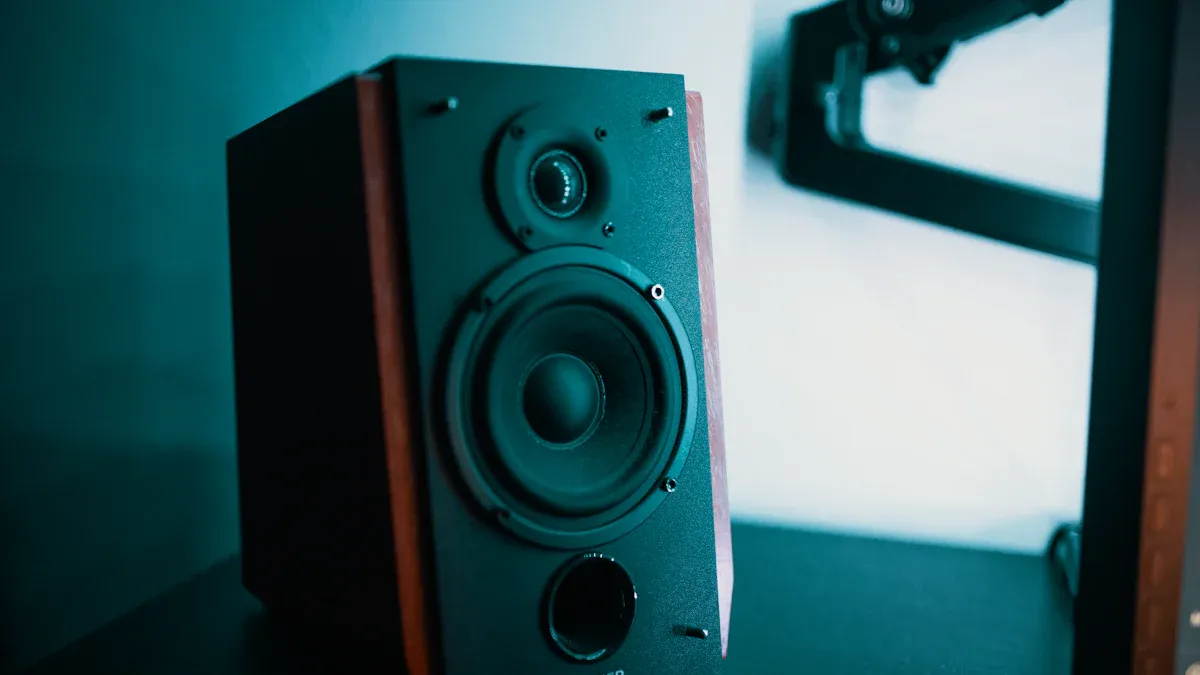
Speaker driver types are the parts inside a speaker. They change electrical signals into sound. Each driver works with a certain range of sounds. This affects how you hear music and voices. For example, midrange speaker drivers help make voices and instruments clear. They work best in the 1 to 4 kHz range. Your ears notice details most in this range. If you know how each type works, you can choose the right speakers. This helps your favorite songs sound their best.
Key Takeaways
Speaker drivers change electrical signals into sound waves. This affects how you hear music and voices.
Different driver types, like woofers and tweeters, focus on certain sound ranges. They help make your listening experience better.
Pick the right drivers for your needs, like movies or music. This gives you balanced and enjoyable sound.
Room size and where you put speakers matter for sound quality. Think about these things for the best performance.
Buy good drivers that fit what you like. This gives you better audio and makes you happy for a long time.
How Speaker Drivers Work
Sound Conversion Basics
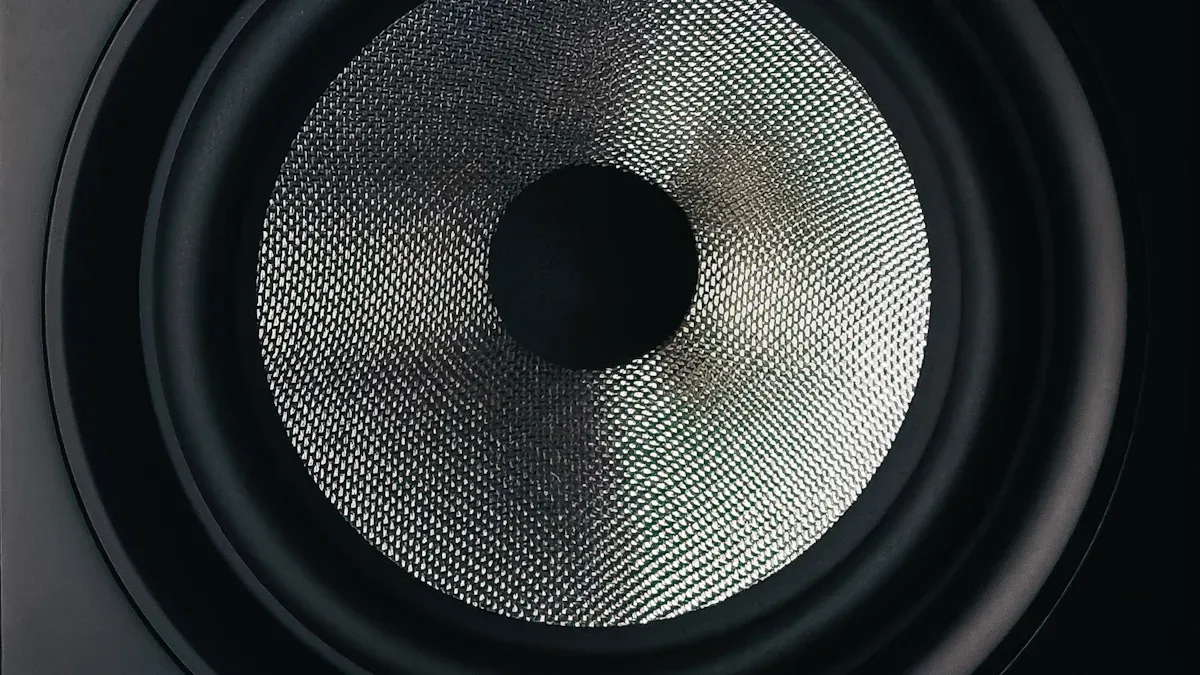
You hear music because speaker drivers change electrical signals into sound waves. First, an amplifier sends a signal to the speaker. The signal goes to the voice coil inside the driver. The coil switches polarity when the signal moves through it. This makes the coil move back and forth. The coil is connected to a cone or dome. When the coil moves, the cone or dome pushes air. These air movements turn into the sounds you hear.
Speakers use this way to change electrical energy into mechanical energy. The driver’s movement makes air move. This moving air creates sound waves that reach your ears. Tweeters and woofers both use this process. Tweeters make high sounds clear. Woofers make deep bass sounds.
Tip: For better sound, pick speakers with good drivers. Good drivers help music and voices sound more real.
Role in Audio Systems
Speaker drivers work with other parts in your audio system. Crossovers are needed to split the audio signal into different ranges. Crossovers send the right sounds to each driver. Woofers get low sounds. Tweeters get high sounds.
Passive crossovers use simple parts to split the signal after it is made louder.
Active crossovers split the signal before it is made louder. Each driver gets its own amplifier.
Active crossovers can make sound clearer and lower distortion.
Amplifiers are also needed to make the signal stronger. The amplifier gives each driver enough power. When you use drivers, crossovers, and amplifiers together, you get all the sounds you need.
ZEH Audio helps business clients by putting these parts together in one system. You get steady quality and sound you can trust. Their way of making things fixes problems with parts working together. It also makes building speakers easier. This makes sure your speaker system gives clear and balanced sound.
Main Speaker Driver Types
There are many speaker driver types in home audio systems. Each one plays a different part in making sound. If you know how they work, you can pick the best system for you.
Subwoofers and Woofers
Subwoofers and woofers make low sounds. Subwoofers play the deepest bass notes. Woofers play more bass and some lower mid-range sounds. You hear movie rumbles and music thumps because of these drivers.
Speaker Type | Frequency Range |
|---|---|
Subwoofer | |
Woofer | 40 Hz – 500 Hz |
Subwoofers are important in home theaters. They play deep sounds like thunder and basslines. You can feel the bass, which makes listening more exciting. Woofers play low sounds under 200 Hz. They help music and movies sound strong.
Tip: Put your subwoofers and woofers in the right spot. Try the “crawl” method to find the best place for your subwoofer.
They let you feel the bass.
Woofers help with bass and lower mid-range, so music sounds full.
Subwoofers are bigger, usually 8 to 18 inches. Their box shape changes how they sound. Woofers come in many sizes, from 4 to 12 inches. You can use both for strong bass in your system.
Mid-Range Drivers
Mid-range drivers play the most important sounds. They cover 250 Hz to 5 kHz. This includes most voices and instruments.
Frequency Range | Description |
|---|---|
250 Hz – 5 kHz | Plays most vocal and instrument sounds. |
Mid-range drivers are good at playing middle sounds. You hear clear voices and instruments because of them. They give strong and steady sound. You get clear sound, which is great for concerts, speeches, and home use.
Mid-range drivers are best when you need clear sound.
They play voices and instruments very well.
You do not get tired of listening if your system has good mid-range drivers.
A study showed that bad mid-range sound makes people tired faster. You should always have mid-range drivers for balanced sound.
Tweeters and Super-Tweeters
Tweeters and super-tweeters play high sounds. Tweeters make high sounds clear and sharp. Super-tweeters play even higher sounds.
Speaker Type | Upper Frequency Limit |
|---|---|
Super Tweeter | Up to 100 kHz |
Tweeters work above 2 kHz. They make music crisp and bright. Super-tweeters play above 20 kHz and can go up to 100 kHz. You hear tiny details in music because of these drivers.
Tweeters make sharp, clear sounds.
Super-tweeters add more detail.
You feel more surrounded by sound with super-tweeters.
These drivers let you hear small details in music and movies.
Tweeters come in different shapes, like dome and ribbon. Dome tweeters are small and play high sounds well. Ribbon tweeters are very clear and save energy.
Full-Range and Bass Drivers
Full-range drivers try to play all sounds in one speaker. Bass drivers play low sounds but not as deep as subwoofers.
Driver Type | Frequency Range | Description |
|---|---|---|
Full-Range | All Frequencies | Tries to play low, mid, and high sounds in one speaker. |
Bass Driver | 40 Hz – 500 Hz | Plays low sounds, important for bass. |
Full-range drivers are simple and keep sound smooth. They might not play all sounds as well as other types. Systems with many drivers can play more sounds and handle more power. Bass drivers are not as big as subwoofers. Subwoofers are bigger and play deeper bass. Bass drivers are smaller and play less deep sounds.
Full-range drivers are easy to use.
Many drivers together play more sounds and have less distortion.
Bass drivers help woofers and subwoofers for better bass.
Other Driver Types (Cone, Dome, Planar, Ribbon, Electrostatic, Horn)
Some special speaker driver types are used in fancy or pro systems. Each one is different.
Cone drivers are common and balance cost, power, and sound. You see them in most speakers.
Dome tweeters play high sounds well. They are small and clear.
Planar magnetic and ribbon drivers are very clear. You hear every small sound in good music.
Electrostatic drivers use static electricity to move a thin sheet. They are very fast and clear. These drivers have little distortion and react quickly.
Horn drivers are loud and send sound far. You see them in big places.
AMT drivers mix features from other types for great sound.
Ribbon drivers use a thin strip in a magnet. They are very clear, spread sound well, and save energy. Electrostatic drivers use a thin sheet that moves a little. They make sound very accurately.
Note: ZEH Audio uses many speaker driver types in their systems. Their way of building makes sure everything works well together. You get good sound and steady quality in every product.
You can pick from many speaker driver types for your needs. Each one helps make sound balanced and fun to listen to.
Choosing Speaker Drivers for the Best Home Speaker System
Matching Drivers to Listening Needs
You should pick speaker drivers based on what you like. If you enjoy movies, you need strong subwoofers and woofers. Music lovers want mid-range drivers and tweeters for clear sound. Gamers need fast drivers for quick effects. The best home speaker system uses the right driver for each sound. Check the main factors in the table below:
Factor | Description |
|---|---|
Room dimensions | Pick driver size and power to fill your space. |
Furnishings | Soft things soak up sound; hard things bounce it back. |
Layout | Open rooms need drivers that spread sound wide. |
Primary Use Case | Movies, music, or gaming need different drivers. |
Budget Considerations | Think about upgrades and long-term value. |
Overall Speaker Design | Shape and size change which drivers fit and how they sound. |
Considering Room and Placement
Room size and placement change how your speakers sound. Big rooms need bigger drivers with more power. Small rooms work well with smaller drivers. Put speakers 1800mm to 2400mm apart. Make a triangle with your listening spot. Move speakers away from walls to get better bass. Keep the same distance from side walls for balance. Turn your speakers in for better high sounds. Use panels to keep sound lively. If your system sounds dull, move your seat.
Room size decides driver power.
Layout affects how drivers spread sound.
Balancing Performance and Budget
You want a good speaker system without spending too much. Start with the most important driver for your needs. Upgrade other drivers when you can. Look for systems with balanced tone, strong sound, and clear details. Pick drivers that fit your room and habits. Think about future upgrades and long-term value. High-end equipment costs more but works better.
Tip: Spend more on the drivers that matter most for your favorite activities.
What Makes the Best Home Speaker System?
The best home speaker system uses the right drivers for every sound. You get clear bass, strong middle sounds, and sharp highs. Good systems have balanced tone, strong sound, and clear details. You feel the music and enjoy movies more. The system should fit your room and needs. High-end equipment gives you real and emotional sound.
ZEH Audio helps you build the best home speaker system. They have over 20 years of experience. ZEH Audio designs PCBA, makes speaker systems, creates molds, and processes wire harnesses. Their OEM/ODM services fix compatibility and supply chain problems. You get steady products and fast development. ZEH Audio supports business clients with reliable speaker driver solutions for every system.
Common Questions About Speaker Driver Types
Does Size Matter?
You might ask if driver size changes sound. Size is important for how speakers work. Bigger drivers, like woofers, make deep bass and low sounds. Smaller drivers, like tweeters, play high sounds and details. This changes how your music and movies sound.
One driver alone can’t play deep bass well, so bass is weak.
Two-way speakers use a woofer for lows and a tweeter for highs. This gives better sound.
Four-way speakers use special drivers for each sound range. This makes sound more detailed.
Big drivers can play more sounds and handle more power. Small drivers lower distortion by playing only their best sounds. You should pick driver size based on your room and what you like to hear.
Are More Drivers Better?
You might think more drivers always make sound better. More drivers can help, but only if used right. Many drivers make things more complex. You need good crossovers and matching. Sometimes, a good two-way speaker sounds better than a bad three-way one.
Big drivers cover more sound and give more power.
Small drivers keep distortion low.
Using many drivers means you must match them well.
Good design is more important than just adding more drivers.
ZEH Audio helps fix these problems. Their way of making speakers makes sure all drivers work together. You get steady sound and good performance. This is important for business clients who need speakers they can trust.
Ideal Setups for Different Uses
Pick drivers based on how you use your speakers. Music, movies, and games need different setups.
Use Case | Ideal Drivers |
|---|---|
Movies | |
Gaming | Powerful subwoofer and mid-range drivers |
Classical Music | Detailed tweeters for clear sound |
For music, two-way speakers with a woofer and tweeter work well. Home theaters use three-way speakers with a woofer, mid-range, and tweeter for more detail. Center speakers help you hear voices. Surround speakers make sound feel all around you. Subwoofers add deep bass for music and movies.
ZEH Audio’s skill in putting drivers together helps you get the right setup. Their systems make sure every driver fits your needs. You get clear music or strong movie sound.
You now know that each speaker driver type changes how you hear sound. Planar magnetic, balanced armature, electrostatic, and compression drivers all have special features and some downsides:
Driver Type | Key Features | Advantages and Trade-offs |
|---|---|---|
Planar Magnetic | Uses a thin part and magnets | Quick sound, not much distortion |
Balanced Armature | Very small and saves space | Fits in small places, but can sound odd |
Electrostatic | Has a very thin part | Clear sound, but needs special power |
Compression Drivers | Uses a horn to send sound | Very loud, but not great for home use |
You can pick drivers that fit what you want. Movies sound better with strong woofers. Games are more fun with powerful subwoofers. People who love music like tweeters for clear sound. ZEH Audio puts these parts together so your system always sounds good.
Look at books like “The Loudspeaker Design Cookbook” or “Bullock On Boxes” to learn more. You can also find info about subwoofers, speaker words, and how to pick drivers.
FAQ
What does a speaker driver do?
A speaker driver changes electrical signals into sound waves. You hear music and voices because the driver moves air. Each driver covers a certain sound range, like bass or treble.
How do you choose the right driver size?
You pick driver size based on your room and listening habits. Large drivers make deep bass. Small drivers play high notes. ZEH Audio helps you match driver size to your needs for clear sound.
Can you mix different driver types in one speaker?
You can mix drivers to cover all sound ranges. Woofers, mid-range, and tweeters work together. ZEH Audio’s integrated systems ensure drivers match well and give you balanced sound.
Why do B2B brands prefer integrated audio solutions?
Brands choose integrated solutions to avoid compatibility issues. ZEH Audio combines circuits, drivers, and housing. You get reliable products, faster development, and less supply chain complexity.
Do more drivers mean better sound?
More drivers can improve sound if matched well. You need good crossovers and design. ZEH Audio’s expertise helps you get consistent performance with the right number of drivers.