
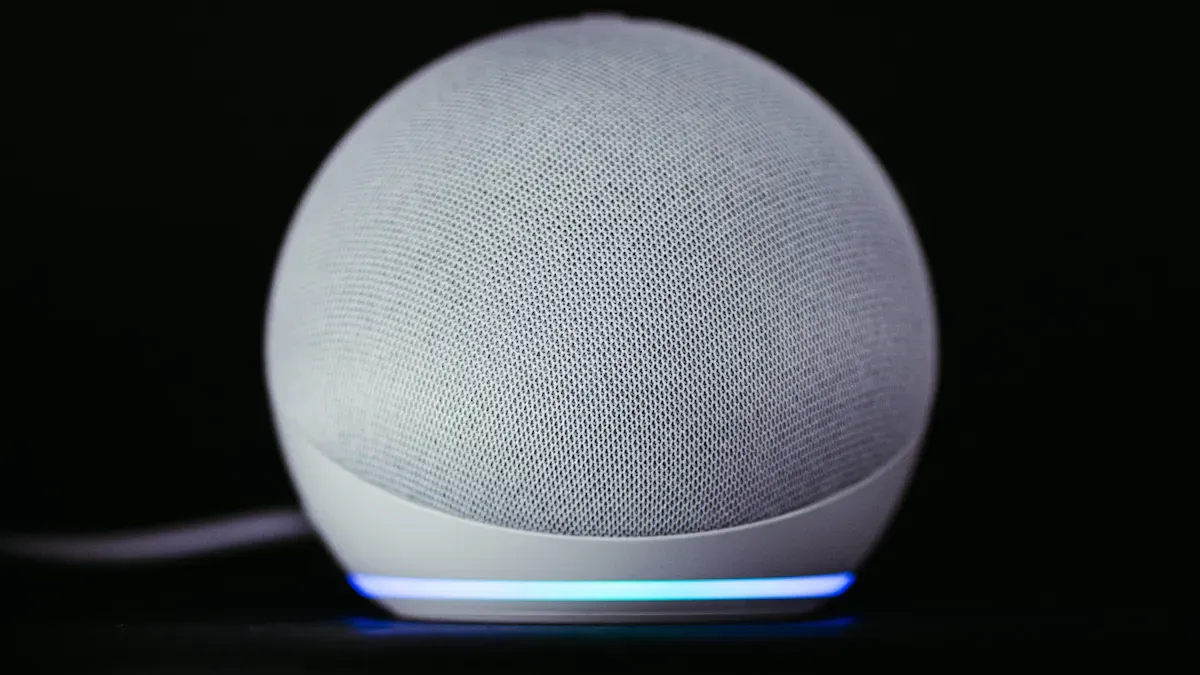
You see smart speakers in more homes each year. Today, most homes have at least one smart speaker. These devices used to be simple assistants. Now, they are the center of your smart home. AI and gesture recognition have improved a lot. You can control devices with your voice. You can also use gestures or images. The integration trend tries to make technology fit into your daily life. People want good design and clear audio. They also want smooth experiences. This is true if you love tech or just want life to be easier.
Key Takeaways
Smart speakers are the main control for your smart home. You can use them to control things like lights and locks with your voice.
You can link your smart speaker to many devices. This helps your home stay neat and work better. You do not need lots of remotes.
You can set up routines with your smart speaker. This saves you time and makes your day more comfortable. You can make it do things in the morning or at night.
The integration trend uses different ways to control your home. You can use your voice, hand movements, or pictures to control things easily.
Smart speakers fit into your life using calm technology. They help you without needing all your attention. This makes your daily tasks simpler.
Speaker integration in smart homes
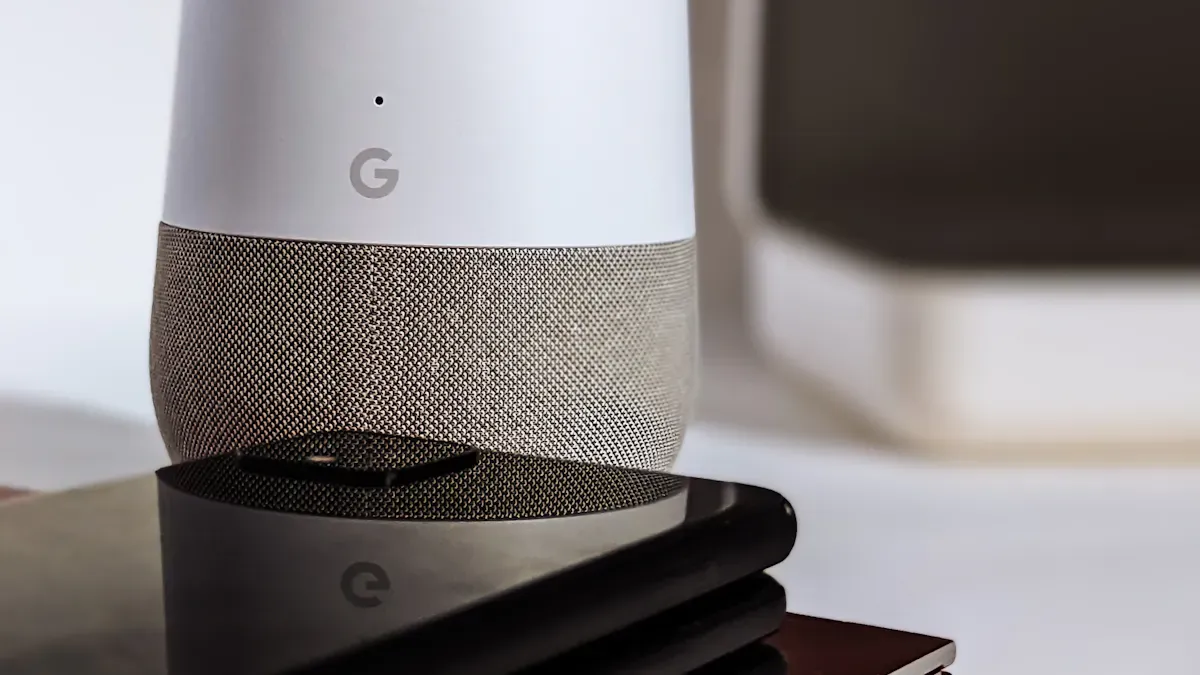
Central hub functions
Smart speakers now act as the main command center in your smart home. You can use them to process data from sensors and appliances. When you give a command, the speaker listens and responds right away. This makes your daily routine easier. You do not need to use many remotes or apps. Instead, you can control everything from one place.
Tip: Place your smart speaker in a central spot in your home for the best coverage.
You can ask your speaker to turn on lights, lock doors, or adjust the thermostat. These actions help you save energy and keep your home secure. The integration trend shows that more people want a single device to manage their smart home.
Device connectivity
You can connect your smart speaker to many devices. These include cameras, doorbells, locks, thermostats, and lights. Once you set up the connections, you can control each device with your voice. This makes your home more organized and efficient. You do not have to walk from room to room to check if you locked the door or turned off the lights.
Connect your speaker to smart bulbs for easy lighting control.
Link it to your thermostat to change the temperature with a simple command.
Automation and routines
Smart speakers help you set up routines that fit your lifestyle. You can create a morning routine that turns on the lights, starts your coffee maker, and plays the news. At night, you can set a routine to lock the doors and dim the lights. These routines save you time and make your home feel more comfortable. The integration trend in smart homes means you can enjoy more convenience every day.
Integration trend in smart homes
Multimodal control
You can now use different ways to control your smart home. The integration trend is moving from just voice commands to gestures and images, too. This makes things feel easier and more natural. For example, you can wave your hand to turn on lights. You can also use your voice to play music. Some systems know who you are and change settings for you.
Here is a table that lists the main types of multimodal input:
Multimodal Input | Description |
|---|---|
Voice | Lets you give commands by talking, which is simple. |
Gesture | Lets you use hand moves to control things, which helps if you cannot talk. |
Image | Uses pictures to make things personal, like changing settings for people in the room. |
The integration trend also brings systems that switch between voice and visual modes. You can use your voice for hard tasks and gestures for quick ones. Projects like NeuraHome use both gesture and voice control. This makes your smart home easier to use. Multimodal AI can handle voice, video, and sensor data at once. This means your smart home can make better choices, like dimming the lights when you watch TV.
You can give a voice command and make a gesture, and your smart speaker will get both.
You can add text to your commands to make them more exact.
The system can change things for you, like setting the temperature when you get home.
This integration trend makes your smart home fit you better and makes it easier to use every day.
Calm technology and invisible interfaces
Smart speakers now blend into your life. You do not have to think about using them. They work quietly in the background. This is called calm technology. It means technology fits into your space instead of making you change what you do.
“Machines that fit the human environment, instead of forcing humans to enter theirs, will make using a computer as refreshing as taking a walk in the woods.” – Mark Weiser, 1995
The integration trend tries to make smart speakers part of an invisible web in your home. You can control things with your voice or gestures. You do not need to look at a screen or press buttons. Smart speakers help you without needing your full attention. For example, they can remind you to take out the trash or turn off the oven when you leave. This invisible help makes your life easier and less stressful.
Compatibility with ecosystems
You want your smart speaker to work with lots of devices. The integration trend is making more smart speakers work with big voice assistant systems. Most smart speakers now support Alexa, Google Assistant, or Siri. Some let you pick which one you want to use.
Here is a table that shows how many devices each voice assistant works with:
Voice Assistant | Total Compatible Devices |
|---|---|
Alexa | 100,000+ |
Google Assistant | 50,000+ |
Siri (HomeKit) | 1,000+ |
About 80% of smart speakers can use more than one voice assistant. This gives you more choices. Alexa works with the most devices, so you can connect to many things. Google Assistant also works with a lot. Siri works with fewer devices, so you may have fewer choices if you pick it.
Picking the right system can change how your smart home works. If you want the most options, Alexa or Google Assistant might be best. If you use Apple products, Siri could be a good choice. The integration trend means you can pick what works for you and still control your home easily.
Advanced audio and design integration
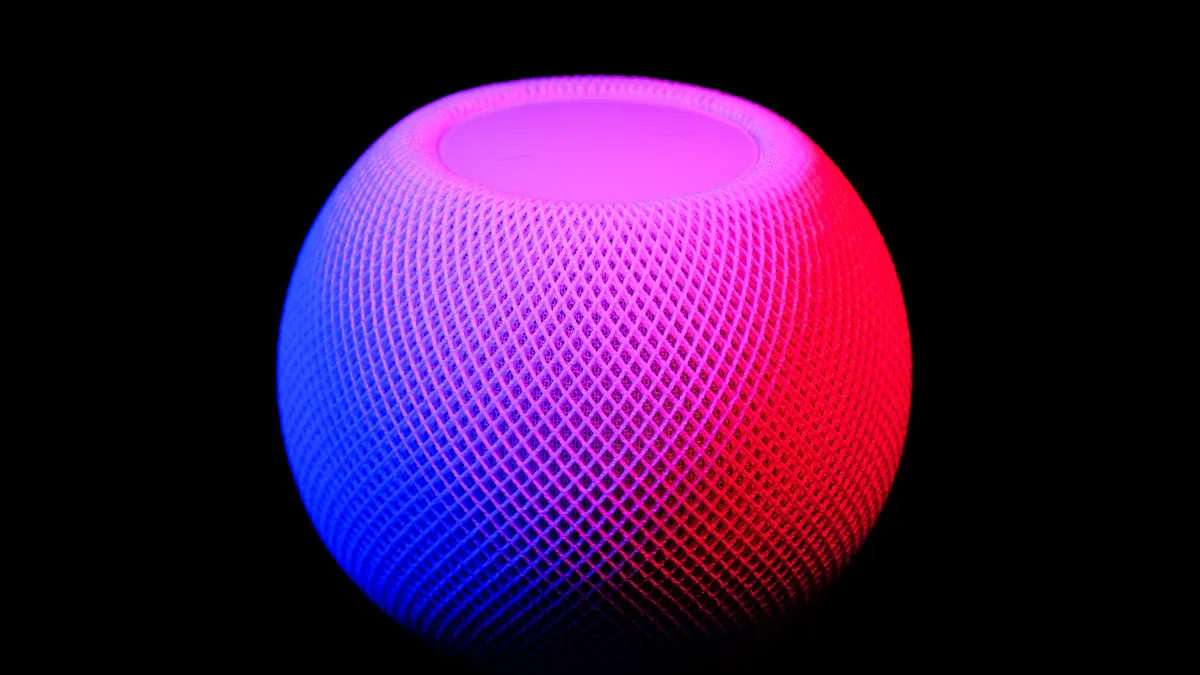
Multiroom and wireless audio
Multiroom audio systems let you hear music everywhere. You can play one song in all rooms or pick different songs for each room. People like these systems because sound follows them as they move. The market for multiroom audio is growing quickly. It might reach $26.1 billion by 2033. These systems are found in new homes and older homes.
44% of multiroom audio projects are in homes that already exist.
36% are in homes that are newly built.
20% are in places used for business.
Wireless technology makes multiroom audio work well. The Wisa protocol helps make sound better. High-resolution streaming is now normal. Ceiling speakers are liked because they sound good and cost less money. Wireless multi-channel audio systems give professional sound. Wi-Fi setups give you fast audio, which is good for live events. Bluetooth keeps improving with noise cancellation and voice assistant support.
HiFi and bespoke sound
You want your music to sound clear and full. HiFi audio gives you this experience. Many smart speakers now let you stream high-resolution music. This means you hear more details in every song. Some systems use special algorithms to make 3D surround sound. You get a unique sound for movies, music, or games. Professional systems use wireless multi-channel setups for the best sound in every room.
Seamless home design
Smart speakers now match your home’s style. You do not see big speakers or messy wires. Designers use in-wall and ceiling speakers to keep rooms neat. These speakers hide behind walls or blend with lights. You get great sound without clutter.
Design Trend | Description | Benefits |
|---|---|---|
In-Wall Speakers | Put behind drywall, wood, or acoustic panels. | You hear them, but do not see them |
Ceiling Speakers | Placed with spotlight fixtures for a clean look. | They match your lighting style |
3D Surround Scenarios | Smart systems use algorithms for different activities. | You get a better experience |
You can have both beauty and good sound. Your smart home looks nice and sounds nice, too.
User benefits and challenges
Convenience and personalization
You get many good things when you use smart speakers at home. These devices make life easier in different ways:
You can use your voice to control lights, thermostats, and locks. This means you do not need your hands, so you save time and energy.
Smart speakers work with lots of devices. You get one system that connects everything.
You get updates just for you, like the weather or recipes you want.
Fifty-three percent of people with a voice-activated speaker say it feels normal to talk to it, and many think it is like talking to a friend.
You can use simple commands to manage your day. Smart speakers help you wake up, play music, or remind you about things you need to do. Many people say these devices help them save time and feel less stressed. Smart speakers also help people live on their own. They help older adults take care of their health and stay in touch with others.
Privacy and security
You need to know about privacy and security problems. Smart speakers listen to your voice and collect data about what you do. Companies use this data to make their services better or show you ads. Sometimes, they share your information with other companies. This can mean you see ads made just for you.
Smart speakers can have security problems. Hackers might try to get your data if you use weak passwords or forget to update your devices. You may not always control your own information. Using different brands can make security harder.
Companies now try to keep your data safe. They use better security and tell you how they use your data. Still, you should check your settings and use strong passwords.
Cost and accessibility
Smart speakers can cost a lot. Most people pay about $5,500 for a basic setup. This includes a smart speaker, hub, lights, locks, and thermostats. The integration trend helps more people use smart homes, especially those who have trouble moving.
You might have problems like bad Wi-Fi or needing help with tech. Some people find smart speakers hard to use if they do not know much about technology. Cost can also be a problem, especially in care homes or for people with less money. Good help and training can let more people enjoy smart speakers.
Future directions for smart speakers
AI and personalization
Smart speakers will get even smarter with artificial intelligence. AI helps your speaker learn what you like to do. It can suggest music or news you might enjoy. Your speaker can notice when you ask for the weather or reminders. It may give you this information before you ask. Some speakers can hear your mood in your voice. They can answer in a friendly way.
Here is how AI makes your smart speaker more personal:
Aspect | Description |
|---|---|
User Preferences | AI learns what music, podcasts, and news you like. You get better suggestions. |
Contextual Awareness | Your speaker knows the time or where you are. It gives you the right information. |
Adaptive Learning | The more you use your speaker, the more it helps you. |
Emotion Detection | AI can hear your mood and answer kindly. This makes your speaker feel more human. |
Your smart speaker fits your life and changes as you use it.
Expanded device support
You can now connect your smart speaker to more devices. New speakers work with many brands and types of tech. For example, you can use your speaker with Harman Kardon, Sonos, Bose, and Samsung audio devices. These speakers support SmartThings, Alexa, and Bixby. You can control music, lights, and your TV with your voice.
Device | Features Supported |
|---|---|
Harman Kardon Virtuo | Works with Bixby, Alexa, and SmartThings |
Sonos Speakers | Connects to SmartThings for music and notifications |
Bose, Harman Luxury, JBL | Integrates with SmartThings |
Samsung Audio Devices | Includes soundbars supported by SmartThings |
You can manage your whole home with just one speaker. This makes your life easier and your home smarter.
Role in daily routines
Smart speakers now help with more parts of your day. You can use them for reminders, schedules, and fun. Many people use smart speakers to remember medicine, set alarms, or check the weather. You can play music with your family or use your speaker for games.
Studies show smart speakers help people feel more independent. People with disabilities can manage their day more easily. Hospitals and care homes use smart speakers for talking and fun. You can start with easy tasks and try harder ones as you learn.
Tip: Try new things with your smart speaker each week. You may find new ways it can help you every day.
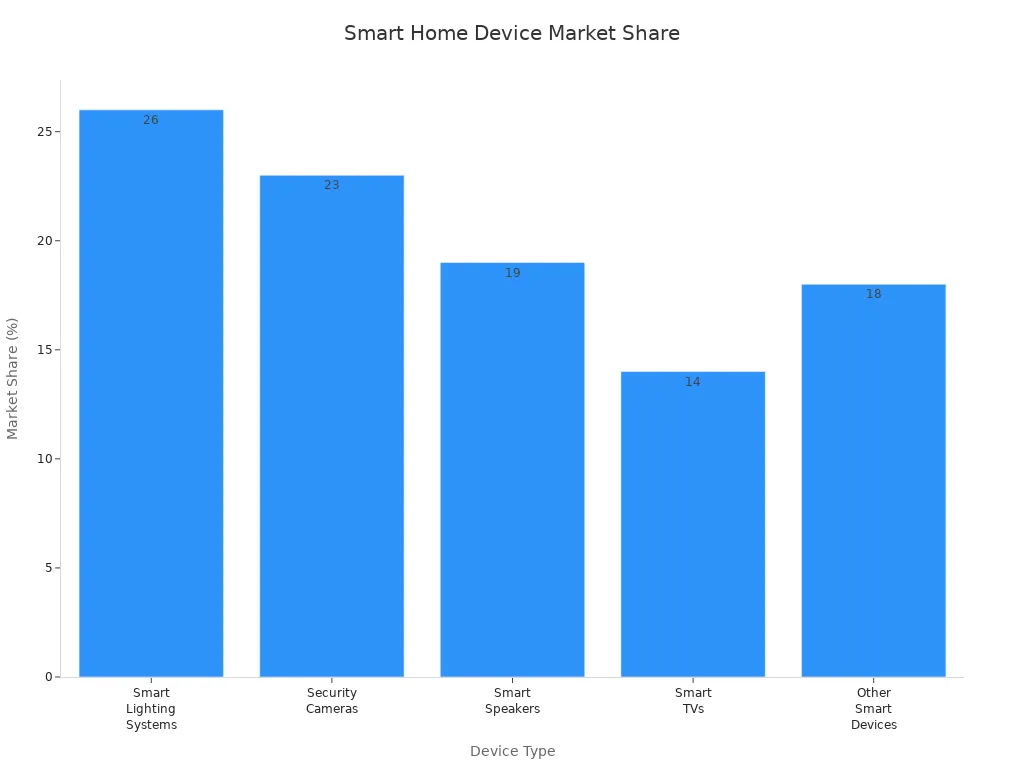
Smart speakers are changing how homes work. They help make homes use less energy. They also let you control things without using your hands. People want devices that save time and money. Smart lighting, security cameras, and speakers are the most popular.
Device Type | Market Share (%) |
|---|---|
Smart Lighting Systems | 26 |
Security Cameras | 23 |
19 | |
Smart TVs | 14 |
Other Smart Devices | 18 |
You can use smart speakers in these ways:
Pick tech that fits what you need.
Use your speaker to control other devices.
Enjoy not having to use your hands.
Think about what you need before you buy new tech.
Smart speakers will keep getting better and help you more each day.
FAQ
What can you control with a smart speaker in your home?
You can control lights, thermostats, locks, music, and even security cameras. Many smart speakers let you manage routines, set reminders, and check the weather. You can also ask questions or play games.
Are smart speakers always listening to you?
Smart speakers listen for a wake word, like “Alexa” or “Hey Google.” They do not record everything you say. You can mute the microphone for extra privacy.
How do you keep your smart speaker secure?
Use strong passwords and update your devices often.
Check your privacy settings.
Place your speaker in a safe spot.
Only connect trusted devices.
Can you use more than one smart speaker in your home?
Yes! You can set up several smart speakers in different rooms. This lets you play music everywhere or control devices from any room. Many systems support multiroom audio and voice commands.